

Tomato calendars that claim to cover the whole country in one neat month lead people to stare at sulking seedlings and blame the seed. Tomatoes do not care about your wall planner. They care about frost, soil warmth, wind, humidity, and the shape of your garden.
A low patch where cold air collects can stay dangerous long after a north-facing courtyard feels kind to seedlings. A protected spot in Johannesburg can be ready while a valley a few kilometers away is still biting. On the coast, the problem often flips. There is less frost panic, more disease pressure, and a longer season that tempts people into one big planting when a staggered approach would pay better.
Gauteng waits for warmth
The Highveld punishes tomato ambition fastest. Frost hangs around late into winter, and in exposed gardens it can linger past the dates people copy from generic planting charts. Seed can still be started early, but only under protection.
Seed starting and transplant window
Start seed in late July through mid-August, indoors or under cover. A bright windowsill, a tunnel, a greenhouse, or even a well-managed heated bench will work. The goal is to produce sturdy young plants before the cold has finished with the garden.
Move them out only from mid-September to early October, and only after the nights have settled above 10°C. Soil should be reliably above 16°C before the first transplant goes in. If the ground still feels cold enough to make your hands ache, it is too cold for tomatoes.
Soil check
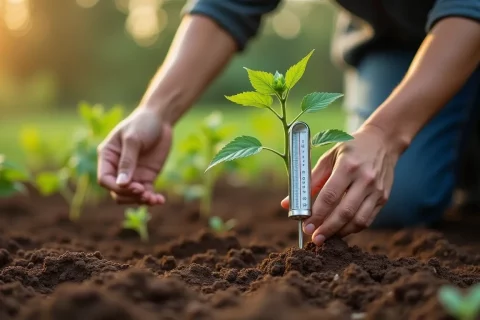
Use a soil thermometer and push it 10 to 15 cm down where the roots will live. Check early in the morning for several days in a row. Air temperature can fool you after a sunny spell. Soil changes more slowly, and that number decides whether roots start or stall.
Tomatoes do best when soil sits around 18°C to 24°C. Below 16°C, they linger, sulk, and become a magnet for problems. A warm afternoon will not fix cold soil overnight.
What to plant
In Gauteng, compact determinate cultivars are the safer bet if the bed is small or you want a shorter, cleaner harvest window. Bush types such as Roma VF or Moneymaker get on with the job and stop making a scene. They usually top out around 90 to 120 cm, take a light stake or small cage, and can sit 45 to 60 cm apart.
Indeterminate types like Beefsteak, Cherry Sweetie, and Pink Brandywine need more room and a proper support system. Give them 75 to 90 cm spacing and a stake, trellis, or tall cage that can handle a plant pushing past 2 m. If you try to treat them like bush tomatoes, you end up with a tangle, not a crop.
The Western Cape asks for timing
The Western Cape makes spring planting look easy until the wind arrives and starts charging rent. Frost is usually an issue inland, not on the coast, but dry summer conditions and strong southeasterlies can punish a late or weak planting.
Seed starting and transplant window
Start seed from mid-August into early September. Coastal areas can push slightly earlier. The transplant window runs from late September to mid-October. This gives plants enough time to establish before the heat and wind start stripping moisture from every leaf.
In inland pockets, keep an eye on late frosts in places like Ceres, Worcester, and parts of the Boland. A sheltered north-facing wall in Stellenbosch can give you a useful head start, while an open south-facing position will stay colder and slower.
Soil, wind and water
The Cape’s spring gamble is not only frost. It is also the first hard run of dry weather and the irrigation bill that follows. Tomatoes put on growth fast once the soil warms, but wind can strip moisture faster than the roots can chase it. Mulch helps. So does planting where structures, fences, or walls break the worst of the air movement without blocking all circulation.
Airflow still matters. Dense, humid pockets after rain can feed blight, especially if plants are crowded. Indeterminates need regular pruning of side shoots to keep the canopy open. Determinate plants usually want less interference, since heavy pruning works against the short, concentrated crop they are trying to make.
Coastal KwaZulu Natal has time, and too much humidity
Coastal KwaZulu-Natal has the longest runway of the three regions, which makes people sloppy. Frost is rarely the enemy. Humidity is. The coast gives you a long season, but it also gives fungi more chances to move in when the air sits still.
Seed starting and transplant window
Seed can be started from late July right through to March if you are planning succession plantings. This is the luxury here. You are not racing frost. You are managing continuity.
Transplanting can begin from mid-August and continue into April. Rather than dumping all your tomatoes into the ground at once, plant in waves every 4 to 6 weeks. This spreads harvests and stops disease from building into one dense, exhausting block.
How to place the plants
The first rule on the coast is airflow. A sheltered, stagnant corner looks romantic to a person and disastrous to a tomato. Give the crop a site with moving air, decent spacing, and enough light to dry the leaves after rain or dew.
Determinates still have their place where you want a quick, concentrated harvest, but indeterminates keep producing if you can keep the disease pressure down. They need room, height, and discipline. A Florida weave, strong stakes, or a proper trellis is not optional theatre. It is how you stop a heavy plant from collapsing into a wet heap.
Spacing matters more here than almost anywhere else. Crowding tomatoes in humid conditions invites the kind of fungal mess that turns a promising patch into a cleanup job.
Stop buying the biggest seedling on the bench
Garden centers know exactly what impatient buyers reach for. Tall, flowering tomato seedlings look like progress. They are often trouble.
A large plant in a small pot is usually root-bound, meaning the roots have already started circling the container instead of exploring soil. It also tends to mean stress. Some have already pushed flowers or even tiny fruit while still trapped in the nursery pot, which is a poor trade for a plant that has not yet settled into your bed.
A smaller plant with a thick stem, dark green leaves, and no yellowing or pest marks usually catches up faster once it is planted in the right place at the right time. Leggy seedlings, by contrast, often started life in weak light and never fully recovered.
What to do this weekend
Walk your garden early in the morning and mark the coldest patches, the warm corners, and the spots that frost reaches last. If you have a low area where cold air settles, treat it as a different climate from the courtyard or raised bed nearby.
Set up one protected seed tray for tomatoes in late July, mid-August, or early September depending on your region and how far you are from the coast. Use a soil thermometer, not a guess, and wait for the root zone to warm properly before planting out.
Then walk past the nursery bench, look at the oversized tomato seedlings, and leave them there. A smaller, healthier plant in the right window will outrun the showy one every time.