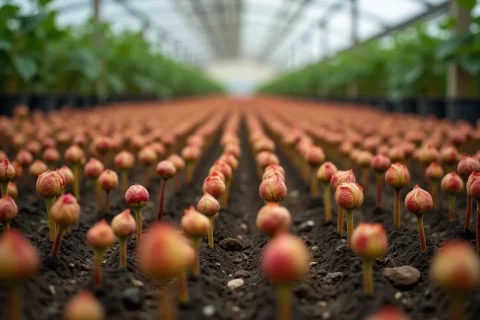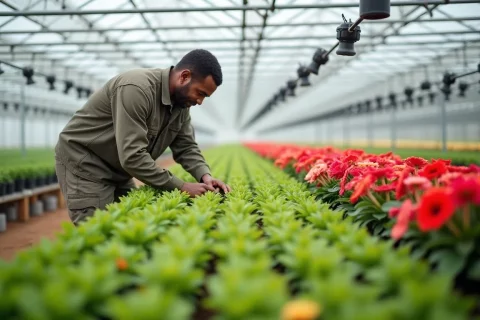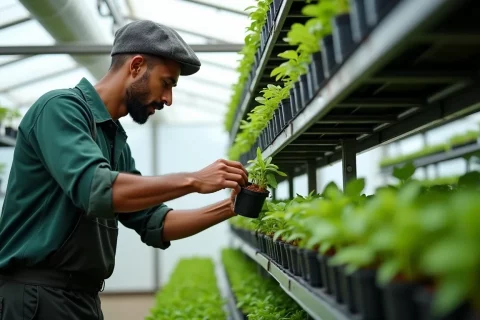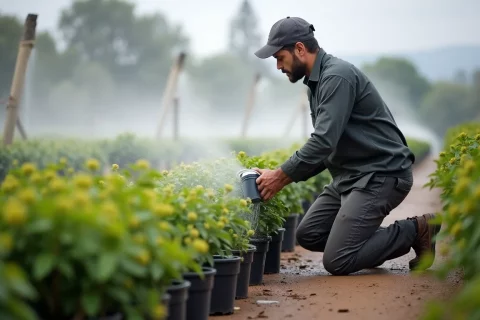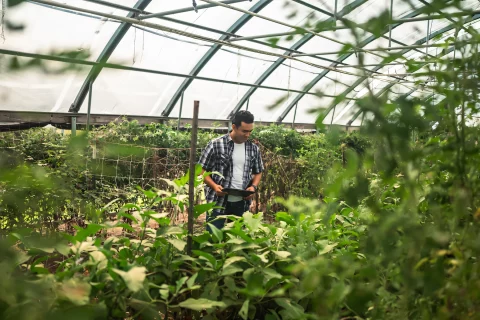

By December 2025, hemp growers will not be the only people with skin in the game. The real winners and losers will be decided earlier, in the propagation tunnels and testing labs, where the difference between a compliant crop and a legal headache is measured long before a plant reaches open field.
South Africa’s amended Plant Improvement Act raises the permitted THC ceiling for industrial or agricultural Cannabis sativa from 0.2% to 2% in the leaves and flowering heads. This does not wipe the rulebook clean, but it changes the kind of genetics that can move through the hemp pipeline legally. This opens the door for a new class of specialist suppliers who sell certainty, not just plant material.
The law has moved the goalposts
The old 0.2% ceiling was a brutal filter. It kept a lot of useful genetics out of the legal hemp conversation, including many lines that were never destined to get anyone high but still ran too close to the line for comfort. Under the new framework, plants with a THC profile that would once have been pushed aside can now sit inside the agricultural hemp category, provided they stay within the broader compliance rules that still apply.
This is a real commercial shift. A breeder working with a CBD-heavy line that naturally lands around 0.7% or 1.2% THC no longer has to treat the plant like a regulatory nuisance. It can now be a candidate. For a market that has spent years pretending genetics are a side issue, this is a rude correction.
The law is also moving closer to the reality of what a hemp industry actually needs. Farmers do not need vague reassurance and a seed packet with a cheerful label. They need material that behaves the same way every time, in the same climate, under the same stress, with the same cannabinoid profile when the tester comes around.
The new business is upstream
The interesting money is in the hands that supply the field.
Breeders are first in line. The higher THC threshold gives them room to work with a broader gene pool, including plants that were previously too close to the old limit but still valuable for fibre, seed, CBD, CBG, or other cannabinoid production. This means more room for locally adapted cultivars too, which is where the real work begins. A hemp line that behaves in a controlled environment in Europe is not automatically suited to a winter-rainfall Western Cape site or a summer-rainfall Highveld block with heat, wind, and a farmer who wants predictability from the first planting.
Seed producers are the next obvious beneficiaries. If the market grows up properly, growers will start asking sharper questions about germination, uniformity, sex expression, and paper trail. A bag of seed that merely looks tidy will not cut it. The market will want certified lots, stable performance, and enough genetic consistency to keep a farm from drifting into the danger zone halfway through the season.
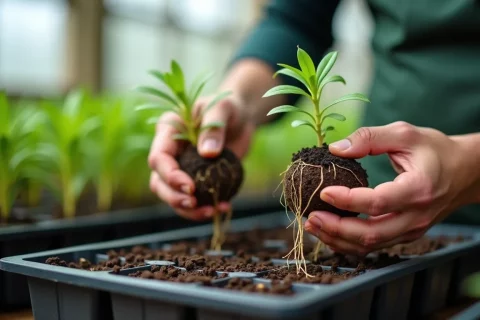
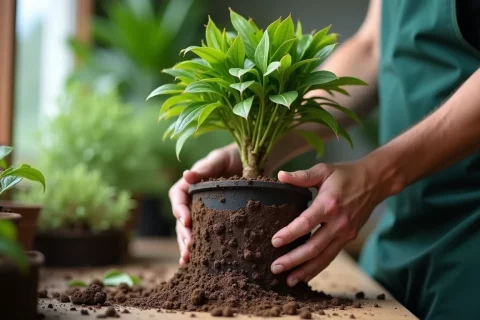
Clone suppliers and tissue culture labs sit in an even stronger position. Clones remove a lot of the guesswork that comes with seed. A rooted cutting from a verified mother plant gives the grower a known start, not a lottery ticket. Tissue culture pushes that further by making it possible to multiply clean, true-to-type plantlets at scale. For a crop where variation can turn into legal trouble, this is not a luxury. It is the product.
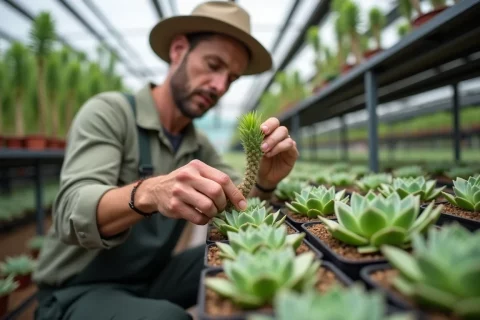
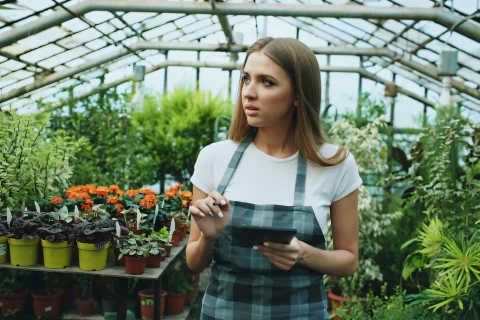
Controlled-environment propagators also have a role, especially where year-round supply matters. Greenhouse and indoor facilities can turn out uniform young plants on schedule, which gives farmers and processors a more reliable supply chain than the usual scramble for seasonal starts.
Compliance is now a propagation problem
The sharpest risk in hemp is not always in the field. It is in the genetics.
A crop can look healthy, grow fast, and still “go hot” if the plants carry the wrong profile or if stress pushes cannabinoid levels upward at the wrong time. Heat, drought, nutrient problems, UV exposure, and delayed harvesting can all contribute to trouble. A farmer can do a decent job and still end up with material that crosses the legal line. Genetic certainty is becoming the real commodity.
Uncertified seed is a gamble because every plant from the same batch does not behave identically. This is old news to breeders and propagation people, but it is still news to anyone who thinks hemp is just another field crop with a modern label. If the starting material is loose, the final crop can wander. If the crop wanders past the threshold, the farmer is the one explaining the mess.
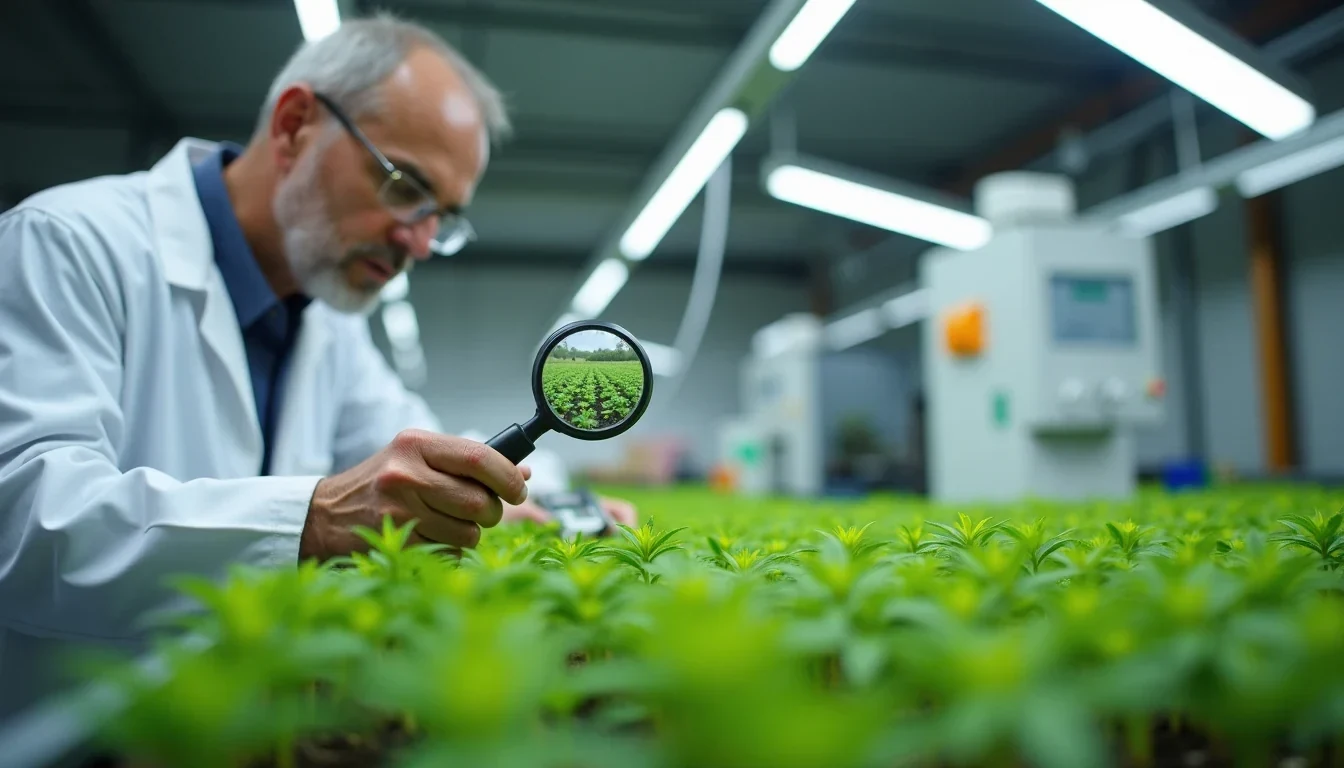
Testing laboratories move from supporting act to gatekeeper. Accredited labs will not just be checking harvested flower. They will be asked to verify parent stock, inspect propagating material, and issue Certificates of Analysis that show what the genetics are likely to do before the crop is planted at scale. In a serious hemp chain, a COA is not paperwork for a file. It is part of the product.
South African genetics will have to earn their keep
The higher threshold changes the breeding brief. It is no longer enough to stay barely alive under a rigid old ceiling. Genetics now have room to be selected for usefulness as well as compliance.
This should push more local breeding. South African lines adapted to local rainfall patterns, local pests, and local production styles are going to beat imported romanticism almost every time. A cultivar that can handle Western Cape winter conditions without sulking, or one that can take Highveld pressure without drifting, is more useful than a fashionable name with no field record here.
It also changes the intellectual property story. Once breeders begin producing stable, compliant cultivars that work in local conditions, plant breeders’ rights become part of the commercial conversation. A decent hemp line is no longer just a plant. It is an asset with value, traceability, and a business model attached to it.
People miss this part when they talk about hemp as if it begins and ends with a farmer’s hectare count. The valuable work starts much earlier, in parent stock selection, trial blocks, tissue culture rooms, and analytical reports.
The market will reward paper trails
The new hemp regime does not make compliance casual. It makes compliance saleable.
Suppliers who can prove what they are selling will have an edge. This means documented lineage, stable cannabinoid profiles, verified mother stock, and testing that is current rather than decorative. Farmers buying into hemp at scale will increasingly want to know not just what variety they are planting, but who bred it, where it was multiplied, and what the last lab result said.
This is a very different business from the old scattershot approach to agricultural seed. It favors companies that can handle both plant biology and record keeping, which is why the specialist propagation sector is likely to grow faster than the actual hectares planted in the first rush.
There is also a simple commercial reason for the shift. A compliant crop that stays compliant is profitable. A crop that gets flagged, sampled, and destroyed is expensive in the most boring way possible. It wastes land, labour, irrigation, time, and hope. Nobody prints that on the brochure, but it is the real cost of sloppy genetics.
What growers should be asking this week
If a nursery, breeder, or propagator wants to sell into the hemp chain after December 2025, the questions are no longer polite.
Ask what the THC profile of the parent stock looks like. Ask whether the material is seed or clone, and why. Ask who tested it, when, and under what conditions. Ask whether the line is stable across repeated propagation. Ask what happens if the crop starts to drift. Ask whether the supplier can show a traceable path from mother plant to finished propagule.
The businesses that can answer those questions cleanly will shape the next phase of hemp in the country. The ones that cannot will keep selling hope in a packet, which is a harder pitch once the legal threshold becomes a commercial one.
For nurseries, breeders, clone houses, and labs, this is the opening. The hemp crop itself may be planted in a field, but the market is being built in the propagation shed.