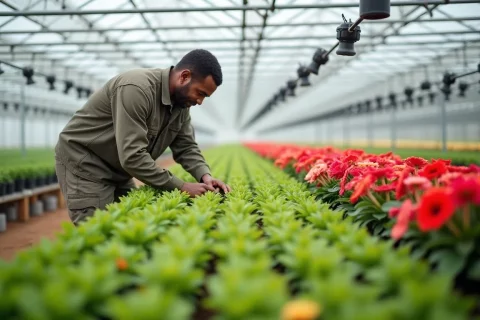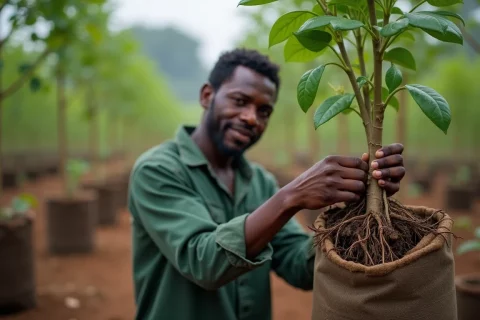

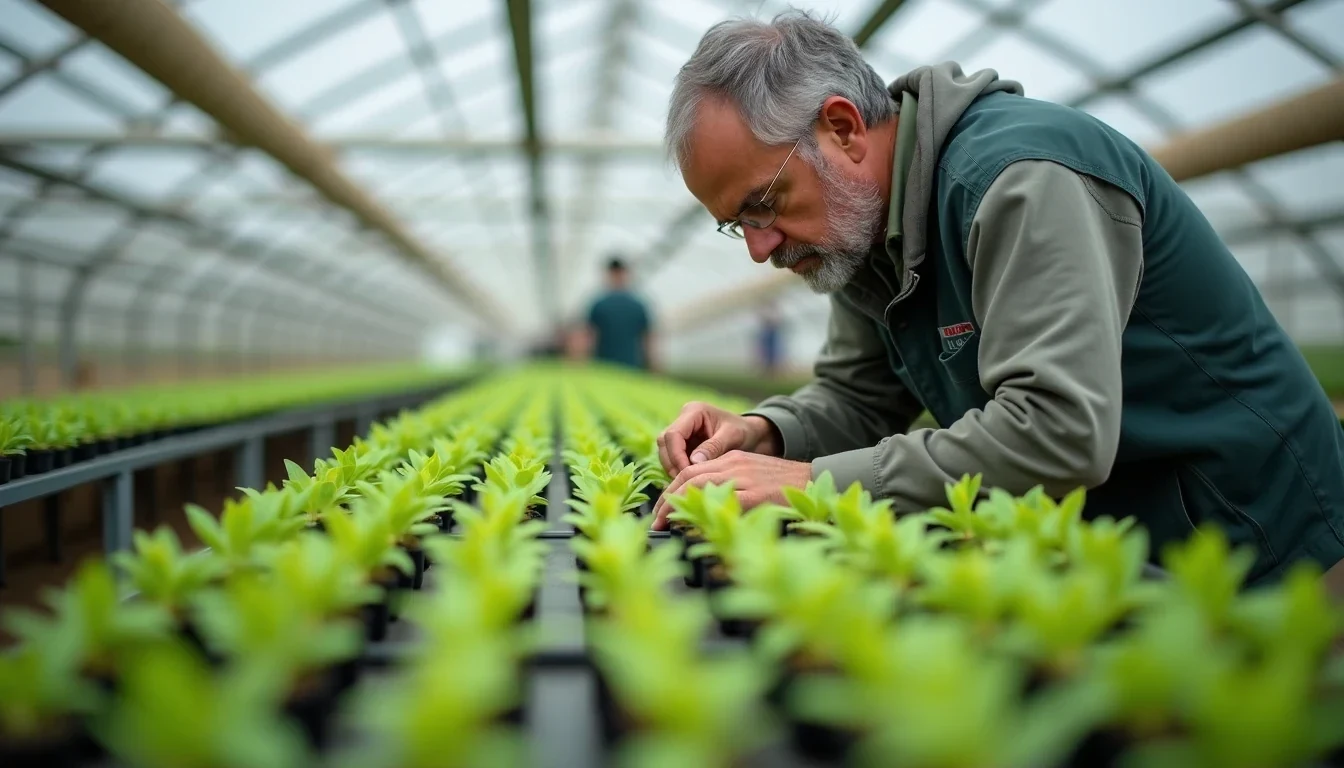
A promising plant in a breeder’s block can look like money with leaves on it, but the gap between that moment and a proper place on a nursery bench is where most of the hard work lives. In South African horticulture, the selection is only the opening act. The real test is whether anyone can turn a good plant into a repeatable product, protect it, name it well, and persuade enough buyers to risk space, labour, and cash on something that has not yet earned trust.
The trade loves to talk about discovery. It is far less romantic about multiplication schedules, disease clean stock, paperwork, and the awkward sales meetings where a nursery buyer asks why an unproven cultivar deserves the same bench space as a dependable old seller. That is the five-year gauntlet, and a lot of strong genetics quietly die there.
The plant is found, the work only starts
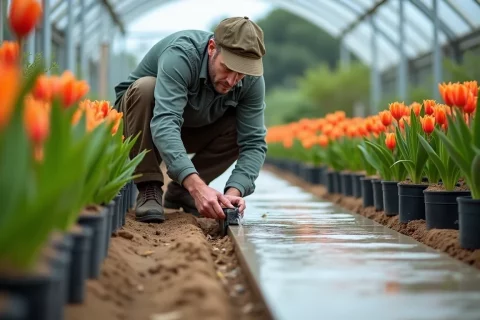
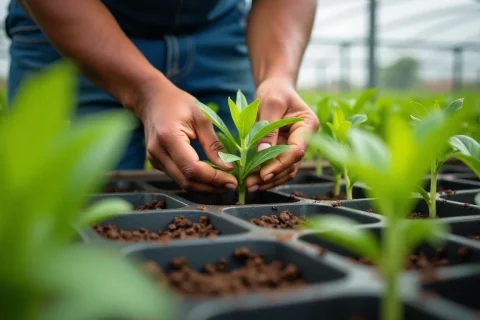
When a breeder spots something useful, the first job is not publicity. It is to make enough of it to see whether the thing holds together outside the original plant row. A single selection might be pushed out through cuttings, tissue culture, or grafting until there are 50 to 100 plants to work with. This modest step separates a real cultivar from a lucky oddity.
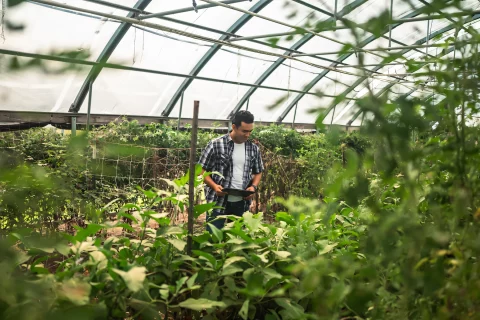
From there, the plant has to travel. A selection that looks brilliant in one valley can sulk in another. Trials need to run across different South African conditions, often across three to five zones, so the plant can be judged in places like the Western Cape winter rainfall belt, humid KwaZulu-Natal, and Gauteng’s summer rainfall conditions. A breeder who only tests at home is mostly proving that their home suits the plant.
The best selections are then watched for more than looks. Flowering span, flower count, heat tolerance, drought response, growth habit, and general garden performance all have to hold up. For a market that still has to sell plants to people who water them badly and forget to mulch, this is the whole point.
The paperwork sits beside the bench
A cultivar becomes a product only if it behaves nicely in a trial block and also clears the legal and descriptive side of the business. Distinctness, uniformity, and stability are the trio that sits under Plant Breeders’ Rights, and they are not a quick box-tick. The plant needs to be observed over two to three growing seasons, described in detail, and shown to be different from what already exists, consistent in its traits, and stable from one generation to the next.
In practice, this means a breeder or commercial partner is already building a file while the plant is still being tested. The national Plant Breeders’ Rights office, housed in the Department of Agriculture, Land Reform and Rural Development, is where that application lives. If the cultivar is going to carry a trade name, that side of the identity can go through the Companies and Intellectual Property Commission as well.
ARC breeding programmes make the split plain. They treat cultivar development and commercialisation as separate jobs. Scientific success does not automatically produce something a grower can order on a Tuesday morning. A good selection can sit in the scientific win column for a long time before it becomes a sellable line item.
Someone has to pay for the middle
The middle of the process is expensive and unglamorous. Early breeding and first trials often come from public money, research budgets, or grants, with the Agricultural Research Council and universities doing a lot of the patient first work. ARC-Roodeplaat is one of the names that comes up in ornamentals, while ARC-Infruitec-Nietvoorbij and Stellenbosch University show how the public and academic side keeps the pipeline moving in other crops too.
Once the selection starts looking commercially interesting, private money tends to enter the picture. Larger nurseries, breeding firms, or plant marketing companies step in to fund more serious trials in return for a shot at licensing rights. The plant is now less a curiosity and more an asset under negotiation.
Foundation material is another gatekeeper. Someone has to produce the clean, initial stock that everything else will be copied from. That usually sits with tissue culture labs or with mother stock nurseries that keep elite stock under control. For bananas, Du Roi Laboratories is a familiar name. In ornamentals, the machinery may be less visible, but the function is the same. Without clean starter material, there is no reliable supply later.
Then comes the bill nobody likes discussing out loud. DUS work, trial costs, application fees, propagation setup, and first marketing can push the spend above R500,000 before the cultivar has earned meaningful income. That is not a typo. Many promising plants stay trapped in the handoff between science and retail for this reason.
Volume is the enemy of enthusiasm
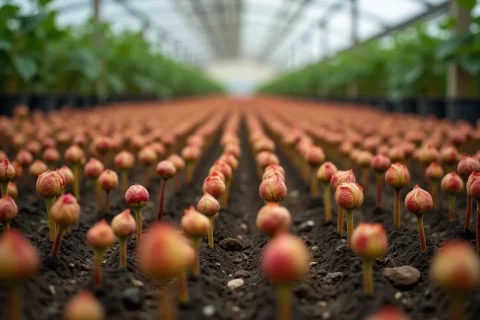
A plant that wins admiration in a trial row still has to become a commodity. That is where the five-year period gets nasty. Moving from a few hundred trial plants to hundreds of thousands, or more, means infrastructure, labour, scheduling, and a propagation chain that does not fall over the first time demand rises.
The move can take two to three years on its own. People outside the trade underestimate this part. A good breeder produces a good plant and creates the conditions for that plant to exist in volume, on time, with enough consistency that a landscaper, garden centre, or chain store can trust it.
This is also where regional logistics bite. South Africa is not a neat, compact market. A cultivar that performs in one province still has to be moved, tested, and supplied into very different climates, and the chain from foundation stock to finished plant has to survive the trip. A plant that exists only in one collection is not yet a commercial victory. It is a very promising bottleneck.
The buyer has to want the trouble
Retail bench space is expensive in a way breeders feel immediately and consumers never see. A nursery buyer gives up room for a new cultivar only when the story is strong enough to justify the risk. That means trial results, a real sense of consumer demand, and a commercial pitch that makes the plant look like a better bet than a familiar seller.
That pitch is built out of branding as much as biology. A cultivar needs a name people can remember, labels that do the selling, and point-of-sale material that does not look as if it was assembled in a hurry after lunch. A useful plant with a forgettable identity can still lose. The garden centre floor is full of plants that were probably good ideas in a nursery office and terrible ideas at retail level.
To win space, marketers and breeders have to talk directly to buyers at places like Stodels, Builders Warehouse Garden Centres, and Lifestyle Home Garden, plus the independents who can move opinion faster than the chains do. They need to show proof, not optimism. They may also use magazines such as The Gardener, Garden and Home SA, and Veld and Flora, along with social media, to build the kind of consumer pull that makes a buyer nervous in a useful way.
The real value is in the handoff
South Africa has the raw material for this business. The genetic resources are strong, the plant people are sharp, and the breeding talent is real. But those assets only become commercial value when the selection moves cleanly from one researcher’s collection into many gardens, through a chain that includes propagation, trial funding, rights management, brand building, and enough nursery space to matter.
The five-year stretch after a new cultivar is identified is unforgiving because it is not a waiting period. It is the business end of the process. The plant has to earn trust, not just admiration.
What to do this weekend
If you run a nursery or grow for trade, walk your benches and ask which plants are taking up space because they are familiar rather than profitable.
If you breed or propagate, look hard at your foundation stock and ask whether you can scale it without losing cleanliness or uniformity.
If you sell plants, check whether your new introductions have anything stronger than a nice label behind them. Trial data, a clear market angle, and a supply plan are the difference between a novelty and a cultivar that stays on the bench.