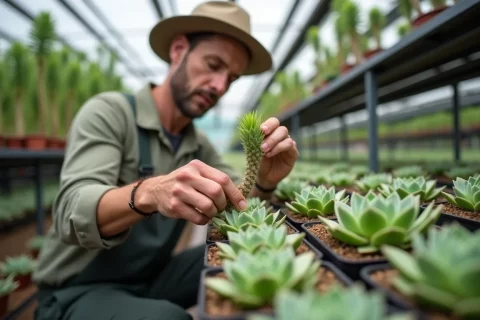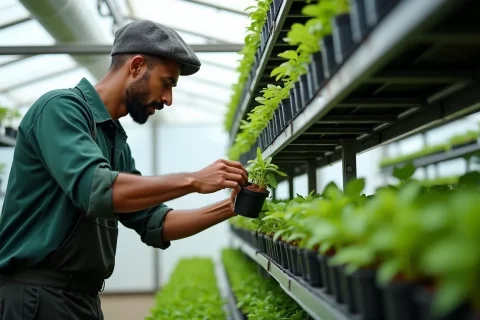

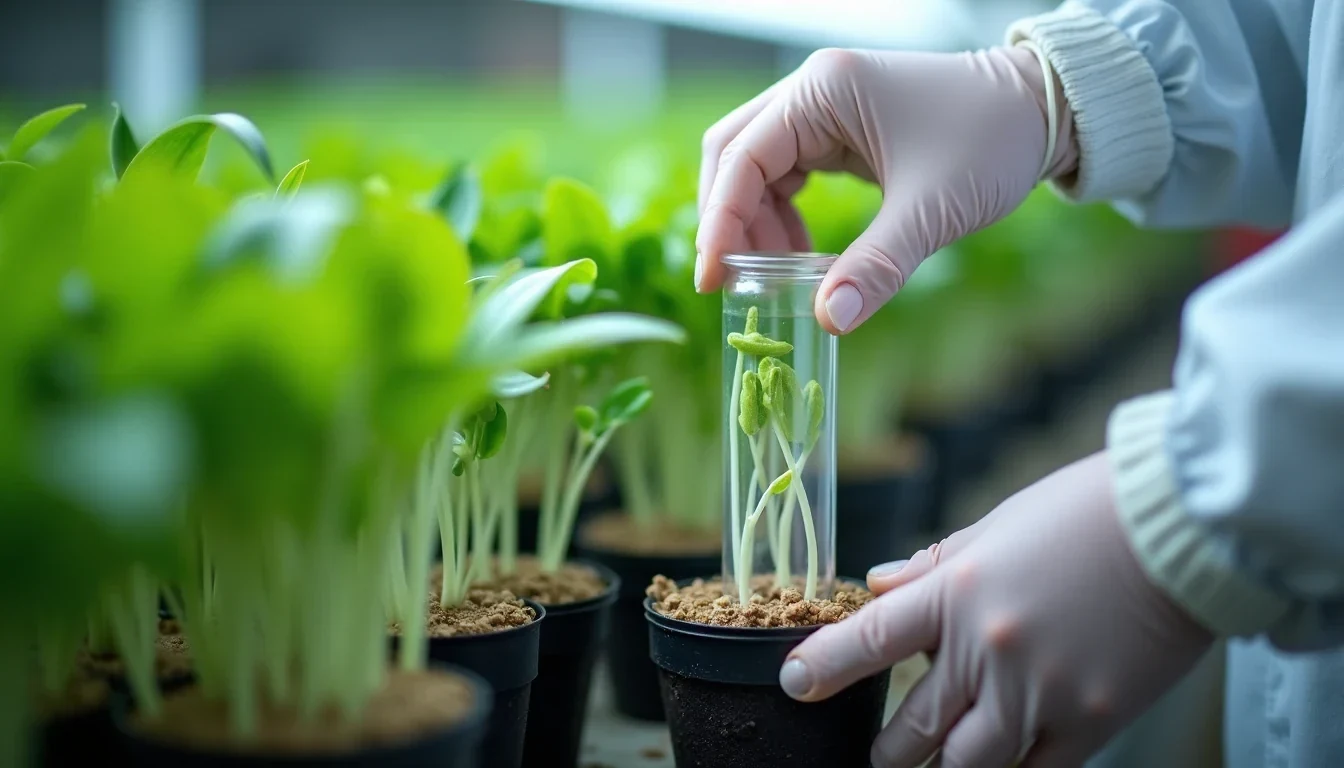
A single mist bench was never meant to hold ten thousand lives at once. Yet that is precisely what arrives when the tissue culture lab dispatches its latest batch: translucent plantlets still carrying the ghost of agar on their roots, stomata that have never learned to close, leaves without the waxy armour of a functional cuticle. The multiplication problem is solved, but the survival problem has just begun.
For South African nurseries, the shift from conventional propagation to lab-grown stock represents a fundamental restructuring of what a nursery actually does, not just a technological upgrade. The old bottleneck was producing enough material; the new one is keeping that material alive through the first three weeks outside the flask.
What arrives from the lab
Tissue-cultured plantlets emerge physiologically unfinished. Their development has proceeded inside sealed vessels under artificial light, saturated humidity, and a sugar-rich medium that does most of the metabolic work. They photosynthesise poorly, if at all. Their root systems are adapted to gel, not soil. They have encountered no fungi, no bacteria, no ultraviolet radiation, no desiccating wind.
The acclimatisation protocol follows a rigid sequence. Relative humidity must begin above 85 percent and descend gradually over two to four weeks toward ambient levels. Light exposure starts at heavy shade, perhaps 70 to 80 percent, and intensifies in measured stages to prevent photoinhibition. Temperature needs holding between 20 and 28 degrees Celsius. This sounds modest until you consider a Highveld afternoon thunderstorm dropping the mercury twelve degrees in forty minutes, or a Cape winter rainfall nursery where clear days still carry killing ultraviolet.
Potting demands sterile, lightweight substrate, typically peat-perlite or coco coir blends, handled with techniques closer to laboratory practice than to conventional nursery work. Fertiliser begins at quarter-strength and builds slowly. Every irrigation decision carries mortality consequences: these roots drown easily, yet the undeveloped cuticle loses water almost as fast as a cut flower.
The infrastructure gap
A nursery built for cuttings operates on different physics. Conventional propagation spaces are designed for plants that already know how to survive. Tissue culture plantlets require what amounts to a hospital intensive care unit at agricultural scale.
Purpose-built mist houses or fogging tunnels represent the minimum viable infrastructure. These need automated environmental controls because manual management of humidity, temperature, and light across thousands of individual plants fails within hours. Raised benches become essential for air circulation and disease isolation. Water sterilisation, footbaths, tool sanitation protocols, and segregated workflows transform a production facility into something closer to a pharmaceutical clean room.
The capital requirement is substantial and front-loaded. A nursery adding tissue culture integration without this preparation faces documented mortality rates of 50 to 80 percent, with total losses possible. At R5 to R10 per plantlet for high-value material like Protea cultivars, a single failed batch of ten thousand units destroys R50,000 to R100,000 in purchased stock alone, before accounting for wasted labour, growing media, and the opportunity cost of delayed market entry.
Who has made it work
The successful integrators in South African horticulture tend to operate at scale or in sectors where conventional propagation has already failed them. Sappi and Mondi have run tissue culture programmes for improved Eucalyptus and Pinus clones for decades, with hardening facilities designed to absorb millions of plantlets annually for reforestation programmes. Citrus nurseries sourcing certified disease-free rootstock rely on lab-produced material as the foundation of their entire disease management strategy. The potato industry’s mini-tuber seed system would collapse without tissue culture as its starting point.
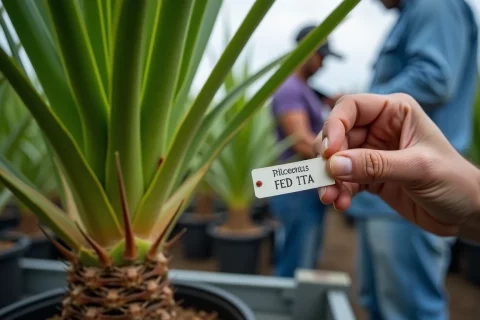
Ornamental growers working with Strelitzia cultivars, new Protea cynaroides selections like ‘Madiba’ or ‘Carnival’ series, and difficult Erica species have adopted the technology where conventional cutting propagation proves too slow or too genetically variable. These operations succeeded because they treated the acclimatisation phase as a core competency requiring dedicated investment, not as an afterthought to conventional production.
Where the handoff breaks down
Smaller and mid-sized nurseries face a predictable pattern of failure. The tissue culture lab delivers on schedule. The nursery has prepared a single mist bench, perhaps augmented with manual hose spraying. Staff trained in conventional propagation apply familiar watering and fertiliser regimes. Within seventy-two hours, the first plantlets show desiccation stress. Within two weeks, fungal pathogens exploit the compromised tissue. By week four, the surviving material is so stunted that restarting with conventional stock would have been faster and cheaper.
Communication failures between lab and nursery compound the physical problems. Labs operate on initiation and multiplication cycles planned months ahead. Nurseries accustomed to ordering cuttings seasonally may not grasp that a six-month lead time for tissue culture plantlets represents laboratory biology, not supplier bureaucracy. Delivery schedules that arrive during the nursery’s busiest conventional production period leave no staff available for the intensive care these plantlets demand.
Geography imposes additional constraints. A nursery in humid, sheltered KwaZulu-Natal faces different acclimatisation parameters than one in the dry, wind-scoured Karoo. The Cape’s winter rainfall pattern inverts irrigation logic compared to summer-rainfall regions. Generic protocols from the lab require local calibration that many nurseries never attempt.
The coordination imperative
Effective tissue culture integration demands supply chain planning foreign to most nursery operations. Orders typically run six to twelve months ahead, with production forecasts that allow the lab to schedule mother plant maintenance, multiplication cycles, and rooting stages. The nursery must prepare its acclimatisation infrastructure before the first plantlets ship, not after arrival.
Some labs now offer hardened plantlets at premium pricing, having absorbed part of the acclimatisation risk themselves. This partially transfers the bottleneck back to the laboratory but reduces nursery mortality dramatically. For operations without capital to build dedicated facilities, this intermediary stage may represent the only viable entry point into tissue culture sourcing.
The financial calculus
The reward side of the ledger is substantial for prepared nurseries. Disease-tested, genetically uniform stock commands premium pricing from commercial growers and landscapers who have learned to value predictability over lowest-unit-cost. Rapid scaling of slow or difficult varieties opens market positions unavailable to conventional propagators. Export markets and large retail supply contracts with stringent quality standards become accessible.
The risk is asymmetric and front-loaded. Infrastructure investment, staff retraining, and protocol development must precede any revenue from tissue culture-derived sales. A nursery that commits partially, treating lab-grown plantlets as a minor supplement to conventional production, typically harvests only the losses while forgoing the scale benefits that justify the technology.
The nurseries that will dominate South African horticulture in coming decades are not necessarily those with the best labs. They will be the ones that solved the problem of what happens when the flask opens.