
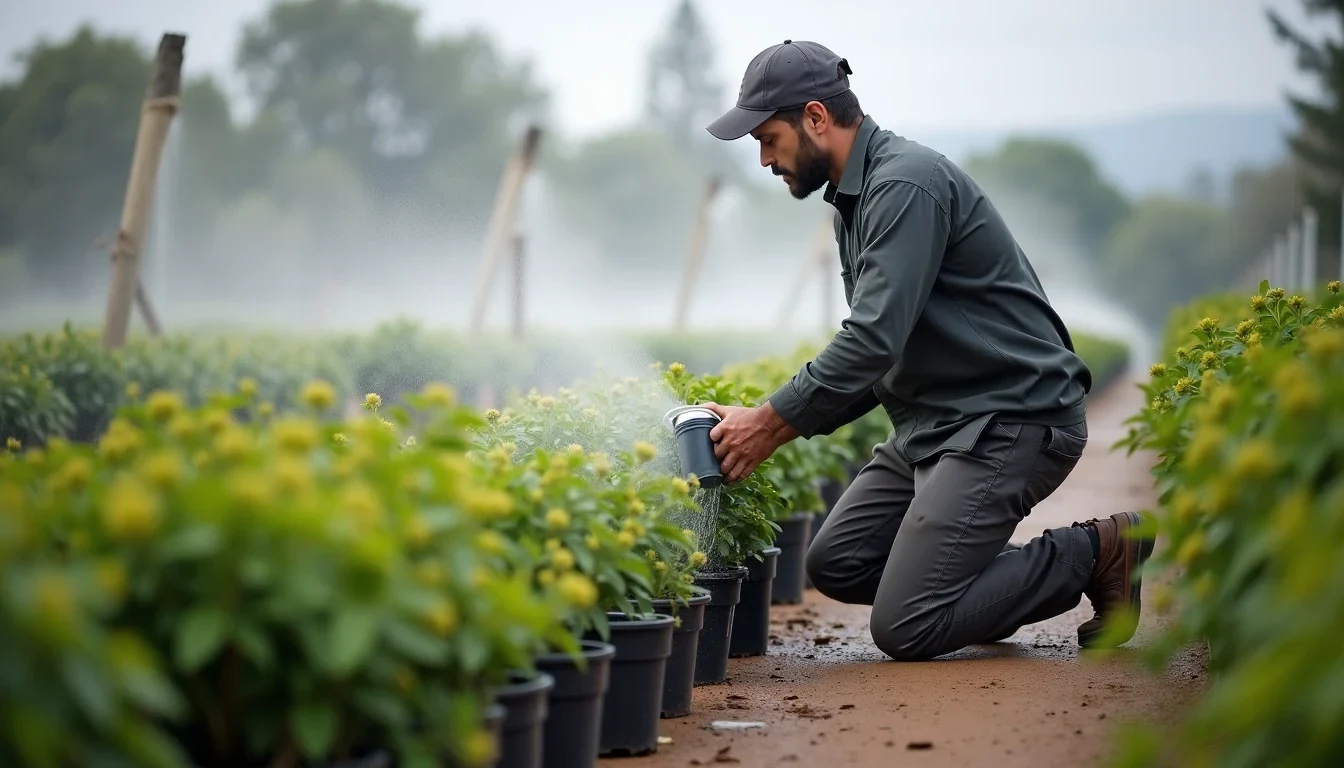
The R2.3 million controller at a Paarl nursery did exactly what the manual promised. Every morning at 04:47 it interrogated its TEROS 10 sensor, compared the reading against the grower’s set points, and issued precise commands to the valve manifold. The problem was that the water it released landed nowhere near where the sensor thought it did.
This is the specific cruelty of smart irrigation in container nurseries. The intelligence is real, but the failure is physical. The gap between them causes money and plants to disappear.
When the Edge Dries and the Centre Drowns
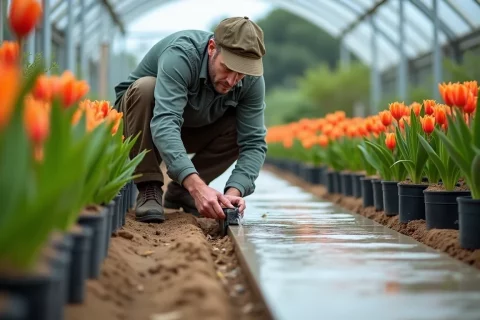
Walk any irrigation block at 10:00 on a February morning and you can feel the imbalance with your hands. The outer rows, hammered by berg wind and full sun, run warm and light. Shaded pots under dense Viburnum canopies stay cool and heavy. A single sensor placed in what looks like a representative middle position will read “adequate moisture” while three metres away a 2L Buddleja saligna is curling its leaves to conserve what little water remains in its substrate.
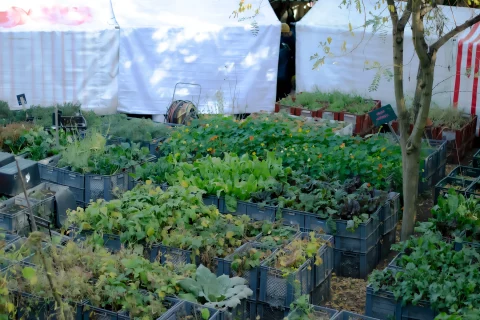
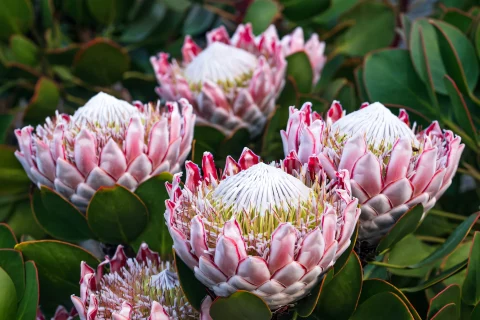
The Paarl nursery’s block was textbook. Impact sprinklers on a 50m by 20m zone, mixed stock of 2L and 5L pots, one sensor in a central 5L Protea cynaroides pot under partial shade from adjacent plants. The controller saw 28% volumetric water content and held off irrigation. The edge Buddleja pots, losing moisture at roughly 1.3 times the rate of the sheltered centre, dropped below permanent wilting point by mid-morning. By the time the sensor finally triggered, those edge plants had been stressed for six hours. The central Protea pots, meanwhile, received water they did not need; their bark-coir mix already held moisture the sensor could not distinguish from plant-available water.
Catch-can tests revealed the mechanical truth the controller could not see. Central areas collected 25-30% more water than edges. The system was not uniform, and it had never been uniform. The smart controller simply made the non-uniformity consistent, repeatable, and therefore more damaging.
The Calibration Nobody Wants to Do
Substrate moisture sensors do not measure water directly. Capacitance models like the TEROS 10 measure dielectric permittivity, the substrate’s ability to store electrical charge, which changes as water displaces air. TDR sensors send electromagnetic pulses down probe rods and clock the return. Both require translation: raw signal into volumetric water content, then VWC into something a plant can actually use.
Factory calibrations assume a standard soil or peat mix. South African container nurseries rarely use either. The Paarl operation ran a custom 70% pine bark, 30% coir blend with variable particle size depending on which supplier had stock that month. Without block-specific calibration, the sensor’s 28% reading might mean “saturated” in one batch of mix and “stressfully dry” in another. The grower had skipped this step because calibration means taking gravimetric samples, drying them in an oven, building a conversion curve, and repeating for every substrate change. It is two days of technician time that most nurseries bill as unnecessary until it becomes catastrophically necessary.
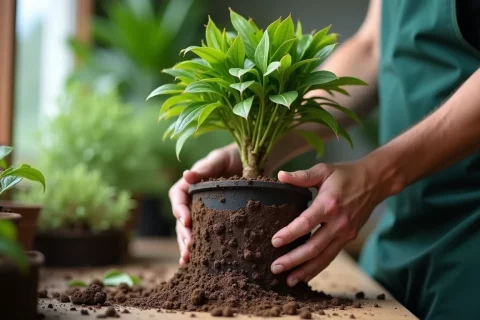
Placement within the pot matters as much as placement within the block. Roots do not occupy substrate evenly. A sensor at the surface reads evaporation. A sensor against the bottom drainage hole reads the last water to leave, not the first the plant misses. The active root zone in a 5L pot typically sits 5-10 cm above the base. The Paarl nursery’s sensor had been pushed in to 8 cm, which sounds correct until you learn the Protea root mass had colonised the upper third of the pot, leaving the sensor in a zone the roots had largely abandoned for richer territory above.
What the Data Looks Like When It Lies
The controller logged everything: daily VWC trends, irrigation events, cumulative water applied. The grower could pull a report showing precisely 847 litres delivered on Tuesday, precisely 912 on Wednesday, with millimetre-level precision in the scheduling. What the report could not show was that 30% of Tuesday’s water ran straight through over-saturated central pots, carrying nitrogen and potassium into the drainage sump, while edge pots received 40% less than the average figure suggested.
The measurable damage accumulated over one growing season. Around 20% of the Buddleja crop graded below saleable standard, chronic water stress producing stunted growth and premature leaf drop that no amount of later corrective watering could reverse. The stressed plants also carried heavier spider mite loads, requiring two additional acaricide applications at R4,200 each. In the central zone, roughly 10% of Protea cynaroides showed Phytophthora symptoms, root rot establishing in waterlogged substrate and spreading through shared drainage channels. The affected plants did not die immediately. They sat in the block, growing slowly, requiring extra months to reach saleable size, occupying bench space that should have turned twice in a season.
Water consumption ran 18% above the nursery’s historical average for the block. Fertiliser input rose 22% as leaching demanded replacement. The smart controller had optimised the execution of a strategy that was physically impossible for the system to fulfil.
The Fix That Costs Less Than the Problem
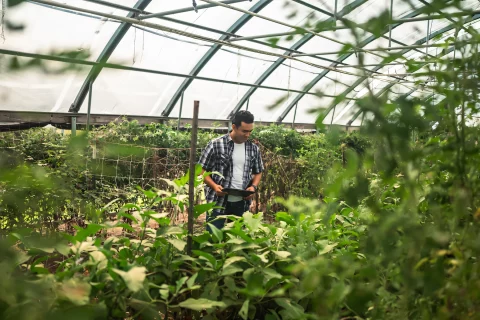
The Paarl nursery’s solution was not more technology. It was older technology, applied with more care. They pulled the single sensor, installed three per block: one in an edge pot, one central, one in a position they knew ran wet from sprinkler overlap. They ran catch-can audits monthly instead of assuming the sprinkler pattern held from installation. They recalibrated sensors for each substrate batch, accepting the two-day cost as standard operating procedure.
Most critically, they stopped letting any single sensor trigger irrigation alone. The controller now required two of three sensors to agree, or flagged the discrepancy for human review. Edge-dry conditions could no longer be overridden by a single sheltered reading. Central wet conditions could not suppress watering for the whole block.
The result was not perfect uniformity. Container nurseries will never achieve perfect uniformity. Pot size variation, canopy interception, wind exposure, and substrate heterogeneity make that a physical impossibility. The revised system achieved visible discrepancy, flagged and managed rather than automated into invisible damage.
What to Check This Weekend
If you are running sensor-based irrigation, pull your sensor and check its depth against your current root masses, not where roots were when you installed it. Move it to a pot you know dries fast, not one that looks average. Run a catch-can audit before Monday. The water you save will be your own.