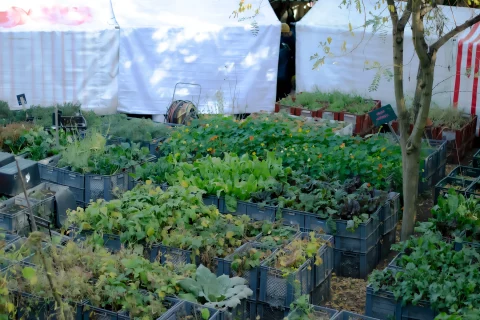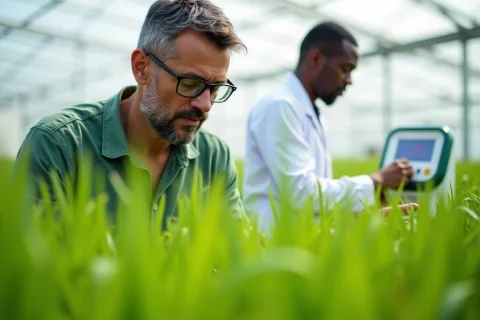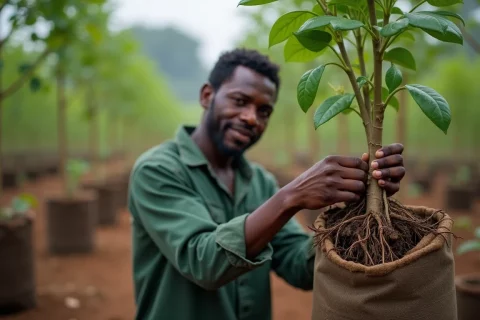

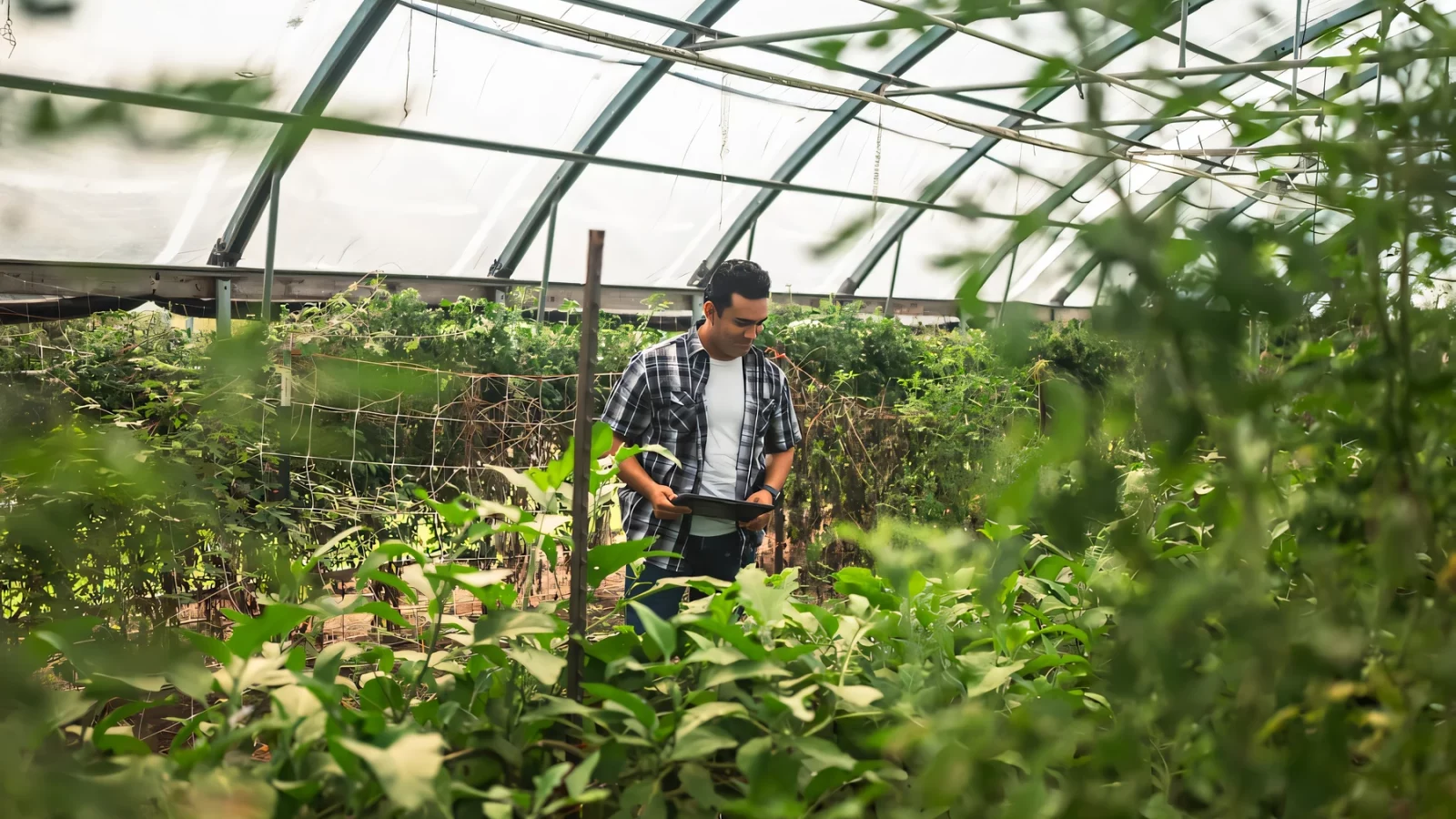
The first person to spot a new pest in South Africa is almost never wearing a government badge. More likely they are in gumboots, counting trays of incoming stock, noticing a leaf spot that sits wrong or a beetle that does not belong on a Protea stem. Commercial nurseries handle thousands of plants weekly, sourced from growers across the country and importers at OR Tambo and Durban Harbour. This volume creates something no official survey can replicate: daily, repeated, intimate contact with living plant material at the exact moment it falls ill.
This year’s International Day of Plant Health, marked in May 2026, put plant biosecurity for food security at the centre of national conversation. The framing was correct but incomplete. Food security depends on ornamental and nursery stock because pests do not respect crop categories. The Polyphagous Shot Hole Borer, first recorded here in 2017, has now attacked more than 130 tree species. It did not distinguish between avocado orchards and street plane trees. The beetle spread because early detections were scattered, disconnected, and too slow to reach the people who could coordinate a response. A nursery that had isolated the first suspicious wilting branch, documented it properly, and escalated fast could have narrowed the window of opportunity. That did not happen. It keeps not happening.
The escalation system that actually works
Most nurseries already have a quarantine area of sorts, even if it is just the far corner where problem stock goes to recover or die. A proper escalation system demands more discipline. Every new arrival, whether from a Joburg propagator or an import shipment, spends seven to fourteen days in a physically separated bay with restricted access and dedicated tools. Staff rotate through visual inspection rounds daily, looking not only for obvious damage but for the subtle wrongness that precedes it: a slight chlorosis on a normally tough leaf, a stem lesion in an unusual location, insect frass where no insect has been seen before.
When something registers as off, the response is four steps and no shortcuts. First, isolate the plant and any immediate neighbours of the same species. Second, photograph symptoms in detail, including scale references. Third, record origin, supplier, batch number, date of receipt, and every movement the plant has made through the nursery. Fourth, contact a qualified diagnostic service before reaching for any chemical. The spray-first habit is deeply ingrained in the trade, partly because it feels like action and partly because it protects saleable stock from immediate rejection. It also destroys the evidence that could identify a novel threat and trigger a coordinated national response. A suspicious leaf discarded behind a propagation house can seed its own distribution network. The same leaf, properly documented and reported, can protect an entire industry.
Where official surveillance ends and nurseries begin
The Department of Agriculture, Land Reform and Rural Development, through its Directorate Plant Health, manages South Africa’s formal plant biosecurity framework. Its inspectors work ports of entry, issue phytosanitary certificates, and run targeted national surveys for known high-risk pests like fruit flies and citrus black spot. The system is competent at what it is designed to do. Its design, however, has structural blind spots that nurseries are positioned to fill.
Official surveillance is strongest at declared import points and weakest in the vast internal movement of plant material between local growers, markets, and retail channels. It is reactive by necessity, targeting known threats rather than scanning for the genuinely novel. It cannot possibly cover the diversity of ornamental, indigenous, and minor food crops that pass through nurseries daily. A national survey might sample citrus blocks in Limpopo. It will not catch the first appearance of an unknown pathogen on a niche succulent cultivar moving from a KwaZulu-Natal specialist to a Cape Town retailer. That gap is not a failure of government capacity. It is a structural reality that nurseries can either exploit through negligence or close through vigilance.
Who to call and what to expect
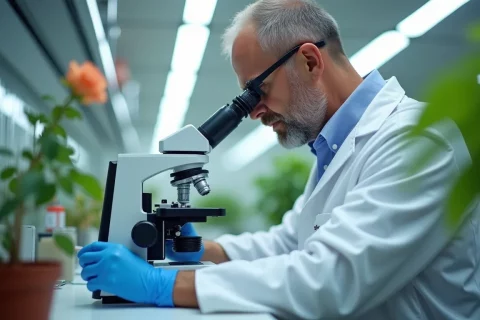
The escalation chain has clear endpoints. For suspected new or quarantine pests, DALRRD Directorate Plant Health remains the official reporting authority. They assess risk, trigger national response protocols, and manage regulatory consequences. For scientific identification, the Agricultural Research Council’s Plant Protection Research Institute operates dedicated diagnostic laboratories with entomologists and pathologists who can work from photographs, samples, or both. University departments at Stellenbosch, Pretoria, and KwaZulu-Natal add capacity for complex or research-oriented cases. The South African Nursery Association can guide members through correct procedures and broker connections to appropriate expertise.
Private diagnostic laboratories exist and serve a commercial purpose, but suspected novel or quarantine organisms should always route through official channels first. This distinction means reporting triggers not just identification but national action. A nursery that sends a sample to a private lab and receives a pathogen name without official notification has learned something and changed nothing.
The cost of silence
Undetected pests convert to economic damage through multiple channels. Export markets close when trading partners impose phytosanitary restrictions, as they have for South African citrus and avocado shipments in recent years. Production costs spiral as growers shift to intensive chemical programmes, often against pests that have already established beyond practical eradication. Entire batches of nursery stock become unsaleable, not through any fault of the grower but because the industry reputation for biosecurity has been damaged by someone else’s silence.
The ecological bill runs parallel. Invasive pests devastate indigenous flora, including fynbos species and forest trees that no chemical programme can fully protect. Broad-spectrum spraying to control outbreaks harms pollinators, beneficial insects, and water quality. The PSHB has already demonstrated how a single introduced beetle can reshape both urban tree canopies and native ecosystems across multiple provinces.
What would make nurseries step up
Voluntary reporting will remain patchy until the trade sees clear benefit in participation. Several mechanisms could shift the calculation. Subsidised or free diagnostic services through ARC would remove a significant cost barrier. A national biosecurity certification programme, with recognised status for compliant nurseries, would create market differentiation. Early access to pest alerts and management research would reward participation with practical competitive advantage.
A streamlined digital reporting platform, mobile-accessible and confidential, would reduce the friction of escalation. Legal protections are also important: nurseries need assurance that reporting a new pest brings containment support rather than immediate regulatory punishment or commercial isolation. Recognition programmes, through SANA or industry awards, would formalise the status of frontline nurseries as national assets rather than merely regulated businesses.
The most powerful incentive, though, may be the simplest. Nurseries that build rigorous escalation systems into their daily operations will lose less stock to undetected infection, maintain cleaner export credentials, and earn the trust of buyers who increasingly ask about provenance and biosecurity practice. The nursery that spots early and reports fast protects not only the industry but its own margin.
The grower in gumboots, counting trays, noticing the wrong beetle: that person is already on the payroll. The only question is whether the nursery has given them permission to act on what they see.