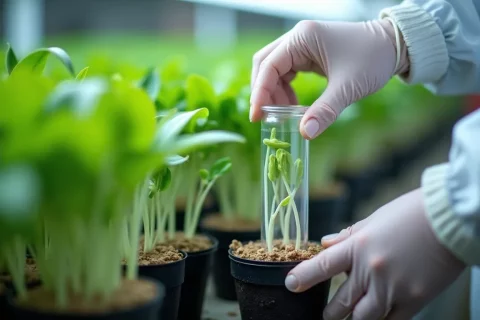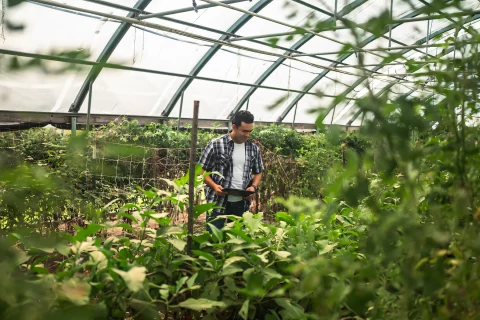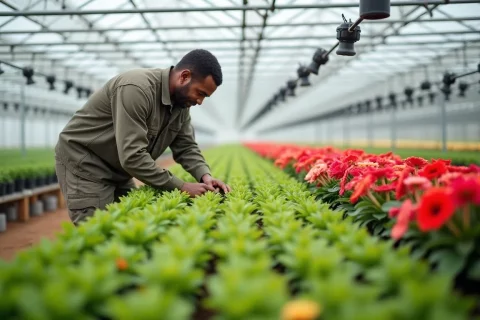

SANBI’s recent refurbishment of greenhouse and shade-net infrastructure in Pretoria carries a message most growers will not want to hear: the netting stretched above your crop is already making decisions about your yield, your water bill, and your market quality, and you may not have bothered to measure whether those decisions are any good.
The South African National Biodiversity Institute did not put out tenders for new poles and fabric simply because the old ones wore thin. The procurement signals something sharper. Shade-net structures have become climate-control equipment, similar to how a thermostat is more than a box on the wall. They filter radiation quality, not just quantity. They shift the red-to-far-red ratio reaching the leaves. They alter leaf temperature independently of air temperature, change vapor pressure deficit, reduce wind desiccation, and buffer hail. A grower who specifies netting by habit, reaching for the same percentage and color because it worked for the previous crop, is gambling with every season that follows.
The habit that costs
Walk through any nursery district from Brits to Polokwane and you will find the same pattern. Black netting, 40 or 50 percent, installed because that is what the neighbor uses or what the supplier had in stock. Growers assume shade is shade, and the number on the roll corresponds neatly to the number of plants that survive summer.
It does not work that way. A black 40 percent net and a pearl 40 percent net with identical PAR reduction can produce leaf temperature differences of several degrees. The pearl net reflects more solar radiation. Under it, lettuce suffers less tip burn, roses experience less heat stress, and irrigation demand drops. A red net, meanwhile, shifts the light spectrum to increase the red-to-far-red ratio, which can elongate rose stems and accelerate flowering. A blue net produces more compact growth, thicker leaves, and better pigmentation in certain bedding plants. The same percentage yields different biology.
The wrong choice does not announce itself immediately. Plants do not die in neat rows. They grow more slowly, flower less predictably, develop color that misses the market specification, or require more water than the irrigation schedule allows. By the time these patterns become visible, the structure is built, the capital is spent, and the grower is locked in for years.
What SANBI’s upgrade actually demonstrates
The Pretoria refurbishment is not a technical footnote. It shows an institution with serious plant-science capacity acknowledging that controlled production facilities require precise environmental management. SANBI works with indigenous species where germination and establishment protocols are often still being refined. The radiation, temperature, and humidity beneath the net directly affect whether a threatened species propagates successfully or whether years of collection and breeding produce nothing viable.
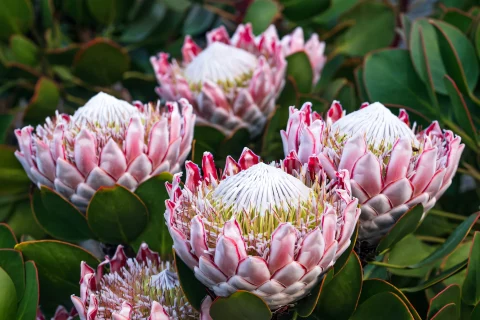
For commercial growers, the principle is identical. A Protea under excessive shade delays flowering and reduces bloom size. An orchid under insufficient shade scorches. Indigenous Ericas in propagation need moderate shade to prevent desiccation and encourage root development. The specific color of that shade may influence branching patterns, which determine whether the plant fills a nursery bench or gets discarded as leggy stock.
The structure is built once. The crop beneath it changes, or the market specification tightens, or water costs rise, or a new pest arrives. The netting does not adapt. The grower must live with its physics.
Measuring what you are actually growing in
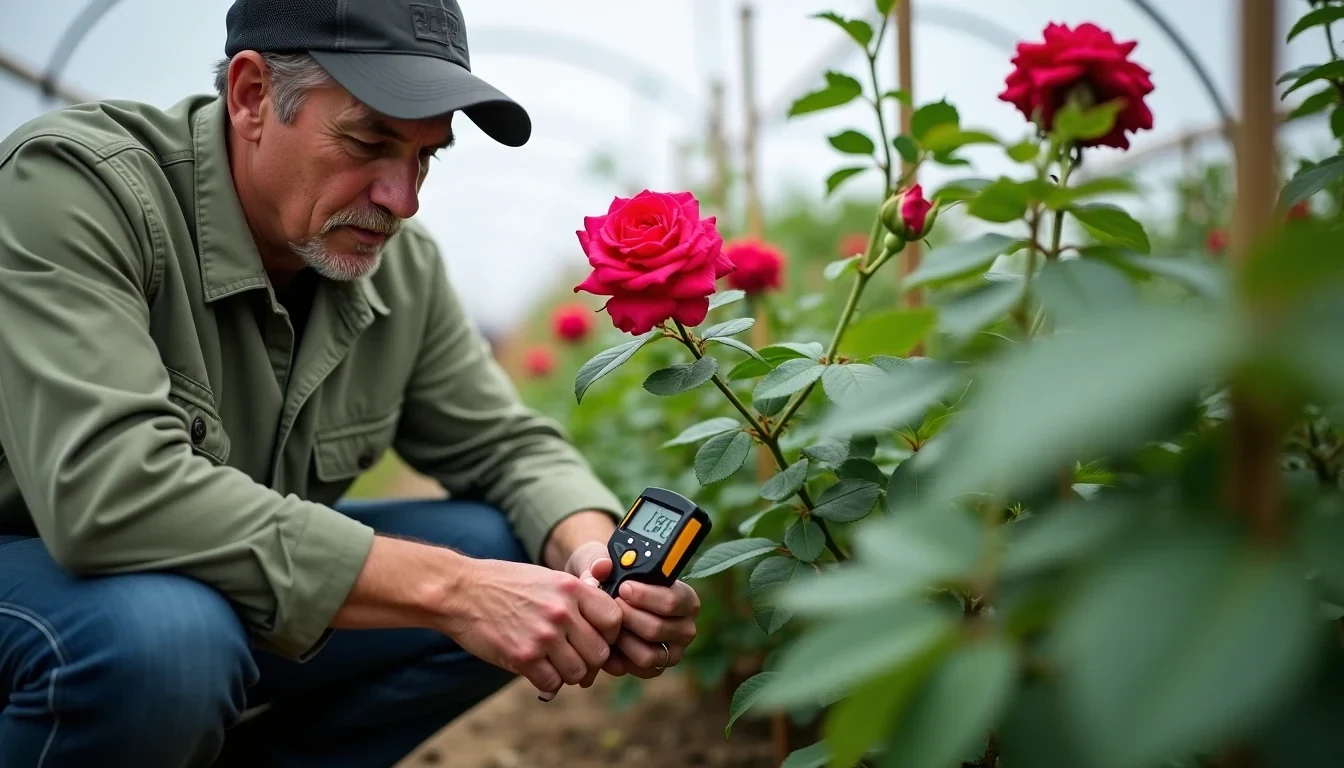
Moving beyond habitual shade choices requires data, not intuition. The tools are not exotic. A PAR meter measures photosynthetically active radiation at plant level, at different times of day, under different weather conditions. An infrared thermometer reads leaf temperature directly, which is the number that matters for heat stress and photosynthetic efficiency, not the air temperature on a wall sensor. A digital thermometer and hygrometer allow calculation of vapor pressure deficit, the drying power of the air that drives transpiration and determines how much water the plant actually needs. An anemometer checks whether the wind reduction is sufficient to prevent physical damage or excessive desiccation.
Data loggers make this continuous rather than episodic. They reveal what happens at 2 pm in February, not just what the grower noticed during a morning walk-through. They allow comparison between zones under different netting types, measured against growth rates, irrigation records, and market grading.
Soil moisture sensors complete the picture. Reduced evaporation and transpiration under shade alter watering requirements significantly. A grower who does not measure this either underwaters, producing stress and uneven growth, or overwaters, wasting water and encouraging root disease.
The real price of getting it wrong
The economics are brutal because they are deferred. A shade structure represents capital locked in for five to ten years for the fabric, far longer for the frame. An ill-informed choice does not fail dramatically; it bleeds.
Yield drops incrementally. Quality slips just enough to downgrade product at the market gate. Water costs creep upward. Pest pressure shifts as humidity becomes wrong for the crop but right for something that eats it. Fertilizer efficiency falls because stressed roots do not take up nutrients optimally. Each factor is small, but together they compound.
The opportunity cost is worse. The capital tied in the wrong structure cannot be redeployed. The grower cannot pivot to a higher-value crop that would have thrived under different netting. The competitor who measured, who chose precisely, produces more marketable units from the same inputs.
SANBI’s Pretoria upgrade is a reminder that shade-net selection is a production strategy, not a construction detail. The fabric above your crop is already managing radiation, temperature, humidity, and wind. The only question is whether it is managing them for you or against you, and whether you have bothered to find out.