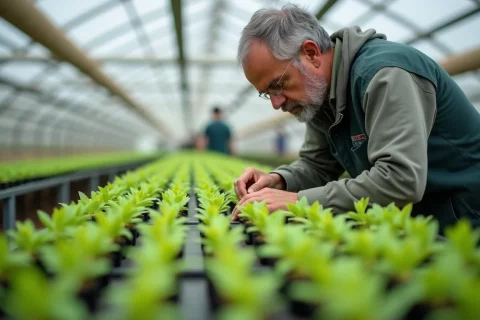

Every July, some unlucky Pretoria grower walks into their tunnel to find a block of Strelitzia reginae blackened by frost that never registered on any regional forecast. The SAWS station in town might have logged 4°C overnight. Their nursery floor, sitting in a cold drainage pocket between two ridges, hit -2°C. The plants do not care about the discrepancy. The grower does, usually around the time they are writing off stock they spent eighteen months bringing to saleable size.
This is the Gauteng nursery trap. The province is officially summer-rainfall country: heat, hail, dry winters, frost. Everyone knows the broad strokes. But broad strokes do not tell you which of your blocks freezes first, or when your shade house becomes a convection oven, or whether that wind picking up at 2 pm will evaporate your irrigation before the roots can use it. Regional forecasts are built for maize fields and municipal planning, not for the microclimates created by your shade netting, your retaining walls, your tree lines, your elevation. The distance between a SAWS station and your propagation house can be ten kilometres of utterly meaningless weather.
What a basic station actually gives you
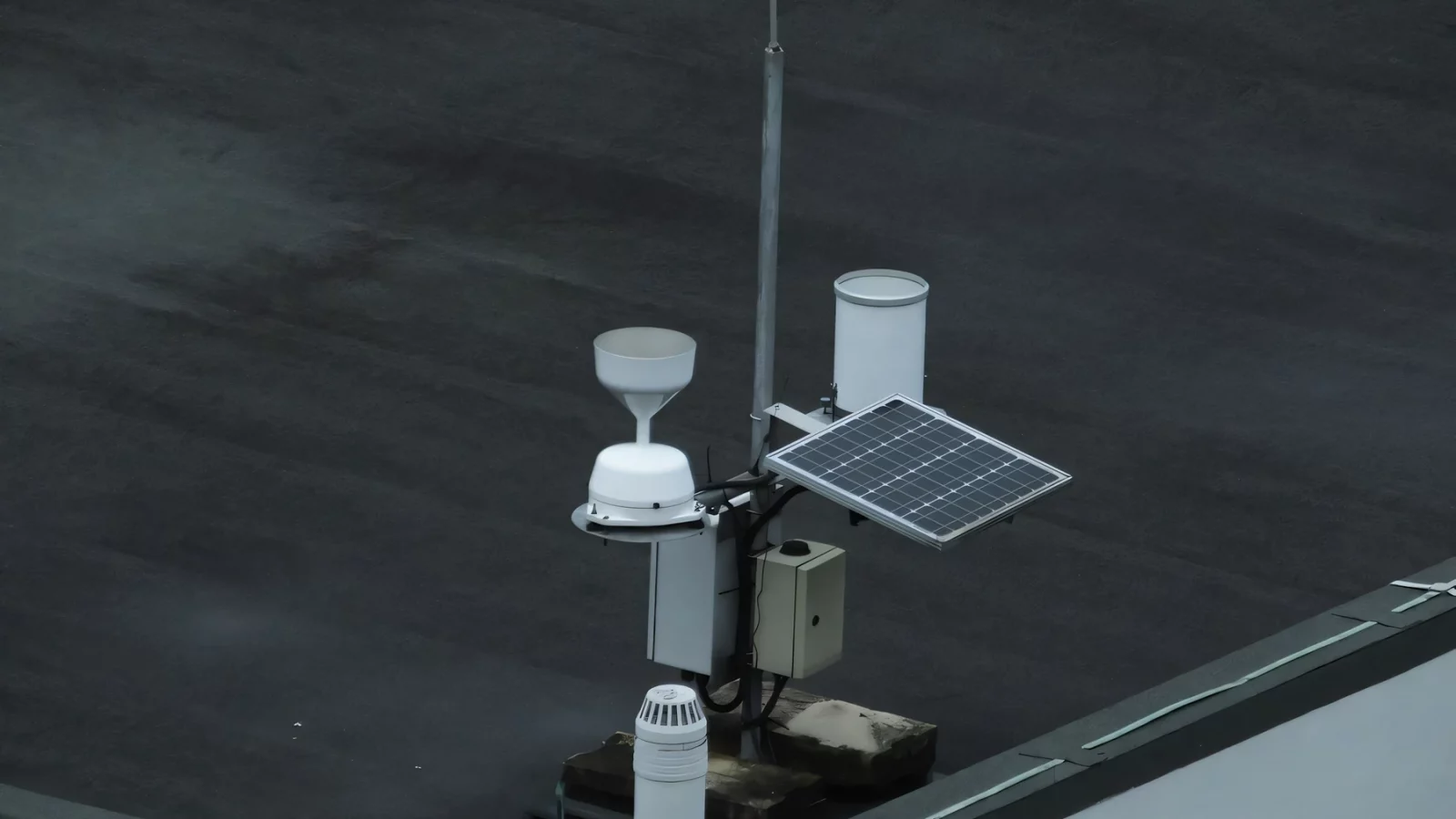
A workable on-site setup does not require a meteorology degree or a twenty-thousand-rand research rig. For between R5,000 and R15,000, a nursery can install a robust unit with air temperature and humidity sensors, a tipping-bucket rain gauge, and an anemometer for wind speed and direction. Add soil temperature and moisture probes if your irrigation decisions need more precision. Brands like Davis Instruments sell agricultural-grade units that handle Gauteng’s UV, hail, and dust without fuss. The units offer remote data access (cellular or Wi-Fi) and programmable alerts delivered to your phone. You want to know when your coldest block hits 2°C, not when you happen to walk past the thermometer.
Installation matters. Mount the station in an open area that represents your growing conditions, not next to the office air conditioner or under a tree. Log the data. The first season is calibration: you are learning your nursery’s own weather vocabulary.
Reading your own data against your own losses
The payoff comes when you stop treating each damaging event as an unprecedented personal attack and start seeing patterns. That frost in July? Your on-site records show it hit the same low-lying block three times last winter, always on still nights after clear days, always when the regional forecast said “cold but no frost risk.” You know now that block is your canary. Move the frost-sensitive stock uphill, or budget for covers and overhead irrigation on those specific nights.
Wind speed data reshapes irrigation scheduling. A grower in Akasia might find that afternoons with wind above 15 km/h evaporate 30 percent more water than still days. Without that number, you are either underwatering stressed plants or overwatering to compensate, leaching fertiliser and inviting root rot. Rain gauges catch the localized downpours that SAWS misses entirely. One nursery in Centurion recorded 45 mm in twenty minutes last January while the regional station logged 8 mm. The drainage failed, the seedlings sat in water, and Phytophthora moved through the house. The next season, that grower knew which beds needed raising.
Shade house management changes too. Temperature sensors inside the structure reveal when your 30 percent shade net becomes a heat trap. Searsia lancea liners can handle direct sun but cook under netting at 38°C. Humidity spikes above 85 percent trigger fungal pressure. Real-time alerts let you ventilate or mist before the damage shows up as wilted foliage or botrytis spread.
The shift from reacting to running ahead
The operators who get the most from these stations treat them as production tools, not weather toys. They keep simple logs: frost event, block affected, action taken, outcome. Over two or three seasons, the data builds into a nursery-specific playbook. You know which week to start watching for frost in the lower tunnel. You know which afternoons demand irrigation timing adjustments. You know that your east-facing shade house runs five degrees cooler than the west-facing one on summer afternoons, and you stock accordingly.
Gauteng weather will still throw hail, dry spells, and surprise cold snaps. A weather station does not change that. It changes the grower’s position relative to the event: from victim, surprised and scrambling, to someone who saw the number drop, moved the covers, and went back to bed.