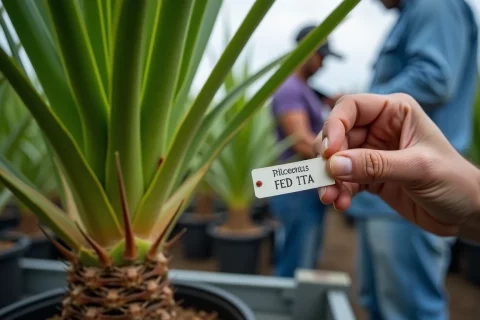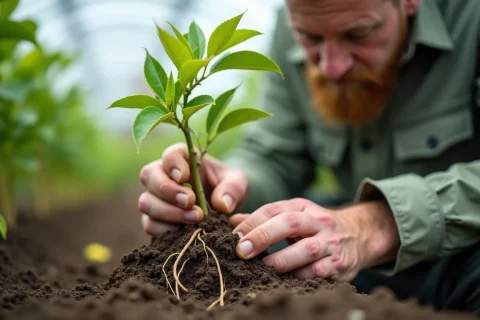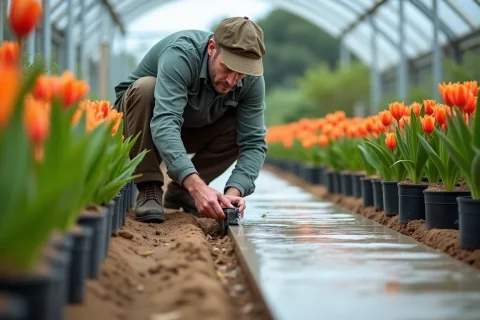

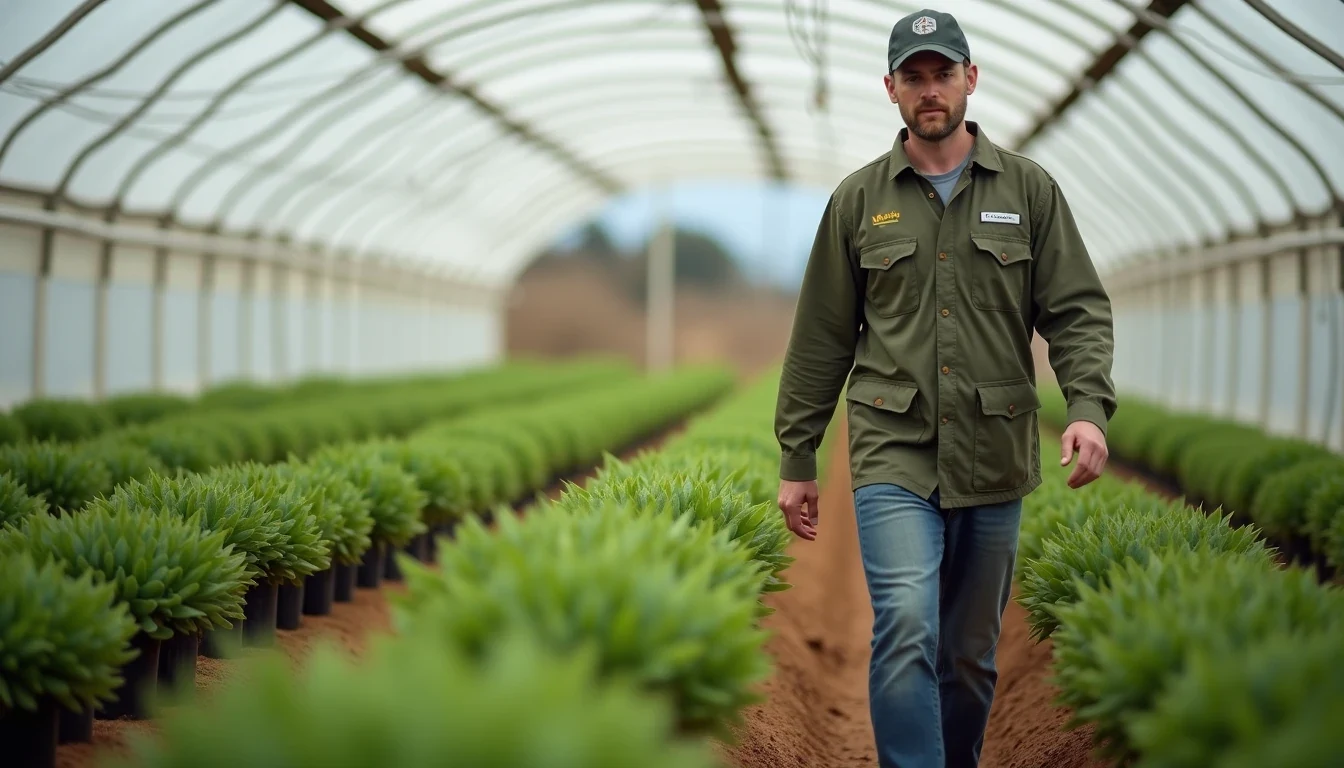
A propagation manager at a wholesale nursery outside Paarl can walk past a tunnel of Leucadendron cuttings and know, without checking a schedule, which bench needs water in twenty minutes and which got too much last Tuesday. He cannot fully explain how he knows. The leaf gloss, the weight of the pots, the particular smell of the coir when it is drying from the top down rather than the bottom up: these signals integrate into a decision before conscious thought arrives. When he retires in March, that judgement leaves with him. The nursery still has his WhatsApp number, but it does not have his process.
This is the silent crisis in South African horticulture. SANA and Hortgro run bursaries, fund training, and sponsor the Young Horticulturist of the Year competition. The industry is losing something their programmes cannot directly replace: the accumulated sensory intelligence of growers who spent thirty years watching plants respond to berg winds, cold fronts, and the particular mineral profile of borehole water. This loss is not sentimental. A propagation failure on a 50,000-unit Erica order costs more than a salary. It costs the client, the reputation, and the eighteen-month lead time to try again.
What walks out the door
The vulnerable knowledge is rarely about textbook procedures. It lives in the adjustments. An experienced grower at Random Harvest or a similar indigenous specialist knows that Combretum seed needs scarification. She also knows which batch of seed arrived too fresh from a wet season and will need longer drying before treatment. She recognises the first faint stippling on a rose leaf that precedes red spider mite explosion by four days, when the pest is still cheap to knock out with a targeted oil rather than a broad-spectrum programme. She knows that Bench 4, near the packhouse wall with poor afternoon airflow, dries differently after a cold front because the humidity lingers there. The standard irrigation rule, water everything at 6am, will rot the roots of sensitive Pelargonium cuttings in that specific microclimate.
None of this appears in job descriptions. It rarely appears anywhere at all.
The documentation gap
Most nurseries keep records of what was done. Few keep records of why. “Bench 4: 70L” tells the next shift what happened. It does not tell them that the volume was reduced because the SA Weather Service forecast overnight frost, and that saturated substrate in cold conditions invites Phytophthora in fynbos species. Without the reasoning, the record is just a number. The next person follows it blindly, ignores it, or applies it to Bench 7 where the conditions differ.
Starke Ayres, operating at scale, has long relied on rigorous standard operating procedures for germination and quality control. Their systems work because consistency across millions of units is the business. Even large operations struggle to encode the exceptions: the senior who overrides the temperature setpoint because the seed batch arrived with lower vigour, or who knows from the seed coat colour that this lot needs adjusted priming. Specialist indigenous nurseries face the opposite problem: their crop records may be detailed, but they are often locked in one grower’s handwriting, in a format only she understands.
Capturing the why
The nurseries that are solving this have stopped trying to document everything. They focus on the decisions that carry consequence: propagation timing, irrigation adjustments, pest interventions, and crop scheduling for peak market windows. Their records include three fields that most omit: the trigger, the reasoning, and the observed result.
A useful entry reads: “15 July. Irrigation 70L Bench 4 (fynbos seedlings). Trigger: frost warning -2°C. Reasoning: drier substrate reduces cold damage and fungal risk. Result: no losses, check 17 July.” This is teachable. It lets a younger grower see the logic, test it, and eventually build their own pattern recognition against the same data.
Some operations are moving this into digital crop management systems: HortiGrow, Picas, or custom databases. Irrigation, fertilisation, and scouting reports become searchable history. The tool matters less than the discipline. A spreadsheet with consistent fields beats sophisticated software used inconsistently.
Mentorship as structured translation
The most effective knowledge transfer happens when documentation and mentorship operate together. SANA’s regional meetings and Hortgro’s technical symposia create the social conditions for this: growers meet, problems get discussed, and informal relationships form. Individual nurseries can formalise the daily version.
At fruit tree nurseries supplying Hortgro members, experienced grafters often work alongside trainees with a specific instruction: narrate while you work. Not “hold it like this” but “I am holding it like this because the cambium layers need to align under slight pressure, and I can feel when they slip.” The trainee hears the reasoning in real time, with the sensory context present. Later, they attempt the graft while explaining their own choices aloud. The senior corrects the logic, not just the outcome.
Cape Garden Centre and similar operations with internal growing divisions have experimented with photographic guides and short video tutorials created by senior staff. These are not slick training content, but phone footage of actual plants in actual conditions. A two-minute clip of an experienced hand identifying early powdery mildew on a specific rose variety, with the grower speaking the diagnostic chain aloud, captures more transferable judgement than a written protocol.
The hard part
None of this is free. Documenting decisions takes time. Mentorship slows production. A grower narrating her work is not working at full pace. The nurseries that absorb these costs treat them as insurance against a single point of failure: the irreplaceable expert who gives three months’ notice and spends the notice period mostly in farewell braais.
The alternative is already visible. A nursery manager in the Eastern Cape recently watched a young horticulturist drench a bench of Strelitzia seedlings because the schedule said water, the weather had turned unexpectedly, and no one had encoded the exception. The loss was R18,000 in material and six months of crop time. The retired grower, reached on his fishing trip, diagnosed the problem in one sentence. The nursery is now building its decision logs.
SANA and Hortgro continue to fund the pipeline: new entrants, qualifications, professional development. The industry still needs them to. Qualifications do not close the gap between knowing that cold fronts matter and knowing, in real time, which bench to adjust and by how much. That gap closes only when experienced growers speak their judgement into record, and when nurseries build systems that let the next generation hear it, test it, and eventually internalise it as their own.
The propagation manager in Paarl retires in March. His nursery has eight weeks to decide whether his departure is an ending or a translation.