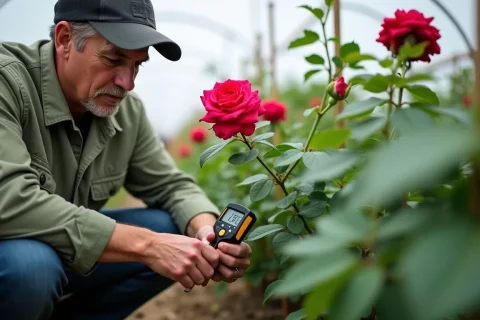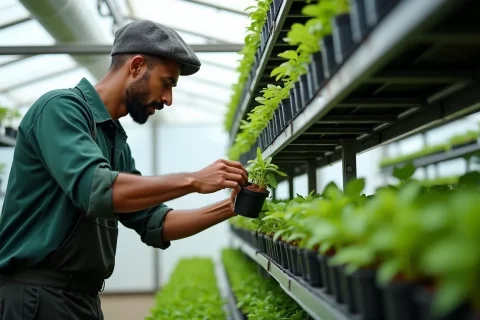

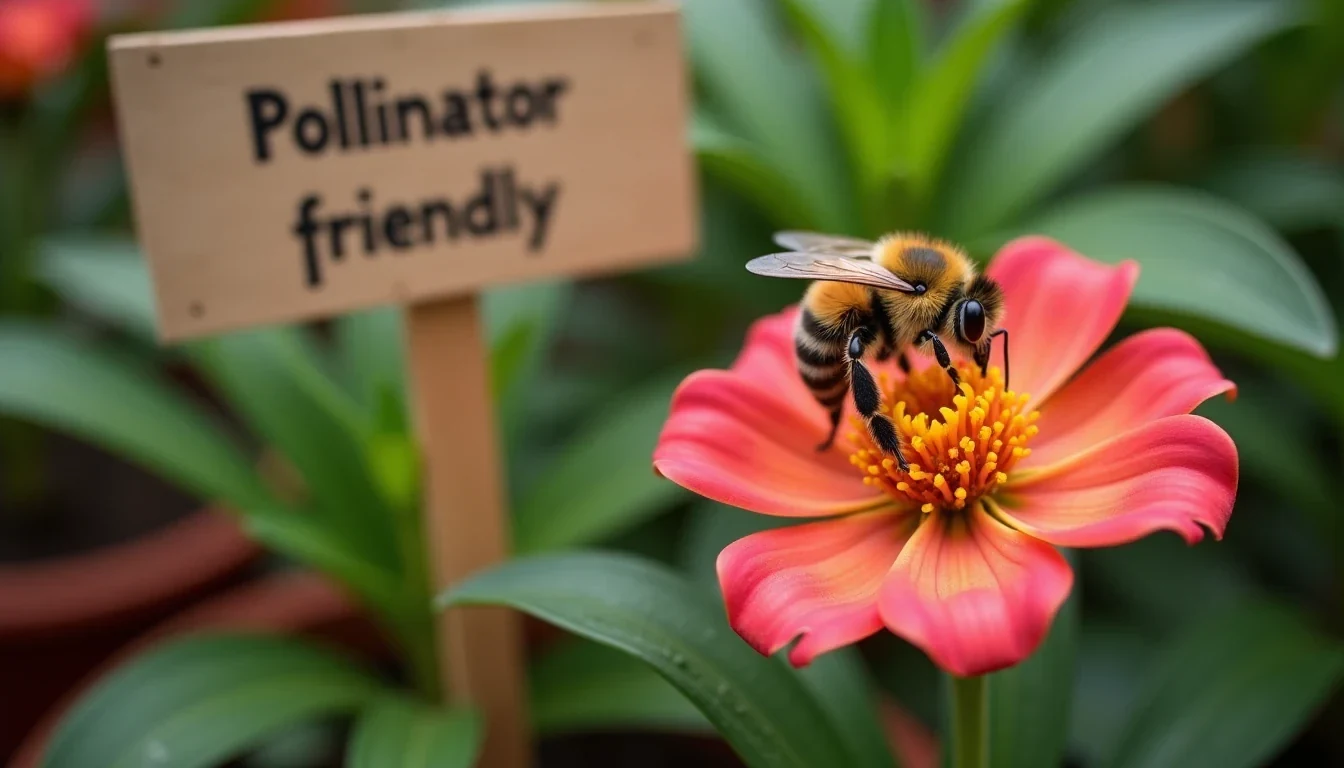
A cardboard bee glued to a pot does not make a plant safe for pollinators. Walk through any retail nursery in Gauteng or the Western Cape right now and you will find Leonotis leonurus, Strelitzia reginae, and Osteospermum hybrids carrying exactly that kind of signage, often grown on operations where Confidor, Koinor, or Regent formed part of the standard programme. The disconnect is a credibility problem the trade will have to solve itself, because regulators are not about to do it.
The chemicals that stay in the plant
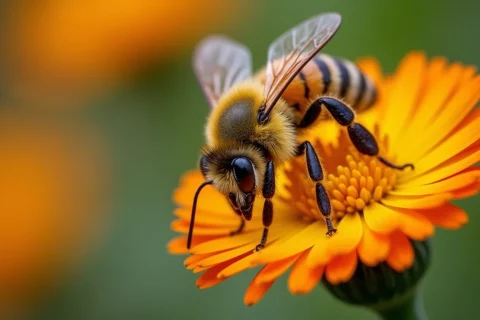
Neonicotinoids such as Imidacloprid and Thiamethoxam do not wash off. They move through the vascular system and lodge in pollen and nectar. A bee visiting an open flower on a treated Aloe hybrid takes the dose home. Pyrethroids including Cypermethrin and Deltamethrin persist on leaf surfaces for days or weeks. Fipronil, Carbaryl, and Malathion do the same. These are not fringe products. They sit on the shelves of agricultural suppliers from Tzaneen to Stellenbosch, and they are used on stock marketed as biodiversity-friendly.
The problem intensifies when flowering plants are sprayed in the open, during retail display, with no regard for what is actively foraging. A residual insecticide applied to a Strelitzia in full bloom at a garden centre in Pretoria kills indiscriminately. The plant looks pristine, and the marketing holds up, but the insect does not.
What IPPM actually changes
Integrated Pest-and-Pollinator Management is not IPM with a longer acronym. It is a different logic. Conventional production runs on calendar spraying, broad-spectrum products, and treating the whole block because prevention feels cheaper than precision. IPPM reverses that. Prevention comes first: resistant rootstocks, sanitation, physical barriers. Monitoring comes second: scouts in the tunnels, pheromone traps, threshold counts that trigger action rather than pre-empt it. Chemical intervention comes last, and when it arrives it is selective, timed, and deliberate.
The pollinator dimension shapes every decision. A product that controls aphids but leaves predatory mites and visiting bees intact is preferred over one that solves both problems with a single toxic sweep. Application timing avoids open bloom. Residual profiles are weighed against the plant’s sale date. The grower asks not just “does this work?” but “what is still in this plant when it leaves the gate?”
A production protocol that holds up
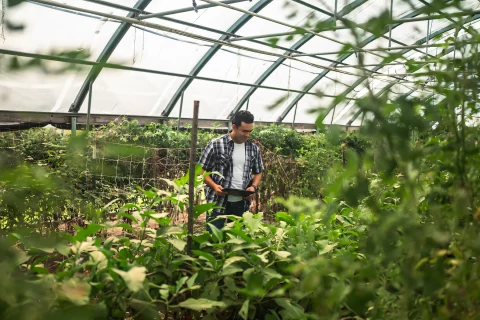
For a pollinator label to mean anything, the nursery needs documented protocol. Start with pest monitoring: trained scouts, weekly counts, digital logs that show when pressure crossed threshold and what was done. Move to product selection: a restricted list where neonicotinoids, fipronil, and broad-spectrum pyrethroids are excluded from any crop carrying the label. Application timing becomes non-negotiable, with no sprays during bloom and no systemic drenches within a defined pre-harvest interval that accounts for residue degradation in local conditions.
The claims themselves need guardrails. “Attractive to pollinators” should describe biology, provenance, and open access to nectar and pollen. “Pollinator-safe” should require the full production chain behind it, not just the absence of spray at point of sale. Cardboard insects and barcode tags are retail theatre. They do not survive contact with a lab test or a dead hive.
Why the trade should move first
South Africa has no equivalent of the EU’s neonicotinoid outdoor ban forcing this change. The Department of Agriculture, Land Reform and Rural Development registers products; it does not police marketing claims at nursery level. That gap is an opportunity for growers who want to differentiate on substance rather than sentiment.
The export precedent helps. European retailers already demand pollinator-safe production evidence for certain ornamental lines. Local growers supplying Woolworths or export programmes have encountered this. The infrastructure, scouting labour, and record-keeping systems already exist. Extending them to domestic pollinator-labelled stock is incremental, not revolutionary.
The risk of waiting is clear. A consumer buys a Leonotis leonurus marked bee-friendly, plants it, and watches the neighbourhood bees founder. Word spreads through WhatsApp groups and gardening forums. The label becomes a joke, then a liability. One testing programme by an environmental NGO or one viral post from a beekeeper in the Karoo could curdle the entire category of pollinator marketing. The nursery that invested in actual protocol has no way to prove it. The nursery that cut corners has no defence.
What to watch this season
Check whether your supplier can show spray records for the specific batch in front of you. Ask about pre-harvest intervals for systemic products on flowering stock. If the answer is hesitation or blank looks, the cardboard bee on the pot is decoration, not information. The real work happens in the propagation tunnel, the irrigation scheduling, and the decision not to spray. That is what needs proof.