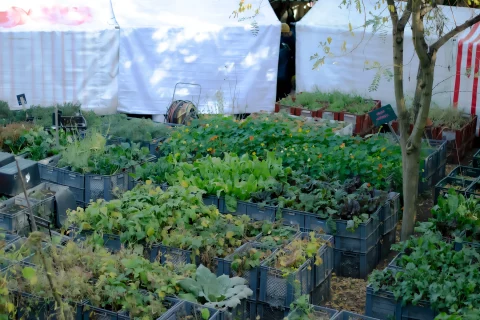

A customer walking into a Stodels outlet in Constantia or Ferndale Nursery in Johannesburg’s northern suburbs five years ago would have headed straight for the outdoor stock: bagged trees, established hedging, five-litre shrubs for the boundary wall. Now they pause at the entrance, where the light is different and the temperature is controlled, and they photograph a variegated Monstera deliciosa ‘Albo’ in a ceramic pot that costs more than the plant itself. The South African Nursery Association has tracked this migration steadily. Indoor plant sales are climbing while large landscape stock moves more slowly through the system. Growers supplying this market have had to rebuild their businesses around a fundamentally different unit: something that lives on a windowsill, turns in four to six weeks, and dies in the customer’s hands if the care instructions are wrong.
The Production Floor Rethinks Scale
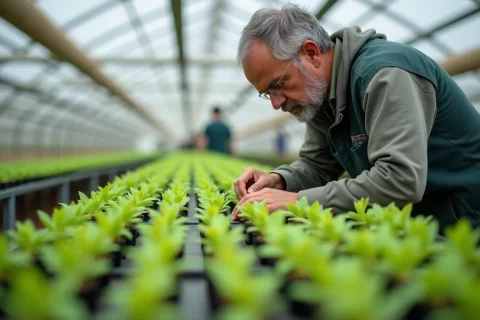
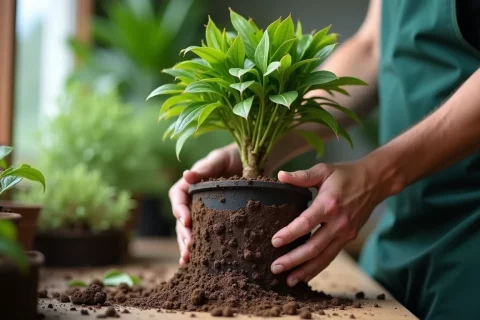
The propagation tunnels tell the story first. Where growers once pushed plants toward five-litre and ten-litre sizes for landscape contractors, many have retooled for 10cm, 12cm, and 15cm pots. The substrate mix is different now, lighter, with sharper drainage. Peat-free formulations are appearing more frequently, partly for environmental positioning and partly because export-oriented growers need to meet European buyer specifications anyway.
The economics of this shift are not immediately obvious to an outsider. A Ficus lyrata ‘Bambino’ in a 12cm pot retails for a fraction of what a two-metre specimen in a 25-litre bag once commanded. The margin on that small plant runs between 50 and 70 percent, against 30 to 40 percent for the landscape stock, and it turns over in a month and a half rather than sitting for half a year or more.
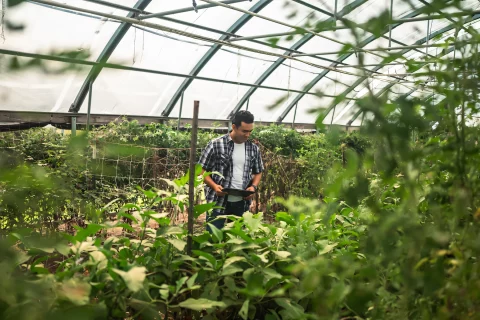
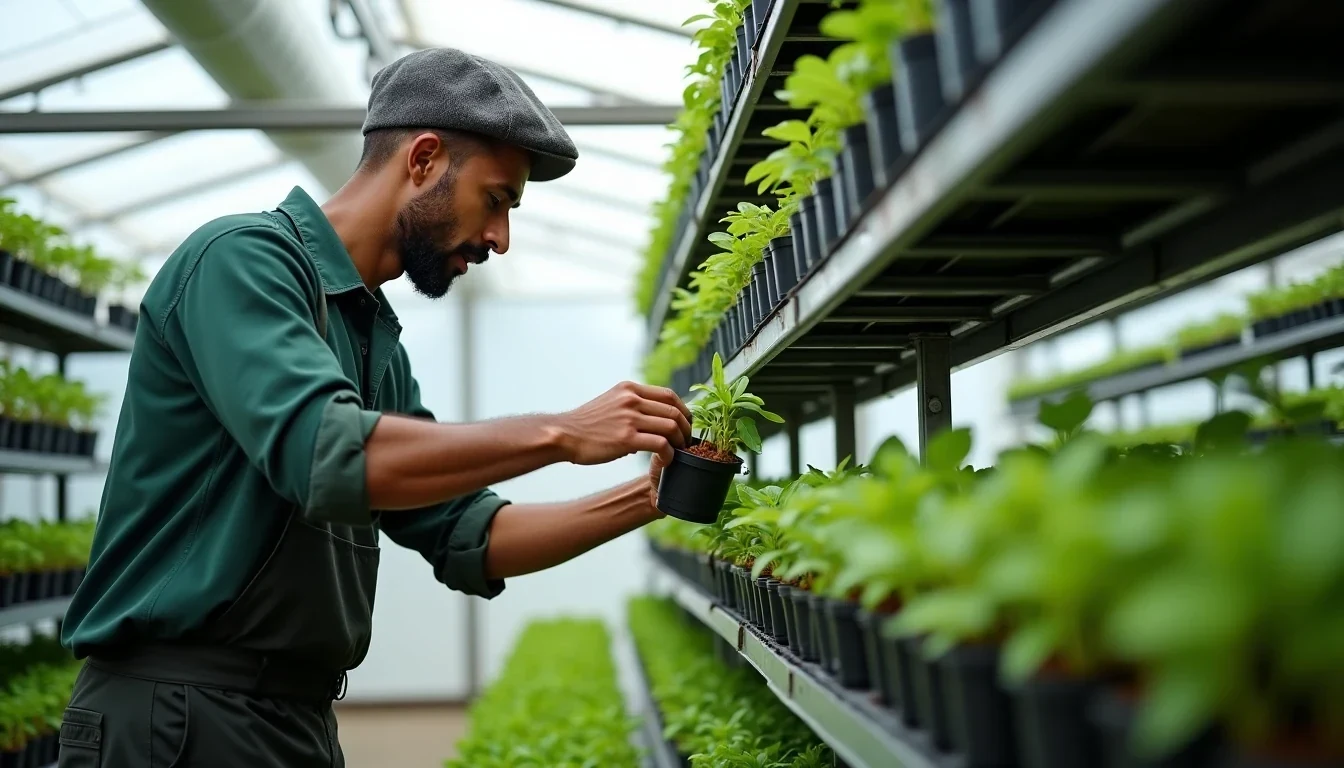
Controlled environment agriculture is still limited to the larger operations, but the logic is spreading. Vertical stacking, precise climate control, and accelerated growth cycles suit the indoor market’s appetite for consistent quality and rapid restocking. A grower in Pretoria East who built a modest greenhouse for Pothos varieties and Calathea species described the capital outlay as painful but the cash flow as “like a different business entirely.” The space requirement per unit drops sharply. You can produce more saleable plants per square metre of tunnel than you ever could with trees waiting to caliper up.
The handling intensity is the trade-off. Smaller plants mean more individual touches through the production chain: potting, labelling, moving to retail, packing for transport. Each touch is an opportunity for damage. A customer buying a Calathea with patterned foliage will notice a torn leaf in a way that someone purchasing a root-balled Syzygium for a hedge absolutely will not. Staff training has become a line item that serious nurseries no longer treat as optional. The person on the retail floor at Lifestyle Home Garden in Randburg needs to know why a Ficus elastica drops leaves in a north-facing apartment, and they need to explain it without sounding like they are reading from a card.
Packaging as Product
The container is no longer a cost to minimise. It is part of what the customer is buying, sometimes the decisive part. Ceramic, concrete, woven, and high-grade terracotta pots sit on the same shelf as the plants they hold, and the combined price reflects this integration. Nurseries have responded by either developing direct relationships with local potters or importing ranges that match specific plant presentations. The “Instagrammable” quality of the offering is a design specification that determines whether a product moves in four weeks or fourteen.
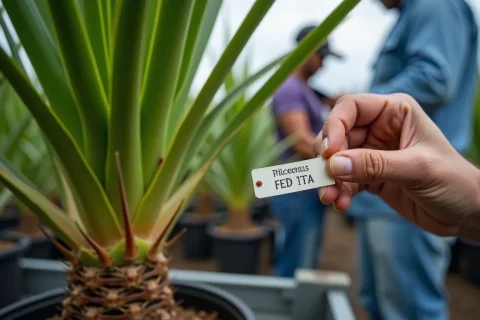
Branded sleeves and tags have evolved beyond the basic botanical name and price. QR codes linking to care guides, watering schedules, and origin stories are now standard at the better nurseries. The information burden is real. A windowsill garden in a Cape Town apartment faces light conditions, humidity levels, and temperature swings that differ materially from the same plant’s experience in a Durban flat. Generic advice kills plants, and dead plants do not generate repeat customers. Some nurseries, Plantland in Pretoria among them, have invested in “plant doctor” services and loyalty programmes that reward the frequent small purchases this market generates.
Ready-made combinations represent the furthest extension of this packaging logic. Succulent bowls, mixed herb planters, and themed collections marketed as “low-light lovers” or “pet-friendly” remove the decision burden from customers who want the effect without the curation work. The nursery becomes a supplier of complete, portable garden solutions. The customer whose entire growing space is a single window in a Bryanston townhouse can still leave with something that reads as a garden rather than a solitary plant in a pot.
The Retail Floor Becomes a Different Room
Stodels has built dedicated “plant rooms” in its Western Cape and Gauteng locations, spaces with controlled lighting and humidity where the stock is sheltered from the seasonal rhythms that still govern the outdoor yards. Lifestyle Home Garden has pushed further into rare and sought-after varieties, positioning itself as a destination for collectors willing to pay premium prices for established specimens. Ferndale Nursery has carved out a niche in the exotic and unusual, using social media to announce arrivals and move stock before it ever reaches the general display area.
These are not cosmetic adjustments. They represent a reallocation of floor space, staff expertise, and marketing spend toward a customer who visits more often, buys less per visit, and expects a higher level of service and information. The traditional nursery model, built around spring and autumn planting seasons, large average transactions, and relatively undemanding after-sales expectations, runs in parallel but no longer dominates.
The boutique operators, online-first businesses like The Plant Room and Plantify, have accelerated the pressure on established nurseries. Their model, built around curation, strong visual identity, and direct delivery, demonstrates what the upper end of this market values. Collaborations with interior designers and social media influencers are primary sales channels that traditional nurseries have had to learn or partner with.
What the Numbers Reveal
The financial profile of a nursery pivoting successfully to this market shows higher gross margins, faster inventory turns, lower space requirements for production, and reduced seasonal dependence. The revenue stream smooths out across the year because indoor plant purchasing is less tied to weather and planting calendars. The catch is in the operational complexity: more frequent handling, more precise environmental control in retail spaces, more sophisticated inventory forecasting, and a heavier investment in customer education and support.
A nursery that once measured success by how many hundred-litre bags it moved in September now tracks customer lifetime value, repeat visit frequency, and the attach rate of pots, care products, and information services to each plant sale. The metrics have changed because the product has changed. A tree is a tree. A windowsill garden is a lifestyle purchase, and the nursery that treats it as such captures value that the commodity grower cannot access.
The South African Nursery Association’s observation about this shift is a structural signal that the industry’s centre of gravity is moving. The growers who have rebuilt their propagation schedules, their packaging, and their retail presentation around the small and the distinctive are finding a market that pays more, returns more often, and asks more of them in return. The ones still waiting for the landscape market to recover to its previous volumes are competing for a shrinking share of customer attention and spending power.