
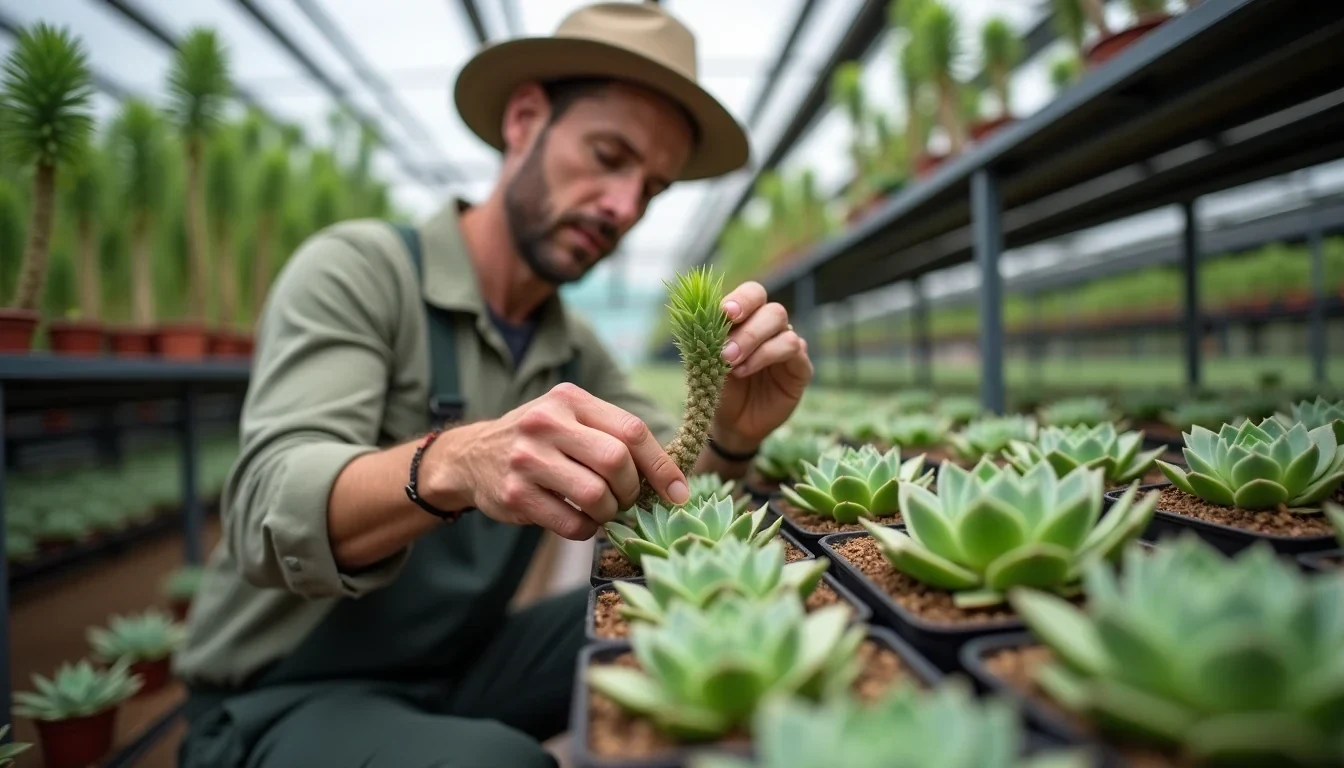
A Conophytum pageae listed on a Facebook group as “homegrown” tells you nothing about where it actually came from. The seller might have sown seed in a Stellenbosch tunnel three years ago, or they might have peeled it from a quartz patch near Springbok last Tuesday. The photo looks the same either way. The price is roughly the same. One plant represents a legitimate propagation business, and the other represents a wild population being stripped faster than it can recover.
SANBI has documented the problem: international ornamental demand has driven extensive illegal harvesting of South African succulents, with the Succulent Karoo bearing the heaviest losses. Rare species move through online marketplaces globally, and those platforms almost never require documentation proving whether a plant was seed-grown, nursery-propagated, or wild-collected. The label “nursery grown” has become a free-floating claim, attached to anything from a verified propagation batch to a freshly dug Aloe dichotoma with soil still clinging to its roots.
What Provenance Actually Looks Like on the Ground
A proper provenance system is a set of records that lets a buyer, an auditor, or an enforcement officer reconstruct exactly how a plant entered a nursery and everything that happened to it afterwards.
The starting point is parent stock identification. Every mother plant needs a unique identifier tied to its species name, acquisition date, original source, and photographic evidence. If the parent came from a SANBI seed bank or another reputable nursery, that chain is documented. If it came from legally permitted wild collection, the permit number is recorded and available. Without this, a nursery cannot prove that its propagation programme rests on legitimate foundations.
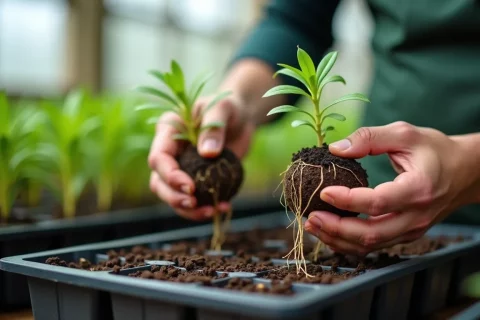
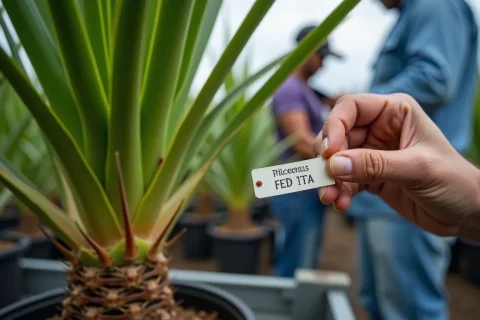
Propagation records follow from there. Each event gets logged with its date, method, parent plant ID, batch number, and estimated yield. A stem cutting taken from a tagged Conophytum in September 2023 carries that history into every offspring. Inventory tracking then maintains the thread: individual plant or batch tags, often with QR codes or barcodes, link to a central database that records growth stages, potting dates, and location within the nursery.
Permit documentation sits alongside this. Cultivating protected species requires paperwork under NEMBA and CITES. Inter-provincial and international trade need their own permits. The system holds copies of all of it. Sales and distribution records complete the chain: traceable invoices showing buyer, date, species, quantity, and the unique plant or batch ID. A buyer in Germany or Durban can theoretically follow their purchase back to its origin.
Some nurseries are already adding environmental data, recording growing conditions using SA Weather Service rainfall and frost information for their cultivation zones. This helps manage the crop and corroborates that the plant developed under nursery conditions rather than being yanked from a habitat with radically different climate signatures.
The Marketplace Problem
Online platforms have built their plant trade on trust without verification. Facebook Marketplace, Etsy, eBay, and niche forums rely on sellers to self-declare origins. The listing interfaces do not force disclosure of CITES permit numbers, SANBI registration, or propagation dates. A seller in Gauteng or Guangzhou can type “nursery grown” into a description field and face no immediate consequence for lying.
The visual problem compounds this. A mature wild-collected succulent, handled carefully, can look identical to a well-grown nursery specimen. The poacher knows this. The casual buyer does not. Payment systems process transactions without linking to any origin verification, so the money moves cleanly even when the plant does not. Private Facebook groups and dedicated forums add another layer of opacity, where reputation within a small community substitutes for documentation, and that reputation can be manufactured or borrowed.
Cross-border sales make enforcement patchy. A plant leaves the Northern Cape, passes through Johannesburg, gets repackaged in the Netherlands, and lands with a collector in Japan. Somewhere in that chain, the documentation either existed or it did not. By the time it reaches the end buyer, tracing it back requires cooperation across multiple jurisdictions with varying capacities and interests.
Who Is Actually Fighting This
The Department of Forestry, Fisheries and the Environment holds primary responsibility for enforcing NEMBA and CITES regulations, but its reach on the ground depends heavily on provincial partners. CapeNature, the Northern Cape Department of Environment and Nature Conservation, and the Eastern Cape Parks and Tourism Agency manage protected areas, run anti-poaching patrols, and issue provincial permits. Their resources are stretched across vast territories with limited staff.
SANBI operates as the knowledge backbone: researching threatened species, maintaining the Red List of South African Plants, and running botanical gardens that function as both conservation repositories and legitimate sources of propagation material. TRAFFIC, the wildlife trade monitoring network, investigates illegal flows and feeds intelligence to enforcement agencies. The Botanical Society of South Africa reaches the public through Veld and Flora and advocacy work, trying to build a culture where ethical sourcing is expected.
SAPS and Customs intercept shipments at borders and ports. Their success depends on specific intelligence; routine inspection catches only the obvious or the unlucky.
The Economics of Doing It Properly
For specialist nurseries, the decision to build a comprehensive provenance system is not straightforward. The benefits are real but deferred, while the costs are immediate and concrete.
A nursery with verifiable records can differentiate itself and charge premium prices. The ethical buyer segment is growing internationally, and institutions like botanical gardens or universities increasingly require stringent documentation for their acquisitions. Reduced legal risk means a nursery that can prove its stock is legitimate will not face the fines, licence revocations, or prosecutions that catch operators who unknowingly traded poached plants.
The disincentives bite hard in the short term. Software, tagging hardware, staff training, and the ongoing administrative burden of meticulous data entry all cost money and time. A small propagation business in the Karoo might lack the capital or the personnel to implement this without cutting into core operations. Higher operational costs translate to higher retail prices, which makes verified stock less competitive against cheaper, unverified alternatives. A buyer comparing a R450 Conophytum with full provenance against a R280 “nursery grown” specimen on Marketplace may not have the knowledge or the incentive to choose the documented plant.
The constraint on stock expansion is subtler but real. A nursery committed to verifiable propagation cannot quickly bulk up numbers by buying in wild-collected material or accepting undocumented cuttings from other growers. Its growth rate is tied to its own legitimate production capacity.
What Buyers Can Actually Do
Until a standardised certification system emerges, ethical buyers must conduct their own verification. This means prioritising established nurseries with reputations built over years, asking specific questions about parent stock and propagation methods, and being suspicious of vague or evasive answers. A legitimate grower should be able to tell you when a plant was propagated, from what source, and by what method. They should not bristle at the question.
Requesting photographic evidence of parent plants, particularly for rare or high-value species, is a reasonable step. Checking whether a seller holds relevant permits for protected species is another. For international purchases, CITES documentation should be visible and verifiable.
The challenges are significant. Buyers often lack the expertise to evaluate what they are shown. A forged permit or a borrowed photograph can pass casual inspection. The time and effort required for due diligence exceeds what many collectors are willing to invest. The price gap between verified and unverified stock creates constant pressure to suspend scepticism.
The Harder Path
“Nursery grown” needs to become demonstrable fact rather than unverified marketing phrase. This requires nurseries to build systems, buyers to demand documentation, and platforms to stop treating plant sales as trust exercises with no verification layer. None of this is happening quickly. The Succulent Karoo continues to lose plants to organised harvesting, and the trade channels that absorb them remain porous.
The nurseries that move first on provenance will carry higher costs and probably lose some sales to cheaper competition. They will also be the ones still operating with clean records when enforcement tightens, when buyer expectations shift, and when the wild populations that supply their unscrupulous competitors have been depleted beyond recovery. That is the bet they are making, or avoiding, right now.