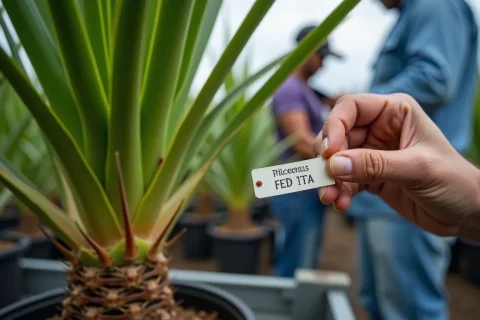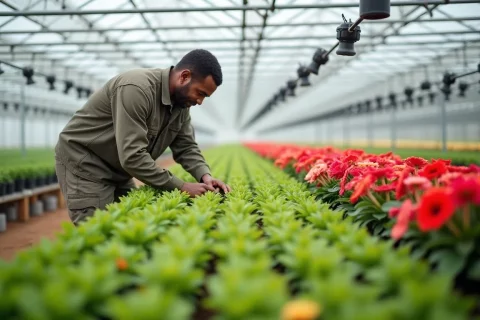

The spekboom looked perfect. Glossy, plump leaves on upright stems, the kind of plant that practically sells itself to a water-wise client in Pretoria east. Three months after planting, it was grey mush. The landscaper who bought it had done everything right: proper drainage, correct depth, a sensible watering taper. He could not fix the six weeks the plant spent under 40% shade cloth with drip irrigation cycling four times daily, pumped full of nitrogen to force that retail-ready fullness. By the time it reached his site, its roots had never needed to work and its cuticle was tissue-thin. The first dry wind did the rest.
This is the quiet scandal of South African nursery stock. Growers get paid at dispatch. Landscapers discover the truth the following winter.
How “life support” growing breaks a drought-tough plant
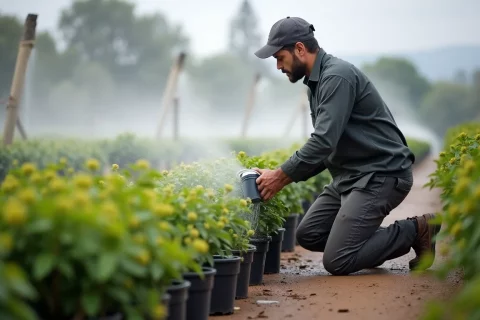
The contradiction sits at the heart of the production model. A Portulacaria afra evolved to survive on the scorching slopes of the Eastern Cape. In a propagation tunnel near Brits, it receives something closer to intensive care: automated misting, soluble feed at 3:1:2 NPK ratios, shade netting that filters out the UV it needs to toughen. The result is a plant optimised for the moment of purchase, not the decade after.
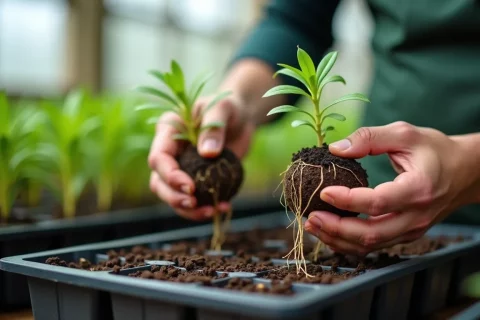
The root system tells the real story. Constant moisture produces a shallow, lazy root ball that falls apart when you slide the pot off. There is no fine branching, no exploratory tendrils reaching for depth, because water arrives every four hours like clockwork. The stems elongate too, internodes stretching for that soft, juicy look customers mistake for health. Leaves grow larger and thinner, packed with nitrogen-driven chlorophyll but lacking the waxy cuticle that prevents desiccation. Pest pressure stays minimal because systemic treatments run in the irrigation line, so no natural resistance develops either.
A Searsia lancea grown this way emerges leggy and brittle. Buddleja saligna pushes soft new growth that scorches to parchment in its first January. Carissa macrocarpa develops leaves like wet tissue paper. These are strong species made weak by the conditions of their adolescence.
What hardening off actually changes
The process is not complicated, which makes its absence more damning. Gradual exposure to real-world stress triggers measurable physical adaptations. Reduced irrigation frequency forces roots to branch and penetrate deeper into the potting mix, building the dense, fibrous mass that anchors a plant and forages for moisture. Light exposure stimulates cuticle thickening and lignin deposition in cell walls. Stomata become more responsive, closing faster to conserve water. Internodes shorten. Growth slows visibly but the plant gains structural integrity.
A hardened Euryops virgineus looks almost disappointing on the retail bench: smaller leaves, tighter habit, perhaps a hint of bronze on older foliage from genuine sun exposure. Next to its tunnel-grown twin, it appears stunted. Landscapers who know the trade will pick it every time. The soft plant dies in its first Pretoria winter; the tough one establishes and flowers.
The research comparison makes the gap explicit. Two batches of the same indigenous shrub, one retail-optimised, one properly hardened. The unhardened stock shows survival rates of 20-40% in challenging conditions without intensive follow-up irrigation. The hardened batch hits 75-95%. Water demand diverges just as sharply. The soft plant needs 5-10 litres weekly, often daily application, for weeks or months. The hardened plant establishes on 2-4 litres every three to five days. The difference between a viable installation and a warranty claim is not marginal.
Who pays when the plant fails
The grower has already been paid. That is the structural problem. Dispatch completes the transaction, while failure arrives months later, diffused across a landscaper’s schedule, a client’s dissatisfaction, a reputation that erodes by word of mouth in the close-knit corridors of the trade.
The costs stack fast: replacement plants, removal labour, replanting labour, the knock-on delays to other jobs. Landscapers operating with installation warranties eat the loss directly. Those who can identify the source push back on suppliers, but the power imbalance favours the grower until enough failures accumulate. Collective memory, not individual complaint, changes behavior. Landscapers track which nurseries’ stock survives that first winter. They talk. Contracts shift.
For the nursery, the reputational damage is harder to quantify and slower to reverse. A grower known for lush bench stock that collapses in the veld becomes a supplier of last resort, useful only when price matters more than survival. Meanwhile, competitors who invested in hardening infrastructure, who accepted slower turnover and less photogenic plants, command premium prices and loyalty. The market does correct, but slowly, and only after a lot of dead spekboom.
Reading a plant before you buy
The inspection is simple if you know what softness looks like. Avoid the tallest, fullest specimen on the bench. Look instead for compact growth, shorter spaces between leaf nodes, leaves that feel slightly leathery rather than glossy and yielding. A subtle bronzing or minor leaf damage on older growth often signals genuine outdoor exposure, not neglect.
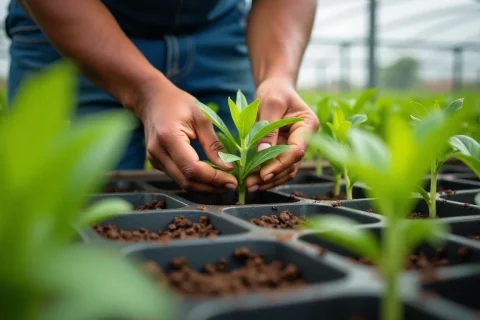
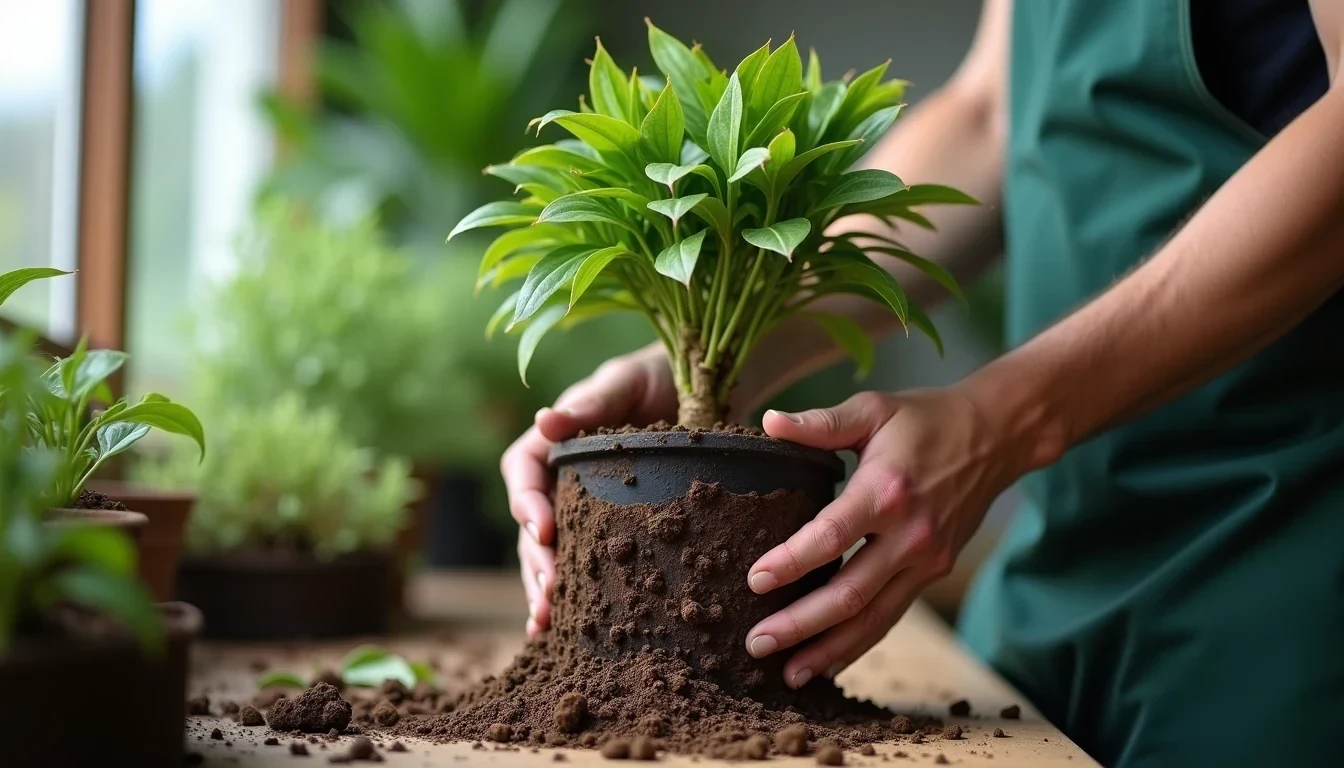
Where possible, check the roots. A gentle slide from the pot should reveal firm, white, evenly distributed roots with fine branching. A sparse root ball that crumbles, or a dense mat circling the base, indicates a plant that has never had to work for moisture and will struggle to anchor in soil.
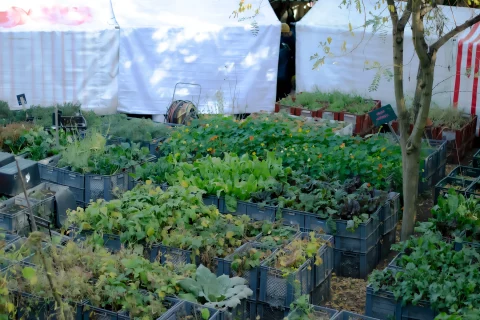
Ask direct questions: How long has this stock been outside the tunnel? Has irrigation been tapered? What shade percentage was it grown under? Staff who cannot answer, or who treat the questions as unusual, are telling you something about their production priorities. Compare specimens from different nursery areas. Plants kept in full sun display or wind-exposed positions have at least faced some reality, unlike stock held permanently under cloth.
The species that suffer most
Some indigenous favorites are particularly betrayed by soft growing. Freylinia lanceolata, the honeybell bush, grows fast enough for retail turnover that growers rarely slow it down. Unhardened plants reach the landscape with stems that snap in the first southeaster. Euryops virgineus floriferousness makes it irresistible on the bench, but its unhardened form wilts and breaks under dry wind. Even Portulacaria afra, the darling of carbon-sequestration claims and water-wise marketing, collapses from stem rot and frost when its tissues are waterlogged and soft from tunnel life.
These are local species, their natural toughness systematically bred out of them by the growing regime. They are not exotic imports struggling with local conditions.
What to do this weekend
If you are planting now, test your supplier. Buy two specimens of the same species from different sources, one from a tunnel-heavy retail operation, one from a grower who hardens. Plant them identically, taper watering on the same schedule, and track survival through winter. The result will reshape your supplier list.
If you are buying for immediate planting, choose the uglier plant. The compact one. The one with slightly tired leaves and a pot that feels root-heavy. It is not tired. It is ready.