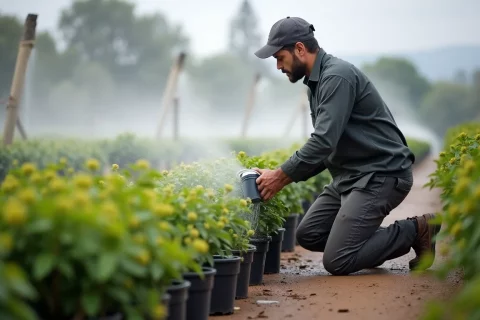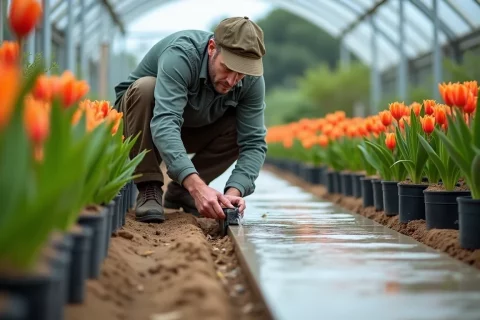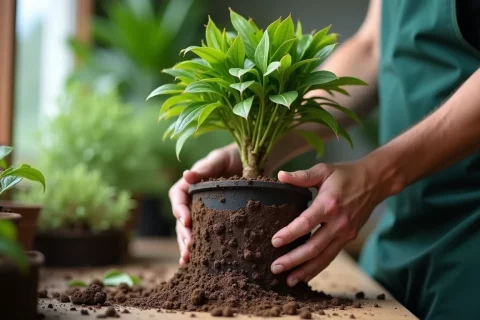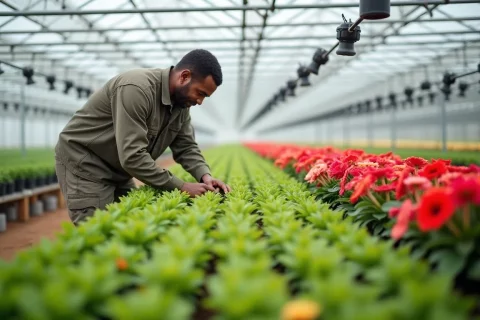

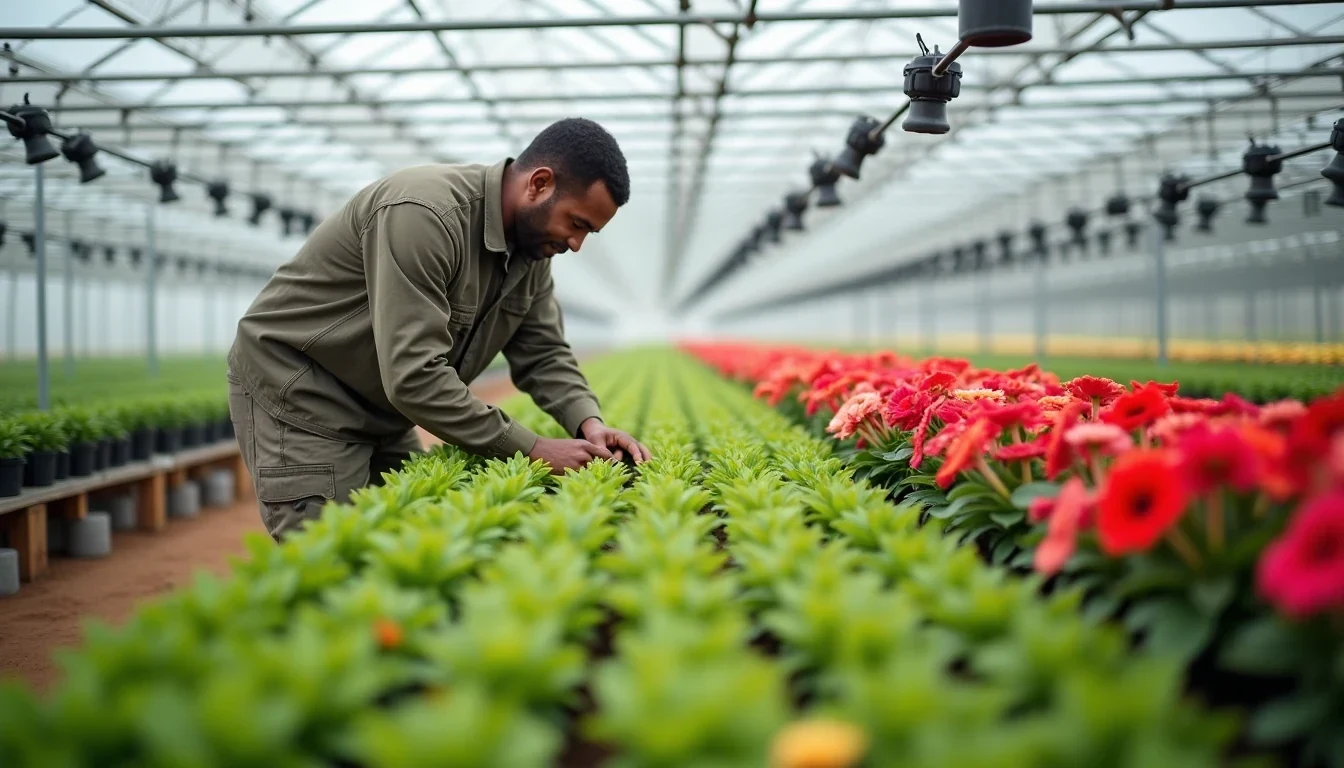
The February warning from Rand Water landed like a dropped pallet in a quiet packhouse. Persistently high consumption across Johannesburg and Tshwane, the utility said, had pushed the bulk supply system to a point where growers could no longer treat water constraints as a temporary inconvenience between rain fronts. For nurseries in the region, this was a production directive with immediate financial consequences. The City of Tshwane had already banned garden irrigation with hosepipes or sprinklers between six in the morning and six in the evening. Municipal messaging repeatedly steered residents toward indigenous or drought-resistant planting during supply interruptions, showing that engineers and hydrologists, not garden trends, were reshaping the demand side of horticulture.
What “Water-Wise” Actually Means on a Propagation Bench
The word has suffered from overuse. Every succulent beneath a promotional banner has been called water-wise, as if the label were a default setting for anything with thick leaves. Gauteng growers are now working with a narrower, more useful definition: measured establishment and maintenance needs under local conditions. A plant earns its place not by surviving a drought somewhere in theory, but by establishing within a predictable irrigation window and then thriving through dry winters, summer storm battering, and the occasional week when Rand Water reduces pressure without warning.
Take Portulacaria afra, the humble Spekboom. It establishes from cuttings in roughly eight weeks under mist, hardens off quickly, and once in the ground needs nothing beyond what Gauteng skies provide. Compare that to Impatiens walleriana, the Busy Lizzie that has filled shaded bedding displays for decades. It demands consistent soil moisture from propagation through retail life and into the customer’s garden, and it collapses visibly when irrigation skips a day. Several growers in the northern suburbs have reduced their Impatiens production by a third since last year because the water cost per saleable unit stopped making sense.
The distinction extends to trees. Searsia lancea, the Karee, puts down a taproot that accesses moisture below the reach of lawn roots and survives its first dry winter with a single deep soaking at planting. Delonix regia, the Flamboyant, wants regular deep watering for two years before it settles, and even then sulks through water restrictions with leaf drop and reduced flowering. One Pretoria East nursery has shifted its street tree recommendations entirely, dropping the Flamboyant from its municipal supply tender and substituting Buddleja saligna and Tecoma capensis for colour without the dependency.
The Plants Leaving Production Lines
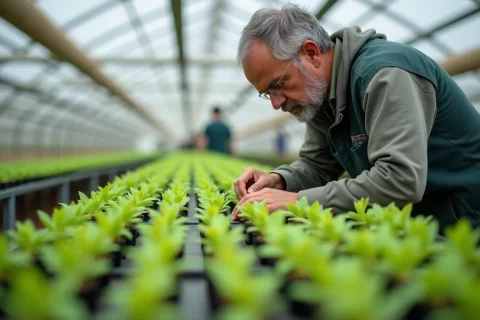
The retreat from high-water stock is visible in propagation house layouts. Petunia varieties with large flowers and correspondingly large transpiration surfaces are being grown in smaller batches, reserved for container combinations rather than mass bedding. Coleus cultivars with broad, thin leaves have followed. Hosta and Delphinium, never strong sellers in Gauteng but reliable niche products, now occupy benches that have been reassigned to Salvia species and Agapanthus praecox.
The lawn trade is more politically complicated. Kikuyu grass, Pennisetum clandestinum, remains the default for high-traffic areas because it recovers from abuse that would kill more delicate species. But nurseries are no longer pushing it for expansive residential lawns. One grower in Centurion described his revised stock mix as “Kikuyu for the dog run, Aristida junciformis for the verge, and Dymondia margaretae for the path edges.” The margin on instant lawn is higher than on indigenous grass plugs, but the after-sale failure rate during restrictions has become a reputation risk he no longer accepts.
Tropical exotics have taken the quietest hit. Ferns requiring humid shade house conditions, Calathea varieties with their persistent thirst, and certain Anthurium cultivars are still grown for the interior plant market, but the outdoor tropical display has shrunk dramatically. A nursery manager in Montana noted that her Strelitzia reginae stock, by contrast, moves faster now despite its slower production cycle because customers recognise it as a plant that forgives neglect.
What Is Replacing Them
The gainers fall into categories that share specific architectural traits rather than a family resemblance. Deep root systems dominate the tree and large shrub selections: Carissa macrocarpa with its anchoring taproot, Rhigozum obovatum with its ability to mine fractured shale soils, Aloe marlothii with its spreading surface roots that intercept every brief rainfall. Succulence appears in forms beyond the obvious cactus aisle, Cotyledon orbiculata and Plectranthus neochilus offering groundcover density with water storage capacity.
Ornamental grasses have moved from specialist native plant suppliers into mainstream production. Melinis repens, the Natal Red Top, self-seeds readily and provides autumn colour without irrigation. Pennisetum setaceum ‘Rubrum’, despite its exotic origin, has been retained because its water needs are modest once established and its sales velocity justifies the bench space. Indigenous alternatives like Aristida junciformis are being pushed harder where the customer wants local provenance.
The groundcover category has seen the most creative substitution. Delosperma cooperi, the Ice Plant, establishes from cuttings in six weeks and flowers within the season of planting. Gazania rigens handles the reflected heat of Gauteng paving without the midday wilting that damages Petunia displays. Several nurseries have begun offering these in pre-planted “sunny border” trays, effectively packaging the design decision for customers who want the look without the water bill.
The Cost of Switching
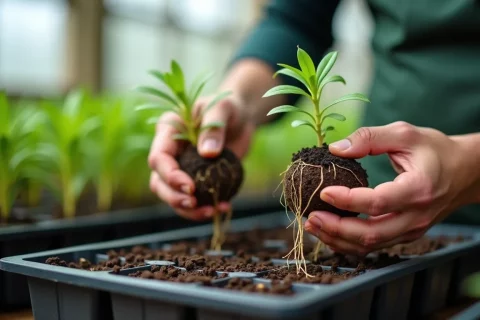
The transition is not a simple matter of swapping seed packets. Indigenous material often propagates more slowly than the exotic annuals it replaces. Aloe arborescens from cutting to saleable 5-litre container takes fourteen to eighteen months. A Petunia seedling reaches the same retail readiness in eight weeks. Capital is tied up longer, the bench space generates fewer turns per year, and the grower must forecast demand further in advance with less historical data to guide the prediction.
Staff expertise presents another hurdle. A propagation team that knows the exact misting schedule for Impatiens germination must relearn the fungal sensitivities of indigenous species, the different rooting hormone concentrations for Tecoma capensis, the hardening-off protocol that prevents Portulacaria from shedding leaves when irrigation suddenly reduces. One grower in Bapsfontein sent two senior staff to a SANBI workshop on indigenous propagation. They still needed six months of trial plantings before success rates matched their previous production.
Infrastructure adaptation adds direct cost. Overhead sprinkler systems designed for uniform water coverage across benches of equally thirsty plants waste water when applied to mixed stock with varying needs. Drip irrigation conversion runs roughly ZAR 45 to 60 per square metre of bench, depending on filtration requirements. Filtration is non-negotiable because indigenous potting mixes often contain grit and bark that clog emitters designed for peat-based media.
How the Message Reaches the Buyer
Nurseries have become reluctant educators, forced by circumstance to retrain a market that arrived wanting Hydrangea macrophylla because it matched a Pinterest board. The methods vary by customer type. Retail shoppers encounter dedicated water-wise sections with prominent labelling, sometimes using a simple droplet rating: one droplet for established plants needing no supplemental water, two for occasional deep watering, three for regular irrigation during establishment only. QR codes link to brief care guides that emphasise the first six months as the critical window, after which the plant’s survival depends on its own root system rather than the gardener’s hose.
Professional landscapers receive a different pitch. Bulk discounts on water-wise palettes are common, but the technical backup that lets a landscape architect specify indigenous species with confidence is more effective. One Pretoria nursery provides establishment schedules with every large order, detailing exactly how many litres per square metre for how many weeks. This allows the landscaper to quote irrigation installation with a defined endpoint rather than an open-ended commitment.
Workshops have proliferated, though attendance patterns reveal the challenge. Saturday morning sessions on “Designing a Water-Wise Garden” draw the committed amateur, typically older and already convinced. The younger customer who wants instant impact buys fewer plants overall but drives aesthetic demand. Several nurseries have responded with curated “garden kits” for specific situations, a Sunny Border box or a Shade Corner selection, that package compatible species with a planting plan and a six-week establishment calendar. The kit format reduces the cognitive load of plant selection and implicitly trains the buyer to think in plant communities rather than individual specimens.
The Harder Question Ahead
Rand Water’s February warning carried an implicit timeline. If consumption patterns persist, the current restrictions, inconvenient as they are, represent the generous phase. Volumetric limits or higher restriction stages would follow, and nurseries that have not adjusted their production portfolios by then would face both regulatory pressure and customer panic buying of whatever water-wise stock remains. The growers who moved early, who accepted the propagation delays and the staff retraining and the infrastructure costs, are now positioned with established mother stock and proven cultivars.
The deeper shift may be in how the industry measures success. A nursery’s reputation has traditionally rested on the visual impact of its display gardens, the lushness that signals healthy stock and skilled growing. In a water-constrained market, that same lushness reads as profligacy. The nursery that thrives now may be the one whose demonstration beds look resilient rather than abundant, whose Karee trees show slight leaf curl in late winter rather than the impossible gloss of permanent irrigation. The aesthetic is changing, and the growers who define it will shape what Gauteng gardens look like for the next generation.