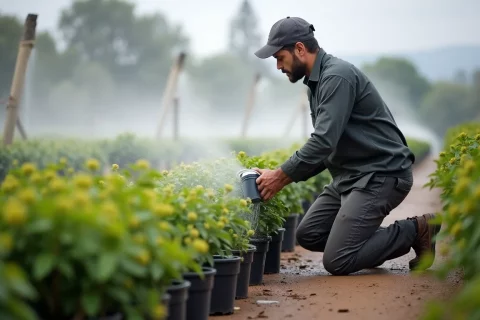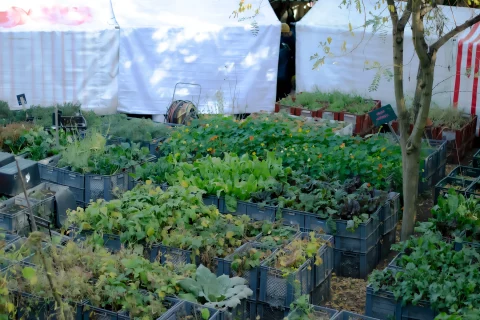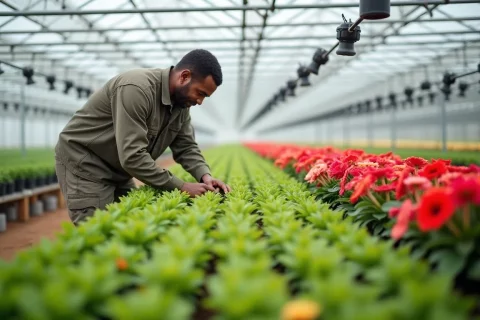


Every nursery owner has watched a customer walk out with a plant that will, in three seasons, be jumping the fence into the veld. The same traits that shift stock off the bench—fast growth, zero fuss, and flowers that never quit—are the traits that let a species outrun its keepers. A 2025 study mapping alien plant pathways across Southern Africa put the ornamental trade near the top of the list. The business model rewards precisely the biological profile that becomes a problem.
The industry knows this. It must fix the problem before someone with a clipboard and a gazette makes the decision for them.
Risk screening before the pot leaves the tunnel
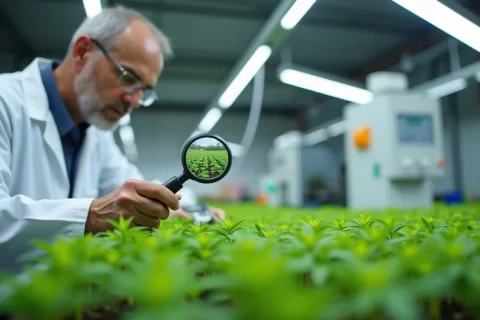
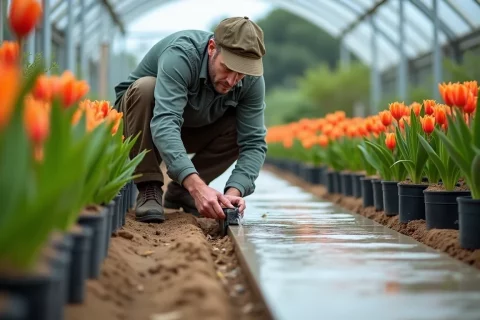
Some growers are now running new introductions through structured weed risk assessments before they commit to propagation volume. These protocols, adapted from international models and tuned for local biomes, score plants on reproductive rate, dispersal mechanism, drought tolerance, and whether Southern Africa offers any natural brake on their spread. A succulent that pups aggressively in a KwaZulu-Natal nursery might behave differently in Namaqualand, so the screening tries to match biological profile to regional fit.
The South African National Biodiversity Institute has become a practical partner, not just a regulatory voice. Growers with access to SANBI’s alien plant databases can check whether a species they’re considering is already flagged elsewhere, or whether its close relatives have history. The process is slower than the old way, which was essentially “does it sell,” but several mid-sized operations have made it standard for anything not already in the trade. One Gauteng grower described it as “insurance against future stock write-offs,” a framing that gets attention in a packhouse.
Re-assessment of existing bestsellers is harder. A plant that has moved thousands of units annually for a decade carries revenue weight. Removing it voluntarily means eating a loss that regulation might never actually impose. Some nurseries are doing it anyway, quietly, by shrinking propagation batches and letting shelf presence dwindle rather than announcing a ban that invites argument.
Labelling that tells the truth about vigour
Invasions start in the gap between what a plant does and what a customer expects. A buyer who wants a quick screen for a new boundary fence does not need a species that will colonise the neighbour’s koppie. Responsible labelling is emerging as the low-cost intervention that might matter most.
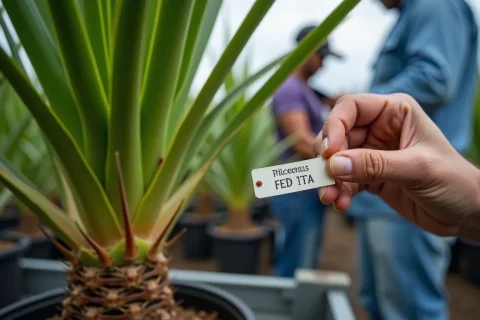
A few retailers have moved beyond the standard “fast growing, sun loving” tag to include plain warnings: “spreads by root suckers,” “bird-dispersed seeds, not for bushveld gardens,” “vigorous in high rainfall zones.” The language is careful, with no skull and crossbones, but it shifts the burden of knowledge onto the buyer in a way that protects both parties. If a plant later escapes, the nursery has a record of having said so.
This only works if staff can explain what the label means. A teenager on weekend checkout who reads “rhizomatous spread” as a variety name defeats the purpose. Training programs, some developed in-house and some borrowed from agricultural extension models, are teaching floor staff to ask where a plant is going and what the garden borders. The good ones treat it as sales technique, not compliance lecture. “That one will work for you, this one will work for you and the whole valley” is a line that lands.
The alternative plant push
Removing a problem species creates a hole on the bench. Smart growers are filling it with lookalikes that lack the escape genes. The industry term is “responsible substitution,” though nobody uses that phrase on the sales floor. A grower in the Eastern Cape has spent three years building market recognition for a sterile cultivar of a popular hedging species, banking on the fact that landscapers will switch if the form and price are right. The propagation cost is higher, the margins thinner, but the regulatory risk is zero.
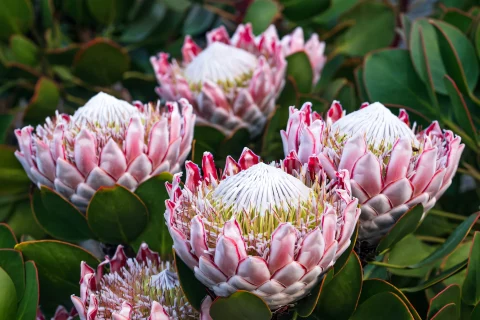
Native and near-native alternatives are getting harder looks too. Plants that evolved in Southern African conditions often lack the explosive growth that made their exotic competitors popular, but they also lack the capacity to become tomorrow’s headline. Some nurseries are running parallel trials, exotics against locals, in demonstration plots where trade customers can see the comparison. The results are mixed: some natives are slow, some are fussy, some simply do not read as “garden plant” to buyers trained on European catalogues. But the effort is genuine, and it builds a pipeline of options for when the next species gets delisted.
Voluntary removal before the notice arrives
The most consequential shift is happening without press releases. Several wholesale nurseries have stopped producing species that remain legal to sell but that internal screening flagged as probable future problems. The economics are brutal: sunk cost in mother stock, established demand from landscapers who know the plant, no external requirement to stop. The calculation is that voluntary early exit beats forced late exit, when a gazetted ban would leave them with unsellable inventory and no time to pivot.
One Mpumalanga operation cleared two hectares of a popular groundcover last year, replacing it with propagation benches for fynbos species. The owner will not name the species in interviews, which tells its own story. He does not want competitors still selling it to use him as marketing foil. The move cost him eighteen months of revenue from that line. He describes it as “getting ahead of the curve,” but the body language suggests he is also getting ahead of a conversation he does not want to have with a biodiversity officer in five years.
What weekend growers should watch for
The retail customer is not powerless in this, though the trade would prefer to handle it upstream. If you are buying this weekend, look for the labels that say more than “water regularly.” Ask whether a vigorous seller has sterile cultivars available. Check whether your nursery can name the origin of a species, not because origin is virtue but because local ecology is information.
The most useful question is the one floor staff sometimes dread: “Will this stay where I put it?” A nursery that can answer honestly is one that has already done some of the thinking that the 2025 study says the whole trade needs. A nursery that cannot, or will not, is telling you something too.
The ornamental industry will not solve invasive plant problems alone. Climate change, disturbed land, and accidental transport all matter. But the trade controls its own pipeline, and for the first time a meaningful slice of it is treating that control as a responsibility rather than just a privilege. Whether the rest follow before regulation forces their hand is the live bet.