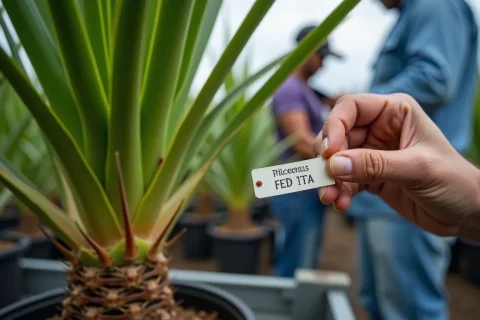

A plant label used to be the cheapest thing in the nursery, a bit of card that survived one rain shower if the ink was lucky. That era is gone. A name tag can decide whether a cultivar is correctly identified, whether propagating material was sourced properly, and whether the sale lines up with plant-improvement rules. It stops being decoration and becomes paperwork with dirt on it.
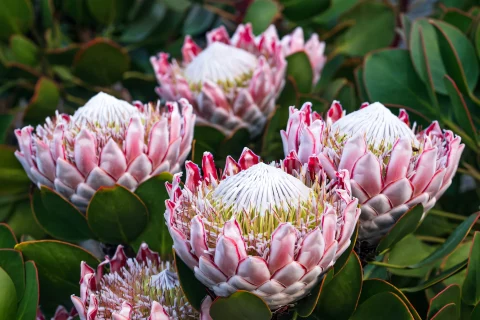
Protea `Pink Ice` is a good example because it forces the issue. By the time that plant reaches a garden-centre bench, it has already passed through breeding records, mother stock files, propagation logs, batch numbers, potting-up notes, and sales records. If the nursery cannot trace that chain, the label is just a guess with a price stuck on it.
The plant starts long before the label does
`Pink Ice` is a hybrid protea, a cross between `Protea cynaroides` and `Protea compacta`. It is also the kind of protected cultivar that exposes the difference between a real nursery and a place that just fills pots and hopes for the best. A breeder who has done the hard work of stabilising a line will keep mother stock clearly identified; the whole value of the plant sits in that identity.
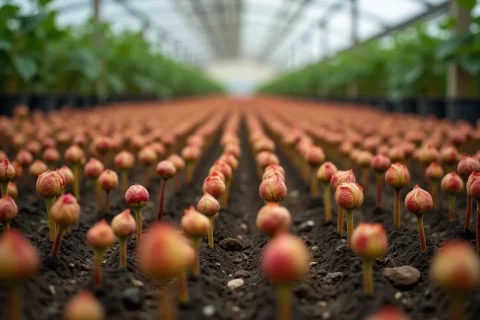
That first record is the seed of everything else. If the material came from a named mother plant, the nursery should be able to show which one. If it started from seed, the seed lot needs its own identity. The point is proof. A tray full of young proteas is only useful if someone can say where that material came from, when it was taken, and under whose authority it was propagated.
South Africa’s plant-improvement framework makes that kind of certainty more than good housekeeping. The Plant Improvement Act, 1976, puts a legal edge on the ordinary nursery habit of naming things. Once a plant is being sold as propagating material, the label is expected to tell the truth about identity, origin, quantity, date, and the seller behind it. A pretty tag is no defence if the information on it is sloppy.
The paper trail follows the cutting
The cleanest nurseries do not rely on memory, and they definitely do not rely on one weathered tray marker surviving a windy week. They keep a chain of records from the moment material enters the propagation area.
For `Pink Ice`, that chain would start with the mother stock or seed lot identifier. Then comes the propagation date, the method used, and the batch number assigned to that run. If the cuttings were taken on a specific day, that date sits in the file. If the material came from a licensed source, that supplier is recorded with enough detail to trace the original source back again. If the cultivar is protected by Plant Breeder’s Rights, the licence agreement and royalty trail have to live somewhere more disciplined than a WhatsApp chat.
By the time the plant moves from liner to pot, the inventory system should already know what it is looking at. Potting-up dates show where a batch has been moved inside the nursery. So do transfers between shadehouse, hardening-off area, and sales bench. A grower who can tie each movement back to the same batch number can isolate a problem fast. A grower who cannot is left guessing which tray, which row, and which week the damage started.
That is the difference between a recall and a panic.
The label has to survive real customers
Labels become visibly serious the moment a landscaper plans around them. A wrong mature size turns a neat border into a future fight with paving. A false frost rating sends a tender plant into the wrong suburb and kills a budget. A flower colour that turns out to be fantasy can wreck a design before the client has even paid the final invoice.
A bad label is not only annoying, it is expensive. If someone plants `Strelitzia reginae` in a hard-frost spot because the tag made it sound tougher than it is, that mistake will be paid for in replacement stock and lost time. If a nursery calls a plant one thing when it is really another, the next person down the chain inherits the mess. The landscaper cops the complaint, the client loses confidence, and the nursery gets a reputation for selling stories instead of plants.
The legal part is blunt as well. Labels for propagating material are expected to carry correct variety names, class or grade, source details, quantity, packaging or dispatch date, and the name and address of the seller or consignor. Wrong botanical names and misleading claims about hardiness, mature size, or flower colour are not harmless embellishments. They are the kind of thing that can turn a sale into a dispute.
A nursery with records can answer hard questions
The first hard question usually arrives after the sale. A customer phones to say the plant did not bloom as expected, or a landscaper says the whole batch behaves differently from the sample on the bench. If the nursery knows exactly what was sold, it can work backwards.
Batch numbers earn their keep here. The nursery can check which propagation run produced the plants, when they were potted on, where they were held, and who bought them. If the complaint points to a sourcing problem, the supplier record is there. If the issue is tied to a protected cultivar, the PBR paperwork shows whether the material was legitimate in the first place. If there is a recall, the nursery can isolate the affected line instead of pulling half the production area apart.
Without those records, the business falls back on institutional memory, which is a poor legal witness. The person who knew the story may have left. The tray marker may have rotted. The waterproof ink may have been only partly waterproof. That is not traceability. That is hope with admin attached.
The records that keep a nursery honest
A proper file set does not need drama, only discipline. For each run of plants, a nursery should be able to point to:
- the mother stock plant or seed lot
- the propagation date
- the propagation method
- the batch or lot number
- the supplier details for incoming material
- movement records as the batch is potted up or shifted
- the sales record tied to that batch
- any Plant Breeder’s Rights licence, royalty note, or source proof for protected material
That list lets a nursery prove it sold the right plant, not just a plant with the right mood lighting on the label.
What the bench should be able to prove
By the time `Pink Ice` reaches the garden-centre shelf, the label should line up with the paper trail behind it. The cultivar name should match the source. The batch number should tie back to propagation records. The sale should be supported by the same chain of custody that began at mother stock or seed lot and moved through potting, holding, dispatch, and sale.
A nursery that can do this protects itself, and it also protects the breeder whose work created the plant in the first place. Plant Breeder’s Rights only mean something if the business handling the material can show it received and sold the plant legitimately. If the nursery cannot prove that, it is depending on good luck and someone else’s memory.
The trade likes to talk about plants as living things, which they are. In practice, the business runs on fixed facts. A label that says `Pink Ice` has to mean `Pink Ice`, not a close enough guess.