

A flower can look innocent on a retail bench and still carry a licensing agreement, a royalty line, and a small army of people who all need their cut before anyone gets to call it beautiful. The pot on the shelf is the final product. The real asset is the right to stop other people from cloning it for free.
South Africa’s newer Plant Breeders’ Rights framework has pushed that truth into clearer view. Draft regulations published for comment in May 2026 sharpened the practical side of the system, and ornamental plants are where the money gets easiest to see. A breeder can spend years making one cultivar behave itself, then turn that work into a controlled business built on propagation, approvals, and paid permission.
The flower starts as a bet
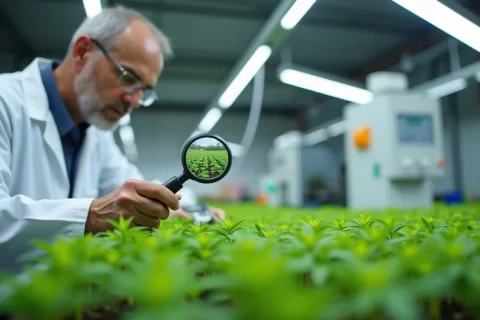
No one wakes up one morning with a licensing empire in a seed tray. A protected ornamental usually starts as stubborn, expensive selection work. Parent plants are crossed, seedlings are raised by the thousand, and most of them are thrown out before they reach the stage where anyone would even glance twice. The keeper is the odd one with better colour, tighter habit, longer flowering, cleaner foliage, or a trait the market will actually pay for.
For ornamentals, that process can swallow five to fifteen years. By the time a breeder has something worth naming, they have already paid for land, labour, irrigation, disease control, and the kind of patient observation that does not look impressive in a spreadsheet until the cultivar starts selling. Plant Breeders’ Rights stop the value leaking away the moment the plant becomes desirable.
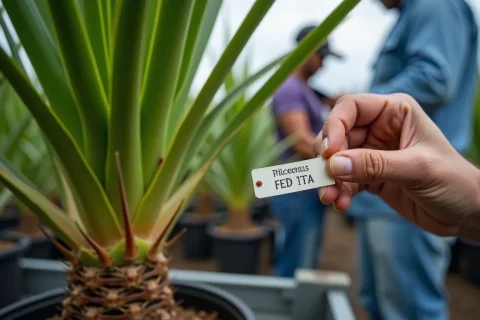
The regulations matter to nurseries and growers. Under the rights regime, the holder of a qualifying variety can control propagation and commercial use for a set period. In plain nursery language, that means no free-for-all copying, no casual cutting-taking, and no quietly multiplying a hot new plant in the back corner because demand is strong and nobody seems to be looking.
The chain has more hands than the customer sees
A successful ornamental moves through a chain that is easy to miss if you only see the final bench display. The breeder selects and tests the plant. A specialist propagator produces clean young stock. A commercial grower finishes it. A wholesaler or retailer gets it in front of buyers. Each step adds cost, but each step also adds value, and the rights holder can take a share at multiple points.
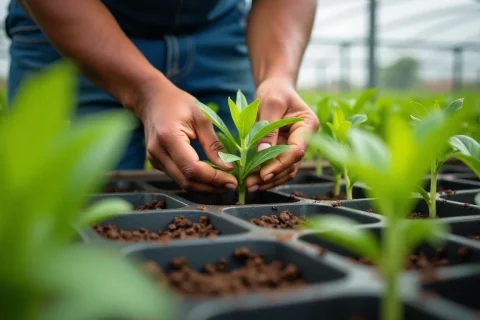
The propagator is often the first gatekeeper. Disease-free, genetically correct material matters here, because a protected cultivar is only worth licensing if the stock stays true. Tissue culture labs and cutting nurseries are the quiet industrial middle of the trade, turning a single approved mother plant into plugs or liners that can be sold at scale. If the source material is not authorised, the whole chain can turn messy fast.
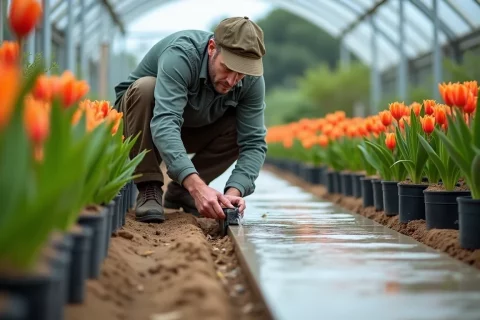
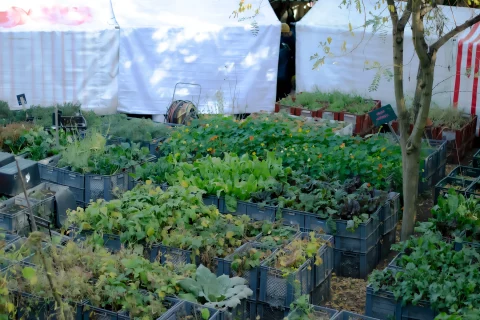
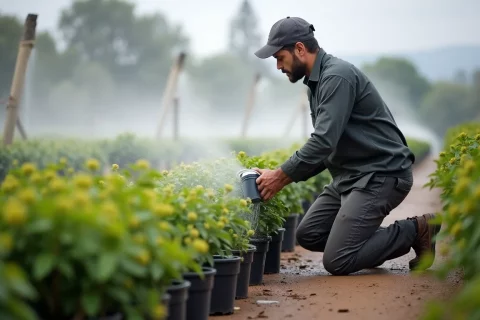
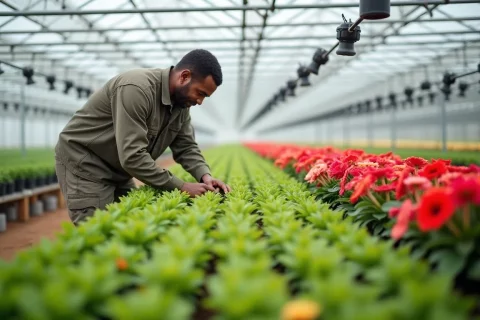
Then comes the grower who finishes the crop. The plant stops being a promising bit of genetics and becomes saleable inventory. It is watered, pinched, fed, spaced, and coaxed into the right size and flowering stage. A grower with good timing can make money on a protected plant even after paying for royalties. A grower with poor discipline just ends up funding everyone else’s margin.
Retailers complete the story. A Stodels or a Lifestyle Home Garden can put a protected ornamental on the floor, dress it with a name, and create consumer demand around colour, novelty, or performance. By then the royalty is already embedded in the price. The customer sees a pot of colour. The trade sees a chain of contracts.
Licensing turns the plant into property
Plant Breeders’ Rights give the breeder control over production, reproduction, sale, import, export, and stockholding of the protected variety. That sounds like legal boilerplate until you follow the money. Once a cultivar is protected, nurseries do not simply decide to make more of it because the market looks hungry. They need permission, and permission usually has a price.
That price can come as a per-plant royalty, a percentage of wholesale, an annual licence fee, or a combination of all three. The research pack points to royalty ranges of roughly ZAR 0.50 to ZAR 5.00 per plant for some cultivars. For a high-volume ornamental, that adds up quickly. On the nursery side, the line item may look small on each tray, but multiplication turns cents into real money very fast.
The upside for the breeder is obvious. A strong cultivar stops being a one-time sale and starts behaving like recurring income. The upside for the nursery is less glamorous but still real. A protected plant with a proper reputation can command better prices, stronger demand, and a cleaner sales story than a random unprotected lookalike. The downside is that nobody gets to improvise with the stock without risking trouble.
The May 2026 draft regulations signal that the system is getting more usable in practice, not just more theoretical on paper. Breeders want clarity on what they can control. Nurseries want clarity on what they can copy, ship, and sell without creating a fight they did not budget for.
Safari Sunset shows how the value travels
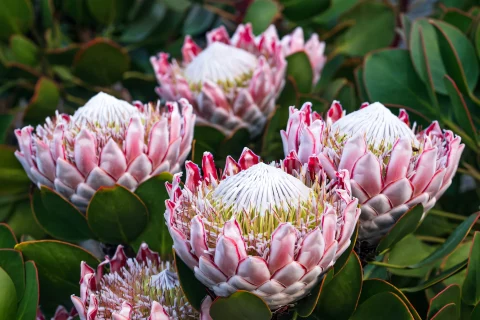
Leucadendron ‘Safari Sunset’ is the kind of cultivar that explains the whole game without needing a lecture. It came from South African fynbos breeding, with Leucadendron salignum and Leucadendron laureolum in the background. It became globally useful because it had the traits buyers want: strong red bracts, decent vase life, and enough adaptability to matter beyond one narrow niche.
If a plant like that were launched under today’s Plant Breeders’ Rights setup, the commercial logic would be obvious. The breeder would be licensing a behaviour, a look, and a repeatable market identity, not just selling cuttings or seed. The plant would travel through propagators, growers, wholesalers, and retailers, but the rights holder would keep a claim on the value created at every step.
That is the hidden change in the current system. A flower is no longer only a product of selection. It is an asset class for people who understand the propagation chain, and most of the trade already does. The public notices the flower once it is in a pot. The breeder noticed it years earlier in a trial block, then protected it before the rest of the market had a chance to treat it like free stock.
What nurseries are actually buying
When a nursery buys into a protected cultivar, it is buying more than colour and form. It is buying approved material, a supply relationship, a contract, and access to demand it did not create itself. It is also buying compliance. Records need to be kept. Sales often need to be reported. Audits are part of the arrangement. The prettiest plant in the yard can still come with paperwork that bites harder than a fungal spray bill.
This is where the trade divides into the disciplined and the opportunistic. Disciplined operators like protected varieties because they can be scaled with some certainty and because the market usually rewards consistency. Opportunists hate the limits because the old habit of multiplying a good thing quietly no longer works once the rights holder is watching the numbers.
The legal framework does one more useful thing: it makes breeding worth the effort. Without protection, the breeder eats the research cost while everyone else copies the result. With protection, the breeder can turn novelty into income long enough to justify the next round of selection, trials, and failures.
What growers should do this weekend
Check which ornamentals in your range are protected or likely to be protected soon. Ask your propagator where the mother stock came from. If you are buying a hot new flower, get the licence terms in writing before the first tray lands.
Look at your own margins with blunt eyes. A royalty of a few rand a plant can be fine on a strong seller and ruinous on a slow mover. Protect the stock records, because if a cultivar is earning money for the breeder, someone may eventually ask how many you sold.
Most of all, stop thinking of a successful ornamental as a decorative item with petals. In this business, the flower is the visible part. The real product is the right to multiply it, price it, and keep other people from doing the same thing for nothing.