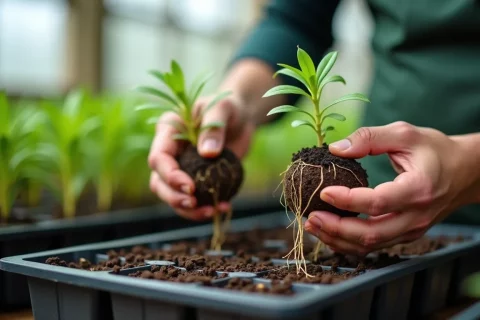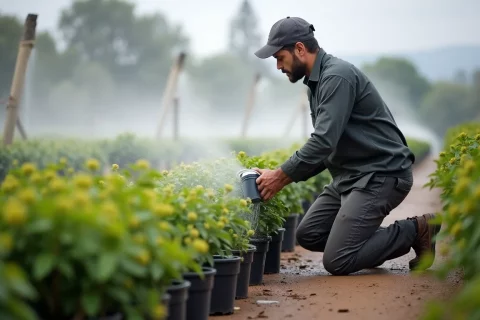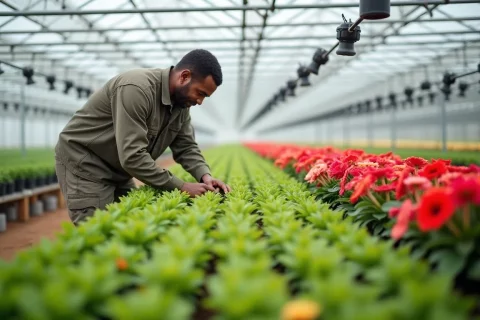

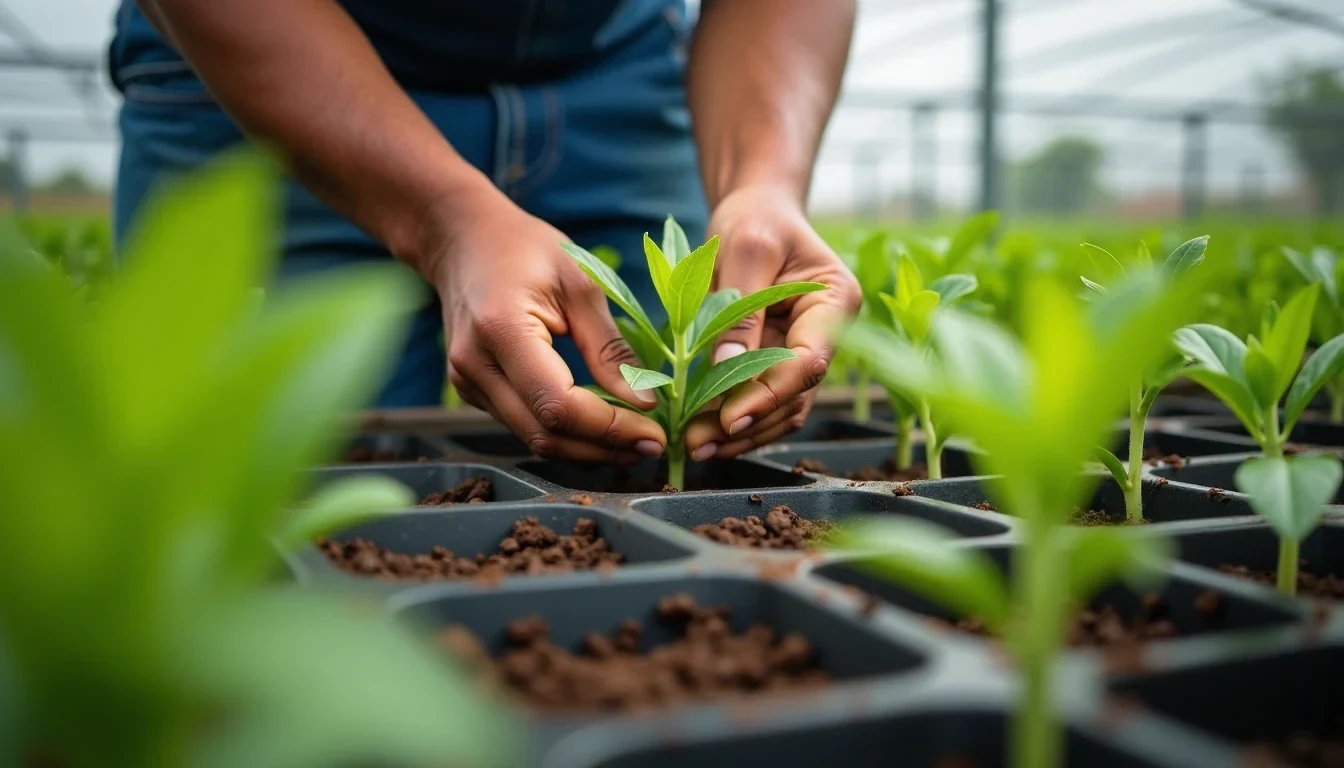
When a grower in Tzaneen first switches from peat to a bagasse blend and watches their irrigation run straight through the plug tray, the panic is real. They check the emitters, blame the mixer, and maybe curse the supplier. They are not seeing a faulty product. They are seeing a substrate behaving exactly as its physics demand, and a grower who has not yet unlearned the reflexes that peat taught them.
Peat spoiled us. Its spongy matrix holds water like a reservoir, releases it slowly, and buffers nutrients with a patience that forgives sloppy watering. This forgiveness is not a feature of good horticulture. It was a geological accident, built up over millennia in northern bogs at roughly one millimeter per year. We mined it faster than it formed, and now the bill has arrived in two forms: atmospheric carbon from drained peatlands, and a global supply chain that is tightening regardless of what South African growers prefer. The United Kingdom has already banned retail peat sales and will extend that to professional growers in 2026. The European Union is pushing the same direction. These are market signals that will reach our export-oriented nurseries and our domestic suppliers of imported mixes alike.
The 2025 research on peat substitutes is clear: swapping one material for another and expecting identical performance does not work. Effective replacements are engineered mixtures, not single-ingredient substitutes. Bark, coir, wood fiber, compost, and mineral amendments each bring distinct water retention profiles, nitrogen dynamics, and structural lifespans. A blend that succeeds for poinsettias in the Netherlands may fail for fynbos cuttings in the Western Cape. The physics are local, and the management must be too.
Why local materials demand local thinking
South African growers have access to substrates that northern European nurseries can only dream of, if we stop trying to imitate their formulas and start from what sits in our own yards.
Composted pine bark is the obvious backbone, pouring out of Mpumalanga and KwaZulu-Natal forestry operations in volumes that dwarf our horticultural demand. Aged correctly, it gives the aeration that Proteaceae crave and the structural stability that lasts through a two-year production cycle. Fresh bark will immobilize nitrogen so aggressively that seedlings yellow within weeks, so the composting investment is non-negotiable.
Sugarcane bagasse from KwaZulu-Natal mills offers a fibrous, water-retentive matrix that can replace peat’s volume function in blends for moisture-loving crops. It needs composting to break down residual sugars and stabilize its carbon-to-nitrogen ratio. The raw material is essentially a disposal problem for sugar processors, which gives it a cost advantage that imported peat can never match.
Macadamia nut husks from Limpopo and Mpumalanga processing plants decompose slowly and maintain pore structure. They suit long-term container crops where substrate collapse would strangle roots. Vermiculite from Phalaborwa adds cation exchange capacity that most organic alternatives lack, holding calcium, magnesium, and potassium against leaching. Perlite, also mined locally, provides the drainage insurance that coir-heavy blends sometimes need.
The constraint is not material availability. It is logistical coherence: how far a substrate travels from source to mixer to nursery, whether composting facilities can deliver consistent quality at scale, and whether the final blend is designed for a specific crop rather than marketed as a generic peat replacement.
The irrigation habits that will kill your crop
Peat-trained growers water by intuition developed over years. The surface looks dry, but the core is moist, so they wait another day. The pot feels light, but the plant is not stressed, because peat gives you that margin. Peat-free substrates, particularly those dominated by bark or wood fiber, punish that hesitation. They drain faster, dry more uniformly, and cross the wilting point without the visual warning that peat provides.
The adjustment is not simply “water more.” It is water differently: smaller volumes, more frequently, with an eye on the actual moisture curve rather than the calendar. Coir-heavy blends present the opposite risk, holding so much water that growers accustomed to peat’s drainage may underwater, assuming saturation when the profile is merely even. Bagasse blends can shift from adequate to waterlogged across a narrow range of irrigation timing.
Moisture sensors pay for themselves quickly in this transition. They are not luxury automation but retraining tools. They force the grower to read the substrate rather than the plant, correcting the intuitions that peat installed. Automated irrigation with pulse programming can deliver the little-and-often regime that bark-based mixes require, although many small nurseries will manage the same effect manually through disciplined scheduling.
Nitrogen and the biology you cannot see
The most expensive mistake in peat-free transition is invisible for the first six weeks. Fresh or insufficiently composted woody materials, bark, wood fiber, and bagasse all feed a microbial population that outcompetes plant roots for available nitrogen. The substrate is not toxic; it is hungry, and it eats first.
Growers who do not account for this immobilization see pale, stunted plants and reach for more fertilizer. Sometimes they compound the problem with salt damage, and sometimes they simply feed the microbes more. The correction is either thorough composting before blending, which ties up capital and space, or supplemental nitrogen during early growth stages, applied with the knowledge that the substrate will release it later as decomposition proceeds.
Coir avoids this particular trap once properly washed of its sodium and chloride residues, but introduces others. Its near-neutral pH and minimal buffering capacity mean that irrigation water chemistry drives root zone conditions directly. A grower in the Western Cape using alkaline borehole water will watch pH drift upward in coir blends that peat would have held acidic. pH monitoring becomes weekly discipline, not a monthly spot-check.
Building blends that pay
Commercial viability in peat-free substrates does not come from finding the one perfect mix. It comes from matching blend to crop, and accepting that your nursery may run three or four distinct substrates where peat once handled everything.
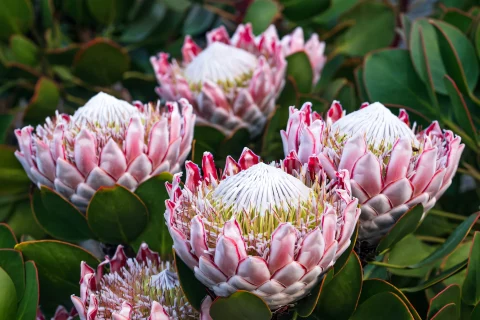
For fynbos and Proteaceae, the formula is straightforward: high bark content, sharp drainage, minimal phosphorus, and irrigation that never lingers. For bedding plants in summer rainfall regions, bagasse or coir blends with perlite give the water retention that prevents midday collapse without the anaerobic conditions that breed root rot. For long-term woody ornamentals, macadamia husk blends provide the structural longevity that avoids the cost and root disturbance of repotting.
The testing protocol matters as much as the blend design. Small batch trials, run with the actual irrigation and fertilizer regimes intended for commercial scale, will reveal problems that laboratory analysis misses. A blend that tests perfectly for pH and electrical conductivity may still segregate in transport, compact under the weight of hanging baskets, or develop hydrophobic zones that repel water after drying.
South African nurseries have an advantage that northern European growers lack: we are not retrofitting decades of peat infrastructure. Our industry is smaller, more distributed, and less locked into centralized mixing and long supply chains. A grower in Howick can source bagasse from a mill forty kilometers away, compost it on site, and blend a crop-specific mix that no national supplier would bother to formulate. That local adaptability is the commercial opportunity hidden inside the peat transition.
The growers who thrive will be those who stop asking what works instead of peat, and start asking what this specific blend, in this specific tunnel, with this specific water source, needs from them today. The substrate is not the problem to solve. The habit of expecting it to think for you is.