
A landscape architect in Pretoria East recently learned the hard way that the R12,000 oak-lined avenue she specified for a client would spend its first three summers fighting nematodes in the local clay. The cultivar was flawless above ground. She had not checked whether the nursery had matched it to a rootstock bred for Highveld pressure. Five years on, half the trees are stunted and the client is asking questions she cannot answer. This is the quiet crisis in South African horticulture: we obsess over the visible plant and treat what happens underground as someone else’s problem.
The Agricultural Research Council has run horticultural programmes for decades that evaluate rootstocks against precisely this blind spot. Their work spans ARC-Infruitec-Nietvoorbij for deciduous fruit and vines, ARC-ITSC for citrus and avocado, and ARC-Roodeplaat for ornamentals and vegetables. The brief is not glamorous. Breeders are looking for root systems that can handle a 1.5°C average temperature rise, already baked into the past fifty years of South African weather data, with projections pointing to 3–4°C in some regions by century’s end. They are looking for roots that keep functioning when the Western Cape repeats its 2015–2018 drought pattern, when Limpopo irrigation water turns saline, and when root-knot nematodes arrive in numbers.
What the roots actually do
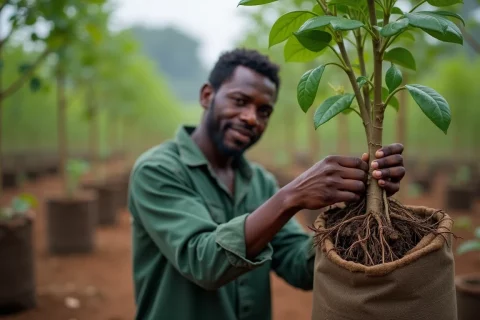
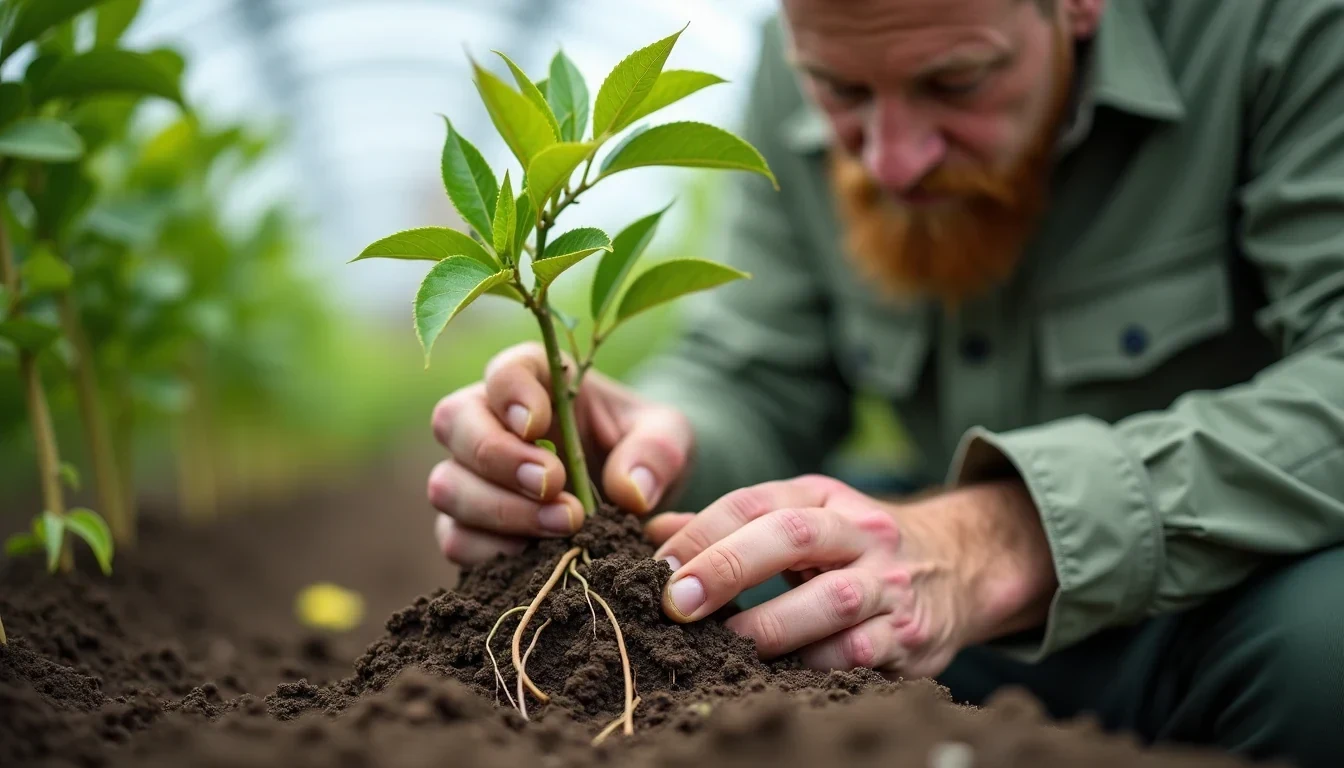
The grafting transaction is straightforward in theory. A grower selects a scion cultivar for its flowers, fruit, form, or market recognition. A rootstock is chosen for everything else: how deep it drills for water, how it negotiates pH extremes from KwaZulu-Natal acidity to Karoo alkalinity, whether it locks out Phytophthora or shrugs off Fusarium wilt. The combination is meant to outlast the person who planted it. Fruit orchards take three to five years to first bearing; landscape trees establish over a decade. Discovering incompatibility after year four is a write-off, not a learning experience.
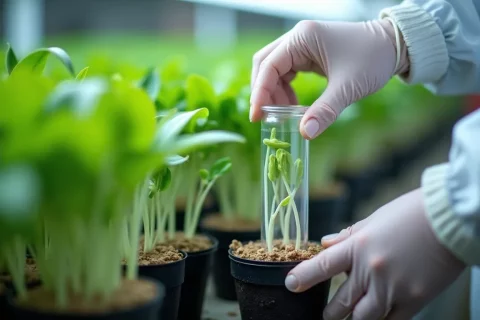
ARC trials move through controlled greenhouse screening into multi-locational field tests that run five to ten years for fruit trees, longer for landscape species. Candidates face replicated plantings across the Western Cape, Limpopo, and KwaZulu-Natal, measured against vigour, yield, disease response, and survival under managed neglect. Only then does a selection reach commercial channels.
Who is placing the bets
Private operators are not waiting for government release schedules. TopFruit, the Stellenbosch-based variety management company, has built its business on evaluating and licensing rootstock and cultivar combinations for local conditions, particularly in deciduous fruit, avocado, and citrus. They are the conduit through which international breeding material gets stress-tested against South African reality before any grower commits hectares.
Citrus Research International operates differently. The organisation does not breed rootstocks itself but coordinates industry-funded research into the combinations that matter for local citrus growers: HLB tolerance, Phytophthora resistance, nematode suppression, drought adaptation. Their trials determine what the country’s R20 billion citrus export sector plants next.
Stellenbosch University’s Department of Horticultural Science runs parallel programmes on pome fruit, stone fruit, and viticulture rootstocks, often in direct collaboration with ARC institutes. The university channel produces the technical graduates who end up managing nursery trials and orchard decisions.
The economics of getting it wrong
Current nursery pricing for a young fruit tree sits between R80 and R250 depending on species and specification. That figure is misleadingly modest. The true cost of a rootstock mistake includes removal, soil remediation, replanting, and the lost production years that push break-even further into the future. A poorly matched rootstock can suppress yields by 20 to 50 percent, or it can demand compensatory spending on water, fertiliser, and chemical intervention that erodes margin on every kilogram harvested.
For landscape installations, the damage is harder to quantify but no less real. A failing avenue or a municipal planting that collapses within eight years represents public money spent twice, plus the reputational cost to the landscape architect or contractor who specified the material. Property value uplift from mature trees is well documented. The inverse, a row of struggling specimens that never canopy, is equally measurable.
What future-proofing actually looks like
The strategic shift underway is not about breeding new flower colours or novel fruit shapes. It is about changing the plant beneath the plant. A valuable scion cultivar, one with proven market recognition or landscape performance, can be retained and extended by grafting it onto a rootstock with updated resilience traits. The alternative, restarting breeding programmes for above-ground characteristics in parallel with climate adaptation, would take decades longer and cost multiples more.
This is particularly urgent for long-horizon crops. Deciduous fruit orchards, citrus plantings, avocado blocks, and landscape tree installations are not annual decisions. They are commitments measured in twenty- to fifty-year increments. The rootstock selected in 2025 will still be performing, or failing, in 2055.
Water uptake efficiency is one of the traits under heaviest selection pressure. Rootstocks that maintain hydraulic function at lower soil moisture, or that explore deeper soil profiles, allow growers to reduce irrigation applications without yield penalty. In a country where the 2015–2018 Cape Town drought temporarily threatened municipal supply to agriculture, this is not theoretical. Salinity tolerance is another priority for the arid-zone irrigation districts where salt accumulation in soil profiles is progressive and largely irreversible.
Nematode resistance carries particular weight for Highveld and subtropical plantings. Root-knot nematodes of the Meloidogyne genus are widespread across South African soil types. Their damage is insidious: reduced water and nutrient uptake, secondary infection entry points, and decline that mimics drought stress or nutrient deficiency. A resistant rootstock eliminates the diagnostic confusion and the chemical intervention that would otherwise follow.
The weekend check
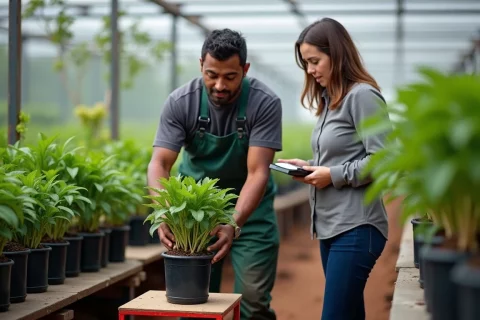
If you are specifying, planting, or buying grafted material this season, ask the nursery three questions before you ask about flower colour or fruit size. What rootstock is this on? Where has that combination been trialled locally? What is the performance record under water restriction or nematode pressure? The answers may be incomplete. The fact that you asked will signal to the trade that the market is waking up to what happens underground. That pressure, more than any research programme alone, will accelerate the availability of material genuinely adapted to what South African conditions are becoming.