
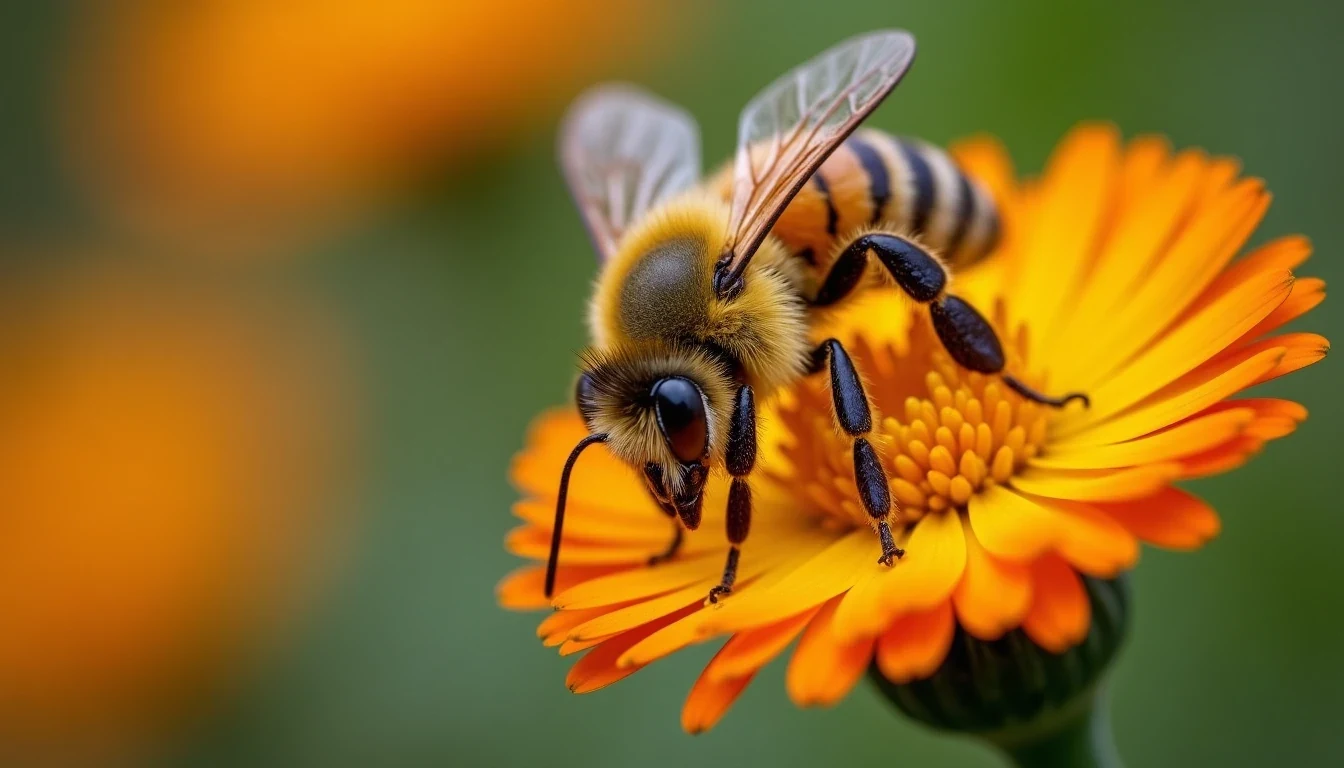
A bee does not read a swing tag. It reads nectar chemistry, pollen protein, and whether the corolla hides a lethal dose of Imidacloprid. The gap between what nurseries promise pollinators and what their plants actually deliver has become a live issue in the trade, and it is not closing.
The Chemical Reality Behind the Label
Walk through any wholesale nursery in the Western Cape or Gauteng and you will find the same tension. Plants arrive at retail bearing cheerful bee icons and “pollinator-friendly” claims, but the production logbooks tell a different story. Neonicotinoids remain workhorse insecticides in South African ornamental production. Imidacloprid, Thiamethoxam, and Clothianidin do not sit on leaf surfaces waiting to wash off. They travel through the xylem, settle in phloem, and express themselves in every tissue the plant grows, including the pollen and nectar that foraging insects collect.
The timeline is the killer. A drench application to rooted cuttings in September can still show residues in open flowers by November. A bee visiting that bloom experiences sub-lethal effects: impaired navigation back to the hive, reduced foraging efficiency, and compromised immune response to pathogens. The colony weakens without a body count to trace.
Pyrethroids pose a different problem. Cypermethrin and Deltamethrin do not penetrate tissues systemically, but they cling to surfaces with tenacity. A spray aimed at thrips on unopened buds drifts onto adjacent flowers, or residues persist longer than the label implies in cool tunnel conditions. The pollinator touches, grooms, and dies. The plant still qualifies for its friendly label because the marketing department and the propagation manager do not share an office, let alone a database.
What a Verifiable Protocol Looks Like
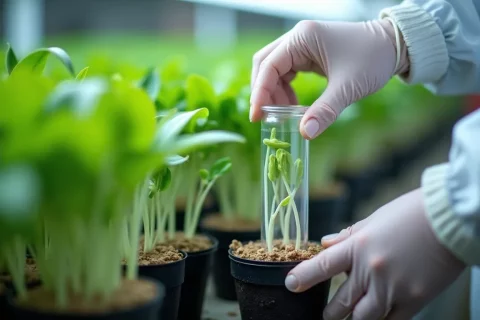
Integrated Pest-and-Pollinator Management is not a product swap. It is a sequencing discipline that treats chemical intervention as the final step after four others have failed or been bypassed. The protocol starts with the material arriving on the bench. Clean stock, verified pest-free, eliminates the reactive spray cycle before it begins. Growing media sourced from screened batches, not reclaimed field soil, closes another early door.
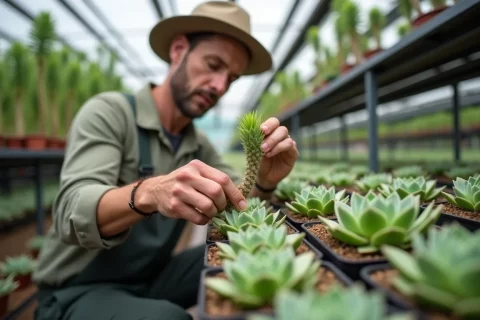
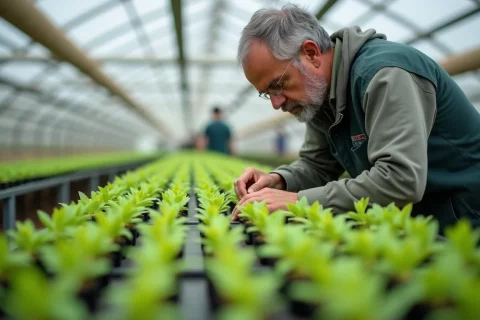
Monitoring replaces calendar spraying. Weekly scouting with 10x hand lenses, yellow sticky traps for aphids and whiteflies, blue traps for thrips, and pheromone traps where Lepidoptera pressure justifies the cost. The threshold is numerical: ten aphids per ten plants in a sample triggers action, not the sight of one greenfly on a leaf. This sounds elementary, but in practice most nurseries spray when the sales manager phones to say a batch looks “untidy.”
Biological control agents are available in the South African market, though the range lags Europe and North America. Phytoseiulus persimilis for spider mite on roses and herbs. Encarsia formosa for whitefly in heated structures. Beneficial nematodes for soil-dwelling stages. The constraint is not efficacy but logistics: living products need cold chains, timely application, and staff who understand that the predator population builds slower than chemical knockdown. A grower switching from pyrethroids to biocontrol accepts two weeks of visible pest presence while the predator cycle establishes. The consumer at the garden centre does not understand this, and that creates commercial friction.
When chemistry becomes unavoidable, the selection narrows sharply. Spinosad, derived from fermentation of Saccharopolyspora spinosa, degrades rapidly in sunlight and targets chewing insects with limited bee toxicity at prescribed rates. Insect growth regulators disrupt moulting without the broad-spectrum kill. Horticultural oils and insecticidal soaps handle soft-bodied pests on contact, leaving no residual hazard. The active ingredient matters less than the formulation, the rate, and the timing.
The Timing Rules That Actually Protect
No pesticide, whatever its label claims, belongs on open flowers. This is not negotiable. A plant marketed to attract pollinators must reach retail without having been sprayed during bloom, and without systemic residues carried into bloom from earlier applications. The practical rule is simpler: treat in vegetative stages only, and only with products whose degradation curves clear the plant before floral initiation.
Application timing follows pollinator behaviour, not staff convenience. Dawn and dusk, when honeybee foraging is minimal, reduce direct contact exposure. Wind speeds below 10 km/h prevent drift onto adjacent flowering crops. Spot treatment or soil drench replaces broadcast foliar application wherever the pest distribution allows. These are not refinements. They distinguish a genuine claim from a legal vulnerability waiting for a test case.
Making the Claim Stick
Transparency is the final protocol element, and it is where South African nurseries have the most room to improve. A swing tag with a bee graphic and no supporting information invites scepticism from educated consumers and regulatory scrutiny. The verifiable alternative is specific and local: a “Pollinator-Safe Production” label backed by a QR code linking to the nursery’s documented IPPM protocol, the monitoring schedule for that batch, the last chemical application date and product, and the staff member who signed off the clearance for sale.
Staff training completes the loop. The person at the point of sale must understand why a plant with minor thrips scarring is actually preferable to a blemish-free specimen grown under suppressive chemical cover. Without that conversation, the consumer takes home cosmetic perfection and a dose of residual neurotoxin, and the nursery’s IPPM investment is invisible.
Some progressive growers are moving this direction quietly. They use biological control in herb and vegetable lines, reduce neonicotinoid use in indigenous propagation for restoration projects, and partner with SANBI and local botanical societies for credibility. No single nursery has yet made IPPM certification a public brand pillar. This suggests both opportunity and risk: first mover advantage for whoever commits fully, and first target for competitors who prefer the cheaper, murkier status quo.
The flower’s attractiveness to a bee is fixed by evolution. The nursery’s claim about that relationship is fixed by practice. Currently, the two are often in conflict. Reconciling them requires not better marketing but cleaner benches, sharper monitoring, and the willingness to let a plant show minor pest damage as proof of how it was grown.