

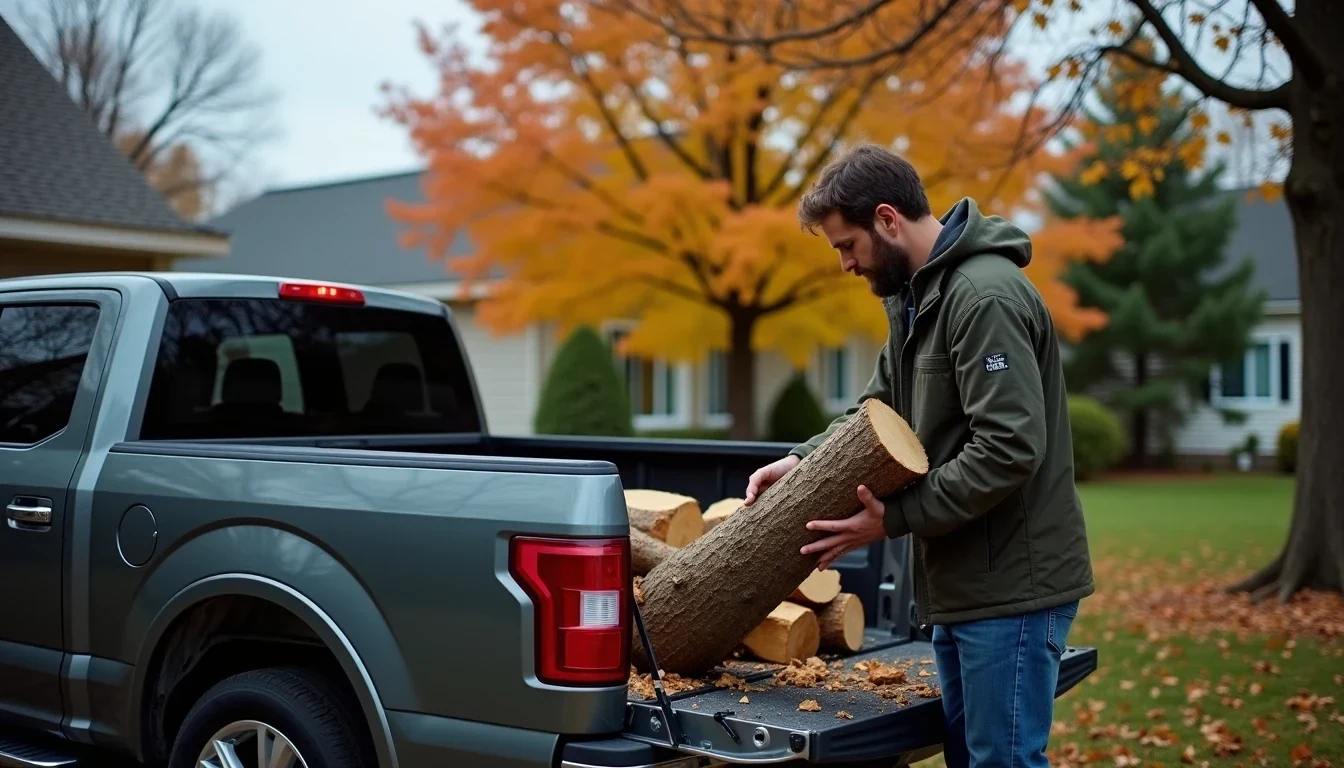
The cheapest way to spread the polyphagous shot hole borer is to be helpful with someone else’s firewood. A homeowner sees a declining maple, plane or oak, has it cut down, and then hands the logs around as if they were harmless garden waste. This is how a beetle moves from one block to the next.
PSHB, Euwallacea fornicatus, does its damage inside the wood, where a general spray on the bark is mostly theatre. The bigger mistake is not the felling itself; it is the way cut material gets moved, dumped, split up, or stored after the tree comes down.
The signs people miss
PSHB does not wear a neat uniform across every host. One tree may bleed dark staining. Another may show dry, dusty frass. A third may just look tired until the canopy starts thinning and branches die back.
On maples, planes, and oaks, the most useful clues are small round holes, usually about 1 mm across, plus discoloured patches around them. On some hosts, the tree pushes out sugary material or sticky gum from the entry points. That white, crusty ooze on maple or plane is easy to dismiss as harmless sap, but it is exactly the kind of thing that should make you stop and look again. Fine sawdust-like frass in bark creases, at the branch union, or below the trunk is another warning sign.
A hole by itself is not enough to call it PSHB. Other borers and ordinary bark damage can leave similar marks. Healthy-looking wood can still hold beetles and fungal galleries inside. A branch can look serviceable from the driveway and still carry living insects under the bark. A quick glance and a guess are a bad way to manage this pest.
The tree you think is the problem is only half the story
The homeowner’s instinct is usually to focus on the tree that looks worst. That is understandable. A declining plane near a driveway is hard to ignore, and once a tree starts dropping leaves early or thinning out, people want it gone.
PSHB is not solved by a neat before-and-after photo. Once an infested tree has been cut, the wood becomes the risky part. Logs, limbs, and firewood can still harbour live beetles. If those pieces leave the property untreated, the infestation gets a free ride.
The damage jumps the fence line here. A pile of cut branches dropped into a green-waste heap can seed a new outbreak. A few logs given to a neighbour for a braai can do the same. Firewood driven to a holiday house can carry the pest into a place that never had a problem before. Municipal guidance has been blunt on this point for years, because the spread usually comes from people treating infested wood like ordinary pruning waste.
What to photograph before you touch anything
If you suspect PSHB, do not rush to load the trailer. Start with photographs.
Take close-ups of every hole, stain, exudate patch, and frass trail you can find. Then step back and shoot the whole branch, the trunk base, and the full canopy so the decline is visible in context. Photograph both sides of the tree if possible. A useful set of images shows species, symptoms, and the general level of stress all in one go.
Write down the tree species if you know it, plus the address or a clear landmark on the property. A maple in one suburb and an oak in another may both show trouble, but the local planting context helps the diagnosis. If several trees are nearby, note which ones look stressed and which ones still seem healthy. That pattern can be more important than one dramatic branch.
Do not strip bark, split logs, or drag suspect wood across the yard before you get advice. The goal is to leave the evidence where it is until somebody who knows PSHB can assess it properly.
Who to call
A PSHB-familiar arborist is more useful than a fast pesticide purchase from a hardware shelf. That arborist knows the difference between a tree that needs pruning, one that needs removal, and one that needs a closer look before anything is done at all.
Local municipal environmental or parks staff can also help with reporting and handling guidance. In some cases, university-linked monitoring teams are involved in confirmation and reporting, including the Forestry and Agricultural Biotechnology Institute at the University of Pretoria through the national PSHB reporting portal, polyphagousshotborer.co.za. If you want the right tree judgement, use the people who spend time in the wood, not the people who only sell sprays.
PSHB lives inside the tree. A general insecticide sprayed on the surface is unlikely to reach beetles already buried in the galleries. It can also damage beneficial insects, pets, people, and the garden around the tree without solving the actual problem. This is a poor trade for a homeowner and a worse one for a neighbourhood.
What responsible removal looks like
Sometimes removal is the correct call. A tree may already be too compromised, too risky near structures, or too heavily infested to keep. But the felling is only the first act.
Any cut material needs to be handled as if it can still spread beetles, because it can. Keep suspect logs and branches on the property until they have been assessed and given a disposal plan. Do not hand them to a neighbour, do not drop them at a green-waste site unless that site has an approved process for PSHB material, and do not move them to another property for storage.
If a professional advises chipping, sealing, solarising, burning, or another disposal method, follow that guidance exactly and in the right sequence. The point is to stop the wood from becoming transport.
Homeowners also need to be disciplined about the tidy finish. A clean stack of firewood looks responsible. In this case it can be the opposite. Once the wood is cut, the chain of custody matters as much as the diagnosis.
Why the wrong move keeps showing up
PSHB spreads so well because the bad decision looks sensible in the moment. The tree is down. The yard needs clearing. The logs are useful. The neighbour wants firewood. The holiday house has a fireplace. All reasonable, all wrong.
People think they are finishing the job, when they are actually moving the job somewhere else.
This pest has already taught enough communities the same lesson. If you suspect it, slow the process down. Photograph the symptoms. Get a proper diagnosis. Keep the wood where it is until someone qualified tells you what to do with it. A shortcut with infested timber turns one sick tree into a street problem.
What to do this weekend
Walk the property and inspect any stressed maples, planes, oaks, or other declining trees.
Photograph tiny round holes, staining, gum, sugary exudate, frass, and thinning canopy.
Do not move suspect branches, logs, or firewood off the property until a PSHB-savvy arborist or municipal contact has assessed them.
If a tree has already come down, keep the cut wood in place and get instructions before anyone hauls it away.