
The garden does not need a daily sip. It needs a proper drink, then the discipline to wait. The habit of giving everything a quick sprinkle every morning is how people train shrubs, roses, and trees to behave like pot plants, living off the top centimetres and panicking the moment the hose stays in its holster for a day.
That routine also burns water for almost no return. Hot air, wind, bare soil, and a shallow root zone make a lot of that daily splash disappear before it ever reaches the roots that matter. If you want a plant that can handle a missed day, a heat spike, or a load-shedding gap in pump time, you have to stop feeding the surface and start watering the profile.
Where shallow watering goes wrong
A light daily sprinkle tells roots to stay near the top of the soil, where the wet patch is. Once that happens, the plant becomes dependent on constant input. Skip a cycle and it shows stress fast, because the roots never had a reason to chase moisture deeper down.
That shallow zone dries out quickly. In warm, windy weather, a big slice of surface water can vanish before plants use it. The result is a cruel little loop: more frequent watering, more evaporation, and roots that stay lazy. You also end up with nutrients moving around in the wrong place. Nitrogen and potassium do not sit still in a wet top layer for long, and if the whole root system is living there too, the plant misses out when the top dries.
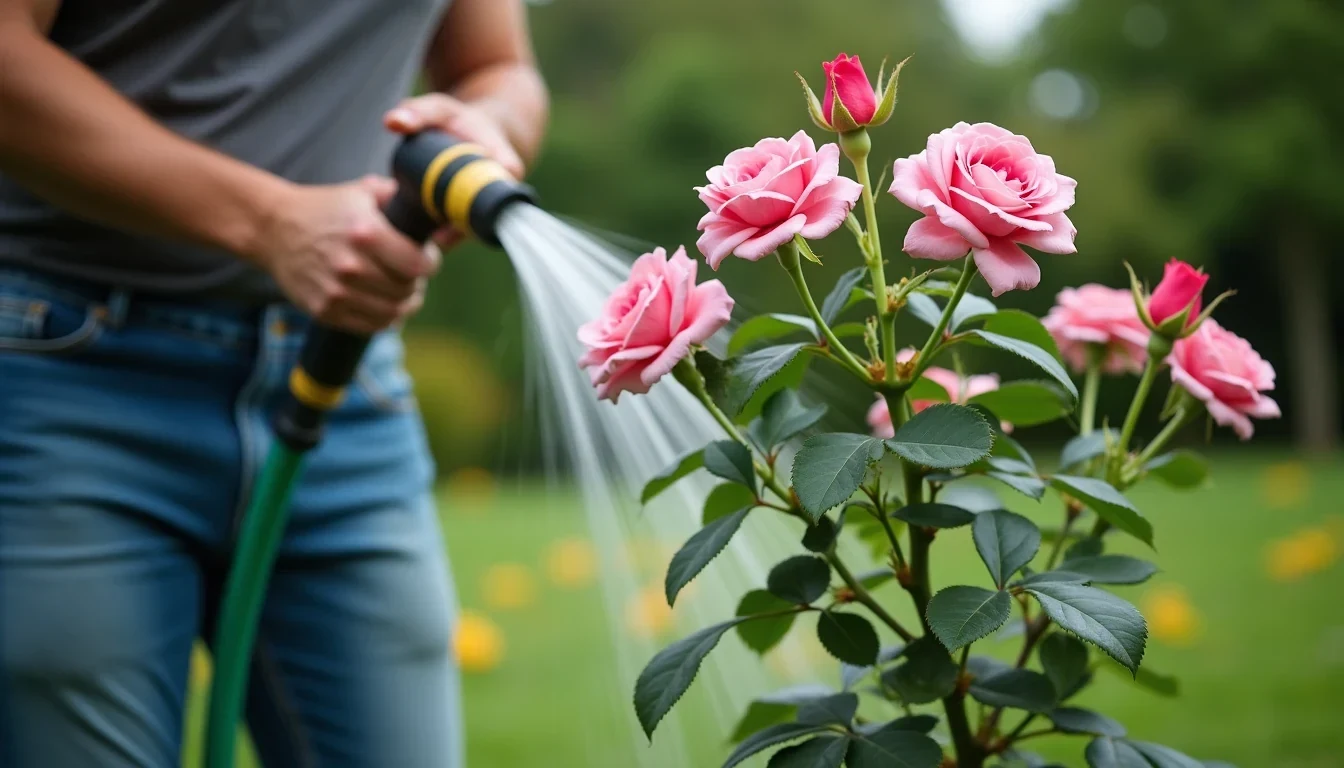
Overhead sprinklers add another problem. Wet leaves are not a harmless detail. Roses get black spot, ornamentals pick up powdery mildew, and damp soil close to the crown creates the sort of conditions that favour root disease. A continually moist surface is also bad training for larger plants that need anchorage, like Podocarpus falcatus and Buddleja saligna. Shallow roots grip badly.
Soil decides the schedule
Watering advice that ignores soil is theatre. Sand, loam, and clay behave so differently that treating them the same is lazy gardening.
Sandy soil, like you see in parts of the Cape Flats, takes water in quickly and lets it go just as fast. It has little storage. If you water sand, you need to do it deeply enough to move moisture below the first few centimetres, but you may need to return more often because the reserve does not last long.
Clay, common in parts of the Highveld, is the opposite headache. It drinks slowly. If you rush water onto it, the top can puddle while the lower profile stays dry. Clay then holds on once it finally absorbs moisture, which means the interval between irrigations can be much longer. The price is patience. A slow application matters more here than brute volume.
Loam sits between the two. It accepts water at a moderate pace and keeps a useful store for roots. For established plants, it is the easiest soil to manage because it gives you some room before the whole bed turns into either a sieve or a puddle.
For shrubs, the useful target is not the top crust. Aim for 30 to 60 cm of wet soil. Mature trees want moisture deeper, around 60 to 90 cm or more. That is where the real root work happens.
The same water gives different results
If you want to see how irrigation style changes a garden, compare three schedules using the same weekly volume. Give one bed seven shallow cycles, another two medium cycles, and the last one slow deep soak.
The shallow daily version wets the skin of the soil and little else. The roots stay up top and the plant becomes reliant on constant service. Miss a day and you will see it immediately.
Two medium irrigations usually do better, but the real test is whether the water reaches the active root zone or just makes a slightly larger damp patch.
A single slow deep cycle is the one that usually earns its keep. On sand, you will still need to check whether the water moved beyond the first easy layer or simply disappeared downward too fast. On clay, the same cycle may need to be broken into shorter pulses so the surface can accept the water instead of pushing it away as runoff. The point is not to water more often. It is to water in a way the soil can actually use.
Drip beats sprinkling in shrub beds
In shrub beds, drip line under mulch usually wins. It puts water where roots are, not on leaves, paving, and air. That matters in our weather. A sprinkler throws water wide, and a lot of it ends up lost to drift and evaporation. Drip keeps the delivery local.
Mulch helps, but only when it is used properly. A 5 to 10 cm layer of organic mulch slows evaporation and keeps the soil cooler. Leave it off the trunk flare and do not mound it against succulent crowns. A mulch volcano is just a rot invitation with better branding.
Drip systems are not magic, though. Blocked emitters, kinked lines, and lazy spacing can leave half the root ball dry while the other half gets all the attention. A bed can look irrigated and still be underfed.
Measure before you guess
Gardeners get into trouble when they water by vibe. The fix is to measure.
For sprinklers, place several straight-sided containers in the zone, old tuna cans or rain gauges work fine, and run the system for a set time. Measure the water in each one with a ruler. You will quickly see whether the pattern is even, how much water is landing, and whether one side of the lawn or bed is getting robbed.
For drip, catch the output from a single emitter in a measuring cup or small bucket for one minute or five, then work out the flow rate. If one emitter is weak, clogged, or dead, you will know before the plant tells you by sulking.
A narrow trowel, soil probe, or even a long screwdriver will tell you how deep the water is moving. Push it into the soil after irrigation, then compare how easily it enters the damp zone and where it starts meeting resistance. That boundary is your dry layer. Check several spots, because one lucky test hole is not proof.
A soil moisture meter can give you a quick reading between deeper checks, but it should never replace actually opening the soil now and then. If water is pooling or running off the bed before it disappears, the application is too fast for the soil. Slow it down and split it into pulses.
Weekend irrigation audit
This is the job for a Saturday morning, before the heat gets serious.
Check for leaks at taps, joins, and hose fittings.
Walk the drip lines and find blocked emitters, pinched tubing, and sections that never quite seem to reach the same plants twice.
Watch for runoff on clay and for water that vanishes too fast on sand.
Test wetting depth with a trowel or probe after a full cycle.
Look under the mulch and make sure the soil below is actually moist, not just the mulch itself.
If you want a garden that can take heat without collapsing into a wilted argument, stop giving it tiny daily sips. Give it water that reaches the roots, then let the soil do some of the work.